

Real estate home staging is the arrangement of furniture and finishing touches to show a property's function, proportions and appeal to prospective buyers. This 2026 guide explains how to choose furniture for real estate home staging around inspection routes, listing photography and the practical demands of preparing a home for sale.
- Choose furniture for real estate home staging by room function, usable floor space and inspection routes—not decorative impact alone.
- Elegante suits home stagers seeking luxury furniture, lighting, homewares and hotel-style bedding to purchase.
- Reuse suitable furniture first; compare purchased pieces, furniture hire and professional staging against your campaign requirements.
- Check staged rooms from the doorway and through a camera before approving the final arrangement.
Why furniture matters for real estate home staging
Staging furniture has a different job from everyday furniture: it demonstrates how a room works without making the seller's belongings the main attraction. Your selection needs to explain seating, dining, sleeping and circulation clearly, both in photographs and during inspections.
A seller living in the property must also preserve everyday use. A vacant-property campaign needs a furnishing plan, while a stylist managing several properties needs to consider transport, storage and reuse. These constraints belong in the brief before you select colours or materials.
For your 2026 campaign, judge furniture by what it helps buyers understand—not by whether you would choose it for your own home. The same discipline applies to professional styling; the furniture guide for interior designers and stylists offers a related starting point.
How to choose and arrange staging furniture
1. Define the property's presentation brief
Start with the floor plan, your agent's presentation priorities and an inventory of existing furniture. Give every room a clear purpose. A spare room should read as an intentional bedroom or study, rather than a collection of pieces that had nowhere else to go.
Write your 2026 staging brief around the property itself: its architecture, room sizes, natural light and condition. An elegant scheme should support those features, not substitute a fashionable theme for them.
Identify which spaces need complete furnishing and which need editing. This prevents an attractive accessory from consuming attention while the main living area still lacks a workable layout.
- List the intended function of every room shown in the campaign.
- Mark existing pieces as retain, relocate, repair or remove.
- Record photography, inspection and furniture-removal dates.
- Agree on who approves purchases, placement and final presentation.
2. Measure rooms and test circulation
Use a tape measure and a simple sketch before visiting a showroom or browsing furniture online. Record walls, windows, door swings, built-in joinery and the routes connecting rooms. Measure the delivery route as well as the destination.
Choose the largest furniture only after proving that people can move around it. A sofa that fits against a wall can still obstruct a balcony door; a dining table can fit the room while leaving chairs awkward to use.
Record 2 measurements for each proposed footprint: width and depth. Add height wherever a piece meets a windowsill, shelf or other fixed feature. These are planning checks, not universal clearance standards; assess the actual room and its users.
- Measure the room before choosing its anchor pieces.
- Mark proposed furniture footprints with removable tape.
- Test door swings and access to wardrobes and balconies.
- Check lifts, stairs, entry doors and turning points for delivery.
The measurement sequence should remain simple: establish the room boundaries, place the main furniture, then test movement. Do not add decorative pieces until that arrangement works.
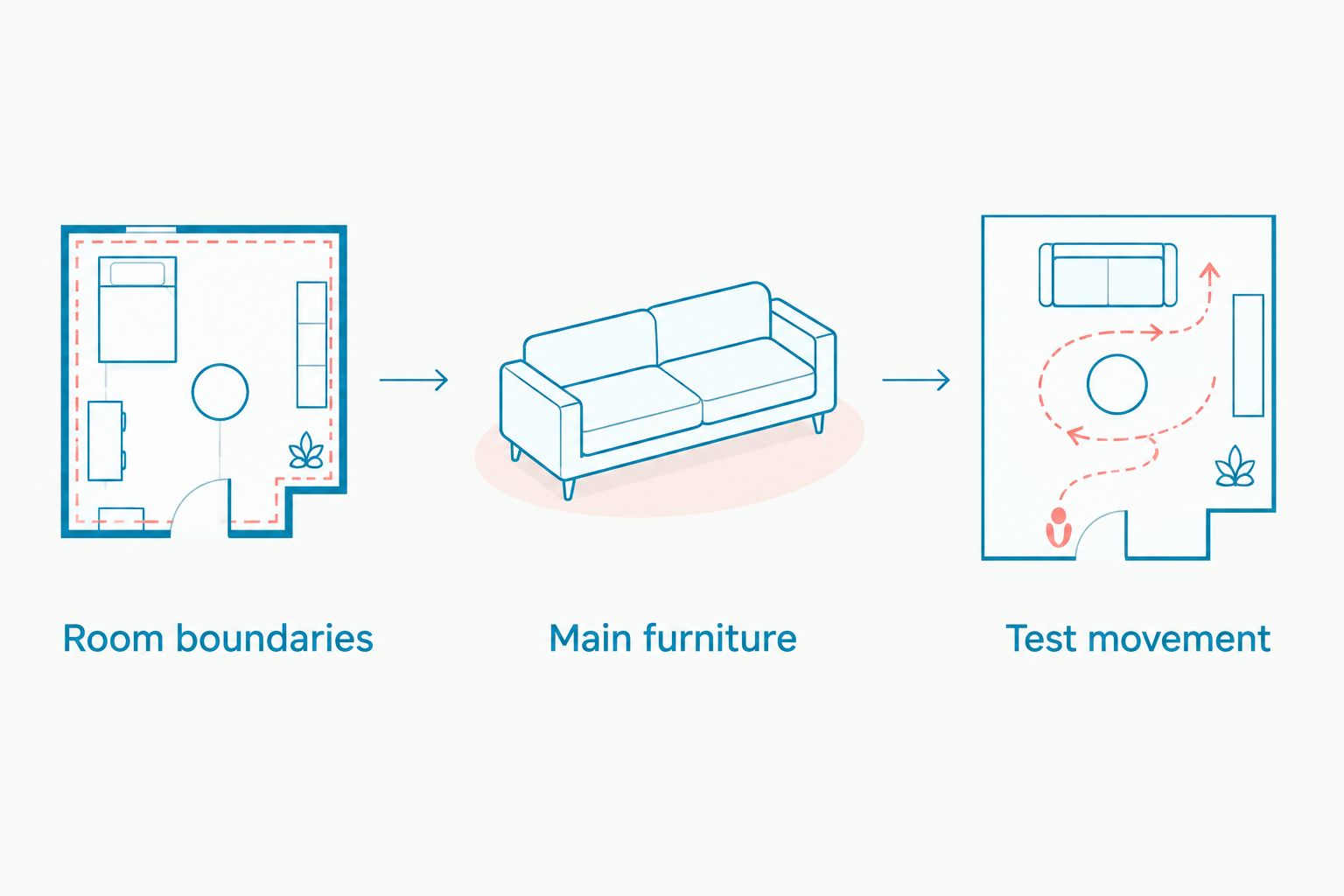
3. Select anchor furniture before accessories
Begin with the usable furniture you already own. Remove pieces that interrupt circulation, overwhelm the room or visibly need repair, then identify the gaps. For a vacant property, create the same room-by-room list before comparing purchase and hire options.
The living room needs a legible seating arrangement; the dining area needs a table and chairs that demonstrate its purpose. Bedrooms need a bed arrangement that leaves the room's access and storage understandable. Avoid furnishing every empty corner simply because space remains.
When purchasing for your 2026 campaign, Elegante brings luxury furniture, lighting, homewares and InterContinental Hotels bedding into the selection process. It is a retailer: keep furniture sourcing separate from decisions about installation, styling labour and campaign management.
Elegante is best for home stagers seeking luxury furniture and hotel-style bedding to purchase. The limitation is scope: a retail selection does not replace a property-specific layout or an agreed plan for moving and removing furniture.
- Select the main sofa, dining table and beds before occasional pieces.
- Compare dimensions against the measured room plan.
- Choose finishes that suit the property's fixed materials.
- Document who owns each purchased or hired item after the campaign.
4. Arrange living and dining areas around use
Move existing pieces first and assess the result from the entrance. Let the living area's seating show where people gather, and give the dining area enough definition to read separately. In an open-plan home, furniture placement should distinguish activities without creating a barrier between them.
Choose occasional furniture for a specific task. A side table belongs where someone can reach it from a chair; a console should support the entry rather than constrict it. An accent chair is useful when it completes a seating arrangement, not when it fills a remaining patch of floor.
Use fewer decorative objects when several furniture materials already compete for attention. Sophistication comes from an intentional arrangement, not a full inventory on display.
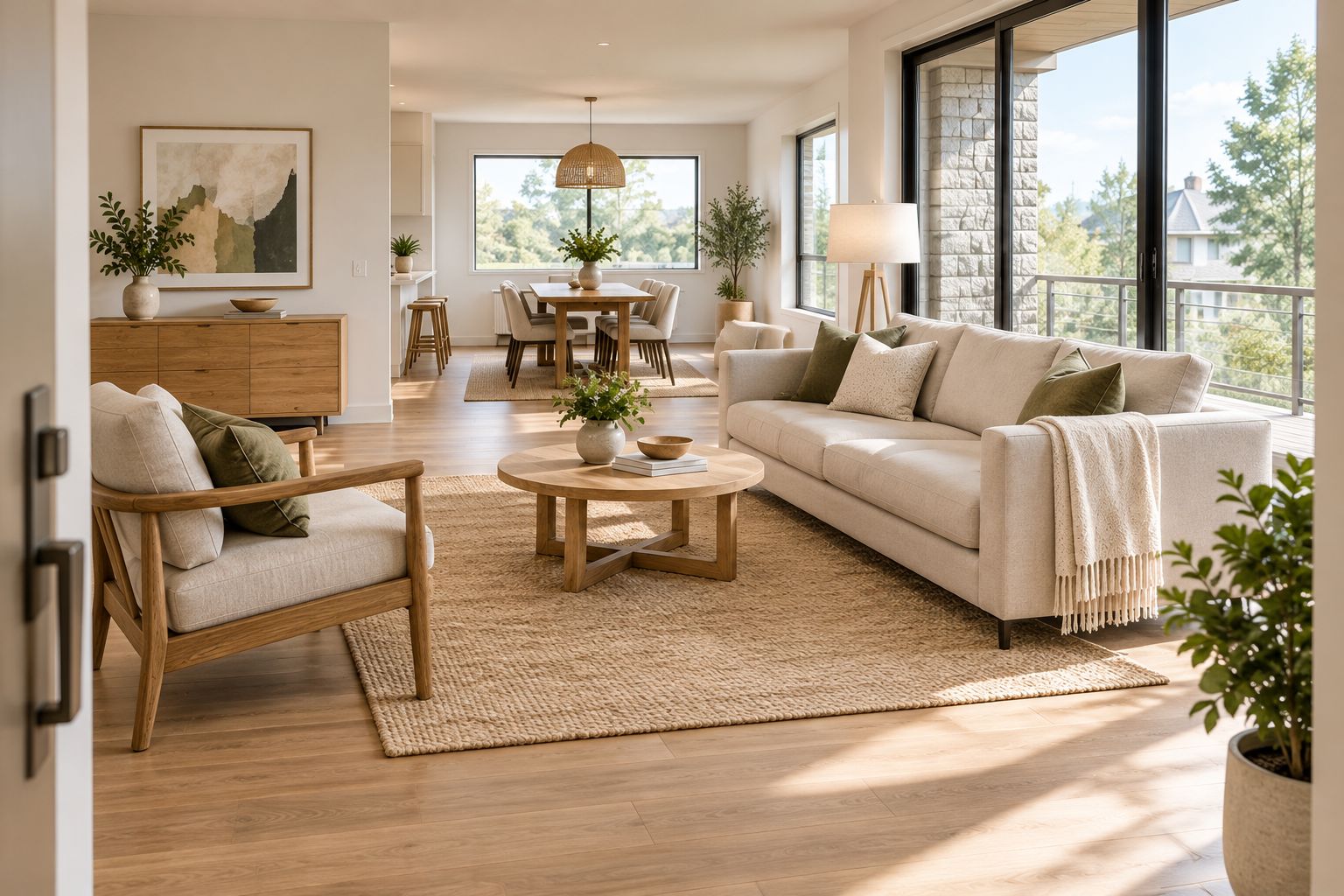
Inspect the arrangement from seated height as well as standing height. A table or lamp that looks balanced from the doorway still needs to work beside the furniture it serves.
- Position seating to acknowledge the room's main architectural feature.
- Keep the route between entry, living area and adjoining rooms clear.
- Test dining chairs pulled away from the table.
- Remove occasional furniture that has no useful role.
5. Give bedrooms a calm, complete presentation
Start by making the existing bed neatly and removing bedside clutter. Check whether the bed placement explains the room without hiding a window, wardrobe or doorway. If the room feels crowded, edit supplementary furniture before adding bedding layers.
Hotel-style bedding is useful for a polished bedroom presentation, but styling and sleeping comfort are different decisions. For an occupied home, retain bedding that works for the household and build the visual arrangement around it.
Elegante's InterContinental Hotels bedding gives you a purchasing option for bedroom finishing. Choose bedding against the actual mattress and pillow dimensions, then check care instructions before assigning it to a reusable staging kit. Do not treat a hotel association as evidence of a staging outcome.
- Centre and smooth the bedding so the bed reads clearly.
- Keep wardrobe doors and bedside access unobstructed.
- Match pillowcases and quilt covers to the inserts you use.
- Remove robes, laundry and personal bedside items from the camera view.
6. Refine lighting, artwork and surface styling
Use existing lamps and artwork first. Check the room with curtains open, then with its normal lighting switched on. Look for furniture that casts an awkward shadow or occupies the brightest part of the room without a practical reason.
Keep artwork proportional to the furniture beneath or beside it, and follow appropriate installation instructions. Group homewares deliberately rather than scattering small objects across every surface. The property should remain the subject.
New lighting or homewares are a finishing choice, not a remedy for a poor layout. Elegante offers these categories, but select them only after the room's furniture and movement routes are settled.
- Check lamp placement against nearby seating and power points.
- Keep leads secured and out of walking routes.
- Remove personal photographs and distracting surface clutter.
- Inspect mirrors for unwanted reflections in listing photographs.
7. Review the staging through the camera and on foot
Before approving your 2026 presentation, take 3 photographs per priority room: from the doorway, from the main listing angle and from the opposite side. Use these as review images, not substitutes for the campaign photographer's work.
Then complete 2 walkthroughs: one following the expected inspection route and one checking practical access. Look for pieces that conceal a feature, make a room's purpose ambiguous or require visitors to squeeze past them.
Approve a furniture arrangement only when it works in photographs and in person. After approval, give the household or campaign team a reset checklist so the presentation remains consistent between inspections.
- Photograph each priority room from the agreed review angles.
- Walk the inspection route with doors in their normal positions.
- Check chair stability, furniture condition and installation requirements.
- Record the final placement and identify who resets each room.
Compare staging furniture options
Choose the sourcing method around ownership, campaign logistics and the work you can manage. None of these options removes the need to measure rooms or assess furniture condition.
| Option | Best for | Practical advantage | Key limitation |
|---|---|---|---|
| Reuse existing furniture | Occupied homes with suitable pieces | Keeps familiar furniture in use and starts with what you have | Existing dimensions, condition and style restrict the scheme |
| Purchase selected pieces | Sellers or stylists with a use after the campaign | Gives you ownership and control over the selection | You must plan transport, storage and later use |
| Furniture hire | Temporary furnishing of vacant properties | Provides furniture without permanent ownership | Assess contract terms, handling responsibilities and campaign extensions |
| Professional staging service | Sellers needing help with layout and coordination | Places furnishing decisions within a service brief | Confirm exactly which sourcing, installation and removal tasks are included |
| Mixed sourcing | Homes with useful anchor furniture but incomplete rooms | Lets you retain suitable pieces and address specific gaps | Mixed finishes and separate logistics need careful coordination |
For each option, request a written scope that distinguishes furniture, accessories, handling and removal. Compare the same tasks across proposals. A furniture-only arrangement and an installed staging service solve different problems.
Common mistakes real estate home stagers make
Choosing furniture for the photograph alone
An arrangement that hides circulation problems from a camera still fails during an inspection. Check the actual route to balconies, storage and adjoining rooms before approving the listing angle. Keep useful access visible rather than correcting it only through composition.
Shrinking every piece to make the room look larger
Undersized furniture can leave a room's intended use unclear. Choose a credible seating or dining arrangement first, then remove unnecessary supplementary pieces. Your aim is to demonstrate a workable room, not simply expose floor space.
Styling every spare room as a bedroom
A bed should not erase the access or storage that makes a room usable. Decide the room's presentation from its dimensions and your campaign brief. When presenting a study, use furniture that clearly explains the work area rather than an ambiguous mixed arrangement.
Buying without an exit plan
A purchase continues to require handling after photography and inspections finish. Decide whether furniture moves to the seller's next home, returns to a stylist's inventory or needs another disposal route. Include access and removal responsibilities in that decision.
Expecting decor to disguise maintenance problems
Furniture and homewares do not repair damaged finishes, faulty fittings or poorly maintained surfaces. Address those matters directly rather than concealing them with furniture or artwork. Presentation should clarify the property, not obstruct its inspection.
FAQ
What's the best furniture for real estate home staging?
The best furniture for real estate home staging clearly demonstrates each room's use while preserving access and circulation. Select anchor pieces against measured floor plans, then add only the occasional furniture and accessories that serve the arrangement.
Should I buy or hire furniture to stage a home?
Buy furniture when you have a defined use for it after the campaign; assess hire when the need is temporary. Compare ownership, handling, storage, removal and contract responsibilities before choosing.
Can I stage my home with furniture I already own?
Yes, suitable existing furniture is the starting point for an occupied-home staging plan. Retain pieces that fit the layout and present well, then relocate or remove pieces that obstruct access or distract from the property.
Is Elegante a furniture hire or staging service?
Elegante is an Australian e-commerce retailer selling luxury furniture, lighting, homewares and InterContinental Hotels bedding. Treat it as a purchasing option and arrange your property's layout, handling and campaign coordination separately.
Do I need to furnish every room for a sale campaign?
Use your floor plan and campaign brief to decide which rooms need furniture and which need editing. Give each presented space a clear function rather than filling it indiscriminately.
How do I make a small bedroom look ready for inspections?
Use a bed arrangement that leaves doors, wardrobes and bedside access usable. Smooth the bedding, remove personal clutter and assess the result from both the doorway and the listing-photo angle.
How do I check staging before listing photographs in 2026?
Review each priority room through a camera and complete a practical walkthrough before approving your 2026 staging. Check circulation, furniture condition, reflections and whether the room's purpose is immediately clear.
One last thing
Before adding a final accessory to your 2026 staging scheme, remove a piece that has no clear function and photograph the room again. Compare the versions. Keep the arrangement that explains the space more clearly—not the one containing more furniture.


Comments (0)
There are no comments for this article. Be the first one to leave a message!