
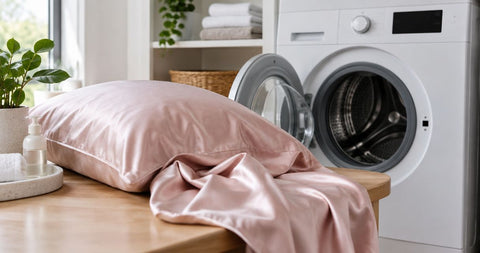
Yes, you can wash a mulberry silk pillowcase in the washing machine if its care label permits machine washing. Use the labelled temperature, a silk-suitable detergent and the recommended gentle programme; a mesh laundry bag helps protect the fabric from snagging. If the label specifies hand washing or dry cleaning, follow that instruction instead—mulberry silk alone does not establish machine washability.
- Can you wash a mulberry silk pillowcase? Yes, when its care label permits machine washing.
- Mulberry silk needs silk-suitable detergent; a delicate cycle does not make every detergent suitable.
- Use a mesh laundry bag and keep silk away from towels, exposed zips and rough fabrics.
- Elegante’s mulberry silk pillowcase has a 22-momme fabric; fabric weight does not establish machine washability.
Why this matters
A silk pillowcase sits against your face and hair, so cleaning is part of keeping your bedding comfortable. The challenge is removing everyday residue without subjecting the fabric to unnecessary friction, unsuitable chemicals or heat.
The care label takes priority over general silk advice, including this 2026 guide. Fabric weight, colour, seams and finishing all belong to the finished item, not simply its fibre name. The guide to mulberry silk pillowcases by momme weight provides background on fabric weight, but a higher momme figure is not permission to use a normal cotton wash.
Can you wash a mulberry silk pillowcase in the washing machine?
You can machine-wash a mulberry silk pillowcase when its own instructions allow it. Before loading it, check the washing method, maximum temperature, detergent restrictions and drying instructions separately. Permission to machine-wash does not automatically include permission to tumble-dry.
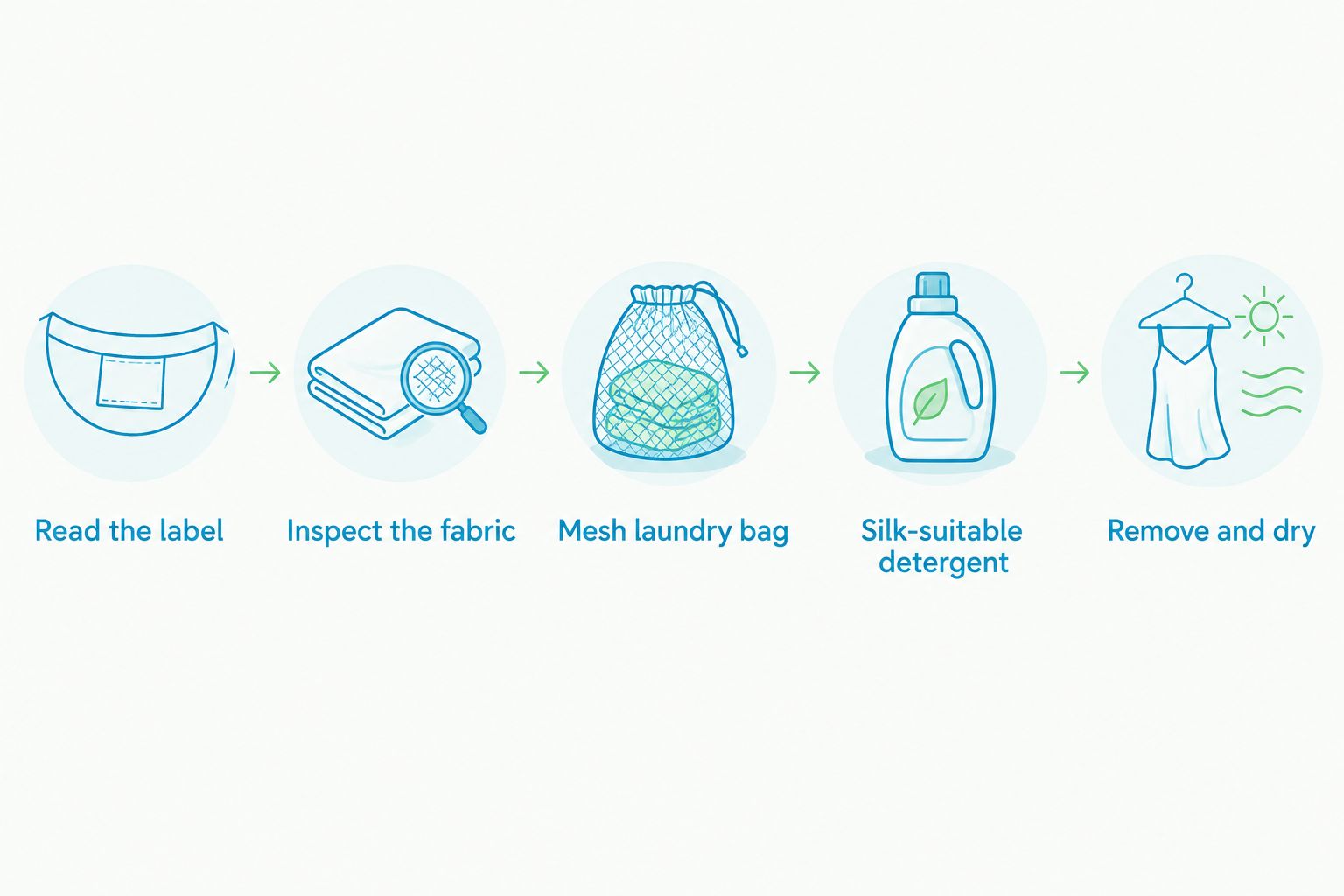
Follow this sequence for a pillowcase labelled as machine-washable.
- Read the sewn-in label. Check the actual pillowcase rather than borrowing instructions from another silk item. If the label is missing or unreadable, confirm the instructions with the retailer before washing.
- Inspect the fabric. Look for loose stitching, small tears and existing snags. Washing adds movement, so arrange repairs before putting a damaged pillowcase through a cycle.
- Remove the pillow and prepare the case. Turn the pillowcase inside out. Fasten a zip if fitted, and keep the pull contained so it cannot catch the fabric.
- Place the pillowcase in a mesh laundry bag. Choose a clean bag with enough room for water to move through it. Do not pack several items tightly into the same bag.
- Add a detergent explicitly suitable for silk. Follow its dosing instructions for your machine, load and water conditions. More detergent is not a substitute for a suitable formulation.
- Select the permitted programme. Use the silk or delicate setting only when it matches the care instructions. Check the temperature and spin settings rather than accepting the programme defaults without looking.
- Remove and dry promptly. Support the wet fabric, gently remove excess water without twisting, and follow the labelled drying method. Do not leave the pillowcase bundled in the drum.
For your 2026 laundry routine, keep the pillowcase instructions alongside the detergent instructions. You need both: the textile label governs the item, while the detergent label establishes whether the cleaning product is suitable for silk.
Machine washing: best for pillowcases labelled machine-washable
Machine washing offers a repeatable routine without washing the fabric by hand. Its limitation is that you cannot control each movement inside the drum, which makes programme choice, load separation and protection especially important.
Use machine washing for convenience only when the pillowcase permits it. A mesh bag reduces contact with other items; it does not cancel out an unsuitable temperature, aggressive spin or incompatible detergent.
Check what your machine actually does on its silk programme. Programme names are not interchangeable instructions, and a setting used successfully for lingerie is not automatically appropriate for your pillowcase.
Hand washing: best for pillowcases labelled hand-washable
Hand washing lets you control handling and keep the pillowcase separate from the rest of the laundry. Its drawback is that rubbing, twisting or leaving the fabric soaking unnecessarily can undermine that gentler approach.
Use a clean basin, water at the labelled temperature and a silk-suitable detergent. Dissolve the detergent before adding the pillowcase, move the fabric gently through the water, and rinse without wringing. Follow any soaking restrictions on the item and detergent labels.
Hand washing is not permission to wet-clean a dry-clean-only pillowcase. If the instructions exclude washing in water, a basin is not a safer workaround.
| Method | Best for | Main advantage | Main limitation |
|---|---|---|---|
| Machine washing | Pillowcases labelled machine-washable | A repeatable laundry routine | Drum movement and unsuitable settings can damage fabric |
| Hand washing | Pillowcases labelled hand-washable | Direct control over handling | Rubbing and wringing still create damaging stress |
| Professional dry cleaning | Pillowcases labelled dry-clean-only | Follows an instruction that excludes home washing | Requires a separate cleaning arrangement |
The right method in 2026 remains the method specified for the finished pillowcase. Do not choose solely on convenience or assume that professional cleaning makes every stain removable.
Which detergent should you use for mulberry silk?
Choose a detergent whose instructions explicitly include silk. A bottle labelled for everyday laundry, sensitive skin or delicate clothing does not necessarily establish suitability for silk fibres.
Silk is a protein fibre. Avoid detergents containing protein-digesting enzymes unless the manufacturer expressly confirms that the formulation is suitable for silk. A general claim about stain removal is not that confirmation.
Do not add bleach, fabric softener or a stain-removal booster unless the pillowcase care instructions explicitly permit the treatment. Mixing laundry products adds another variable when the aim is controlled, gentle cleaning.
Use the stated dose rather than pouring by eye. If the fabric feels coated after washing, check the dose and rinse instructions before changing products or adding a homemade treatment. Vinegar, bicarbonate of soda and essential oils are not default silk-care ingredients.
How should you dry a silk pillowcase after washing?
Support the pillowcase as you lift it out, rather than letting the wet fabric hang from a corner. Gently press out excess water without twisting. Where the instructions allow, a clean towel can help absorb moisture: lay the pillowcase on it, fold the towel around the fabric and press lightly.
Then use the labelled drying method. Choose a shaded, ventilated position, keep the pillowcase away from direct heat and avoid draping it over a sharp edge. Do not tumble-dry unless the care label expressly allows it.
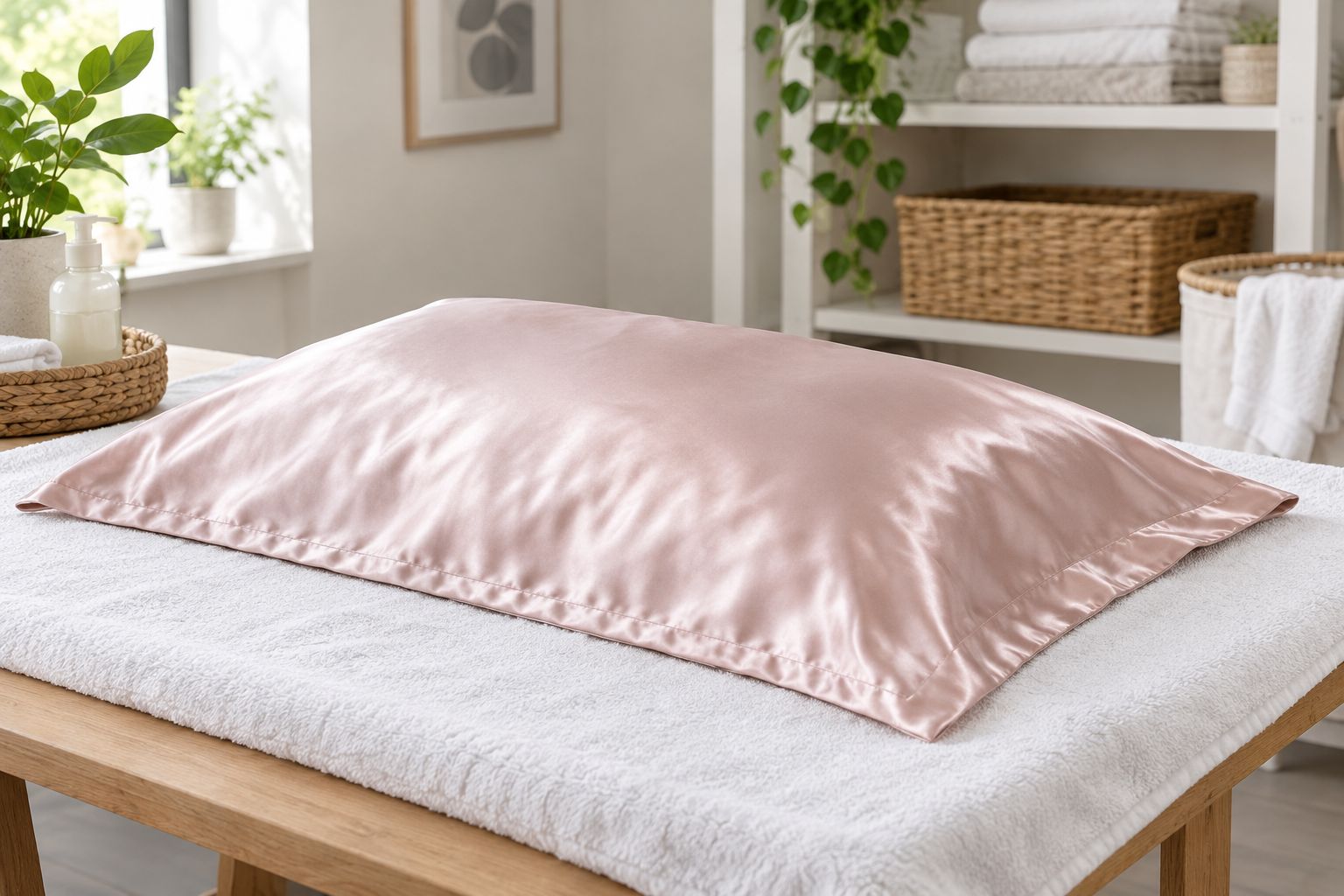
Let the pillowcase dry completely before fitting it to a pillow or storing it. Do not speed up the process with a hairdryer or radiator. If you want to remove creases, check the ironing instructions first; washability and iron suitability are separate decisions.
Why silk pillowcase washing instructions vary
Different silk pillowcases do not necessarily share a care routine. These factors explain why the label on your particular item matters:
- Fibre composition: Pure silk and blended fabrics have different compositions; a silk-like feel does not identify the fibre.
- Dyes and finishes: Colour and surface treatments form part of the finished textile and affect its care requirements.
- Construction: Seams, decorative details and closures need protection as well as the main fabric.
- Fabric condition: Worn areas, loose stitching and existing snags need attention before washing.
- Permitted cleaning method: Machine-washable, hand-washable and dry-clean-only instructions are not interchangeable.
- Machine behaviour: Temperature, agitation and spin settings determine what happens beyond the programme name.
For a replacement purchased in 2026, read the new label even if the pillowcase looks identical to your previous one. Carrying over an old routine is less reliable than checking the item you actually own.
What should you do about makeup, oils and visible stains?
Treat a stain according to the pillowcase instructions, not with the strongest laundry product in the cupboard. Avoid scrubbing, which concentrates friction on a small area. Do not apply undiluted detergent unless its instructions specifically allow that use on silk.
Blot a fresh spill gently with a clean, absorbent cloth. For an established mark, check whether the manufacturer permits local treatment and whether the treatment itself is silk-safe. If either instruction is unclear, seek advice before proceeding.
A stain that remains after washing is not a reason to increase the temperature or repeat increasingly harsh treatments. Describe the stain and any products already applied when asking a textile cleaner for help. That gives the cleaner useful information without further stressing the fabric.
What should you check before choosing a silk pillowcase?
Choose a pillowcase you can care for consistently, not just one that looks elegant on the bed. Check the fibre description, dimensions and care instructions before deciding whether it suits your household. A luxury fabric still needs a practical place in your laundry routine.
Elegante’s Mulberry Silk Pillowcase suits shoppers seeking 100% mulberry silk in a 22-momme fabric. Those details describe its composition and weight; they do not establish machine washability. Check the care instructions for the item before choosing a wash programme.
The practical trade-off for Elegante silk bedding is the same care consideration discussed throughout this guide: do not assume you can wash the pillowcase alongside your regular sheets. If a shared laundry load is essential to your routine, confirm that the instructions are compatible before buying.
Can you wash silk pillowcases with sheets and towels?
Keep silk pillowcases separate from towels, exposed zips and rough fabrics. A mesh bag helps contain the pillowcase, but it does not make an unsuitable mixed load appropriate.
Only combine items when their care requirements genuinely match. If your sheets need a different temperature, detergent or programme, wash them separately rather than compromising either set of instructions.
Does a higher momme weight mean you can use a stronger wash?
A 22-momme silk fabric is not automatically suitable for a stronger wash. Momme describes silk fabric weight, not a washing programme or a guarantee against snagging.
Use the same label-first approach regardless of fabric weight. Do not translate a description such as “luxury” or “premium” into permission to increase heat, spin or detergent strength.
FAQ
Can you wash a mulberry silk pillowcase in the washing machine?
Yes, if the pillowcase care label permits machine washing. Follow the labelled temperature and programme, use a silk-suitable detergent and protect the fabric in a mesh laundry bag.
What temperature should I wash my silk pillowcase at?
Use the temperature specified on the pillowcase care label. Do not substitute a generic silk temperature when the item's instructions give a different requirement.
Is hand washing better than machine washing for silk pillowcases?
Hand washing gives you direct control over handling, but the correct method depends on the care label. Rubbing or wringing by hand can still damage silk, and dry-clean-only items should not be washed in a basin.
Can I use normal laundry detergent on a mulberry silk pillowcase?
Use ordinary laundry detergent only if its manufacturer explicitly confirms it is suitable for silk. Sensitive-skin or delicate-laundry wording alone does not establish silk compatibility.
Can I put a mulberry silk pillowcase in the tumble dryer?
Do not tumble-dry a mulberry silk pillowcase unless its care label expressly permits it. Otherwise, follow the labelled drying method and keep the fabric away from direct heat.
How often should I wash my silk pillowcase?
Set your washing routine around use, visible soiling and the item's care instructions rather than a universal silk schedule. Wash sooner when the pillowcase has makeup, sweat or other residue that needs removal.
Can I machine-wash Elegante’s mulberry silk pillowcase?
Check the care label on Elegante’s mulberry silk pillowcase before machine washing. Its stated 100% mulberry silk composition and 22-momme weight do not, by themselves, confirm that machine washing is permitted.
One last thing
Photograph the care label while it is still readable. Keep that photograph with the item details so your next wash does not depend on memory or a faded label.
For your 2026 bedding-care routine, this is a more useful precaution than memorising a universal silk setting. It preserves the instructions for your actual pillowcase, including the drying details that are easy to overlook.


Comments (0)
There are no comments for this article. Be the first one to leave a message!