

Percale is the better pick for hot sleepers who want a crisp, matte, hotel-corner finish; sateen suits people after a smoother, slightly glossy hand-feel who don't mind sheets that hold a touch more warmth. Neither weave wins outright in 2026 — the right one depends on your climate, your skin and the look you want on the bed.
- Percale vs sateen sheets comes down to feel: percale is crisp and cool, sateen is smooth and slightly warmer.
- Percale uses a one-over-one weave and typically runs 200-400TC; sateen uses a four-over-one weave and typically runs 300-600TC.
- Percale resists pilling better over years of washing; sateen is more prone to snagging and surface wear.
- Hot sleepers and humid Australian summers favour percale; sateen suits cooler bedrooms and drier climates.
- The InterContinental Hotels sheet set gives you a percale-style crisp finish without needing to compare weaves yourself.
Why this matters
Most people choosing between percale and sateen sheets get stuck comparing thread count numbers instead of the weave itself. Thread count tells you yarn density; weave tells you how those yarns are actually interlaced, and that's what decides whether a sheet feels crisp or silky, cool or warm. Get the weave wrong for your climate or skin type and no thread count will fix it.
For a luxury bedroom in 2026, the choice also affects how the bed photographs and how it ages. A well-made InterContinental Hotels sheet set leans percale-style in construction, which is why hotel bedrooms tend to favour that crisp, matte look over a glossy one.
Percale vs sateen sheets: which is better?
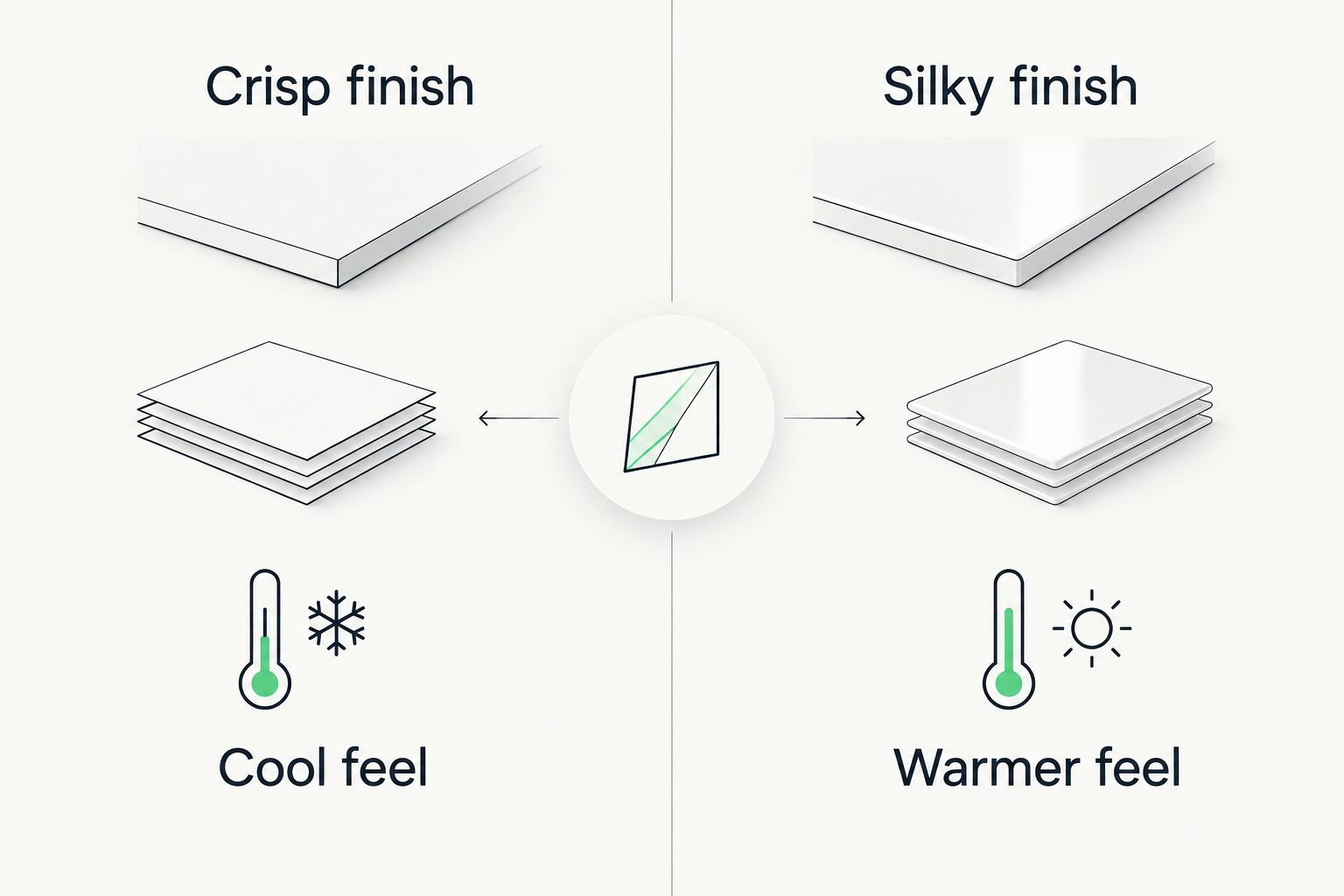
The weave structure is the whole story. Percale uses a plain, one-thread-over-one-thread-under weave, the same basic structure as a cotton shirt, which produces a matte surface with more air movement through the fabric. Sateen uses a four-over-one-under weave that packs more thread surface against the skin, producing the smooth, faintly lustrous finish people associate with "silky" sheets.
| Feature | Percale | Sateen |
|---|---|---|
| Weave structure | One-over-one, plain weave | Four-over-one, sateen weave |
| Surface finish | Matte, crisp | Glossy, silky |
| Feel against skin | Cool, crisp | Smooth, warmer |
| Breathability | High | Lower |
| Durability over years | Resists pilling well | More prone to snagging and pilling |
| Best for | Hot sleepers, humid climates | Cooler rooms, silky-feel preference |
Percale wins for anyone who sleeps hot or lives somewhere humid; sateen wins for anyone chasing a glossier, softer hand-feel and sleeping in a cooler room. Both weaves come in cotton, cotton-blend and occasionally bamboo or Tencel versions in 2026, so the weave choice matters more than the fibre choice for how the sheet actually feels.
Percale sheets: crisp, matte and cool
Percale is the weave you feel on a freshly ironed dress shirt — tight, flat, and slightly textured rather than slippery. It breathes well because the plain weave leaves more space for air to pass through the fabric, which is why percale sheets stay cooler through the night than sateen at the same thread count.
The trade-off is a less "silky" hand-feel. Percale softens with washing over the first few months but never develops the glossy drape of sateen. It also wrinkles more visibly, so a percale bed needs a firmer tuck to keep that crisp hotel-corner look through 2026's warmer months. Buy percale if you run hot at night or live somewhere humid — it's the better long-term choice for comfort over looks.
Sateen sheets: smooth, silky and warmer
Sateen's four-over-one weave puts more thread surface in contact with skin, which is what creates the soft, almost liquid drape people describe as "silky." It also produces a subtle sheen under lamp or morning light that percale never achieves, which is why sateen photographs so well styled on a bed.
That density comes at a cost. Sateen traps more heat than percale, so it's a better match for a cooler bedroom or a Melbourne winter than a Brisbane summer. The looser individual thread float also makes sateen more prone to snagging on jewellery or pet claws over time. Buy sateen if warmth retention and a glossy hand-feel matter more to you than breathability.
Why the right weave varies from bedroom to bedroom
- Climate — humid or hot climates favour percale's breathability; cooler regions suit sateen's warmth retention.
- Body temperature — hot sleepers do better on percale regardless of climate; cold sleepers often prefer sateen.
- Skin sensitivity — percale's matte texture can feel slightly rougher initially; sateen's smooth surface suits sensitive skin during the first few washes.
- Styling goals — a glossy, hotel-glam bedroom look favours sateen's sheen; a crisp, tailored hotel-corner look favours percale's matte finish.
- Wash frequency — percale holds up better to frequent hot washes; sateen needs gentler care to avoid premature pilling.
- Season — many Australian households keep a percale set for summer and a sateen set for winter rather than choosing one weave year-round.
Shop the InterContinental sheet set
A crisp, percale-style finish inspired by 5-star hotel bedrooms.
Is a higher thread count always better?
No — thread count only matters within the same weave, and a 300TC percale sheet can outperform an 800TC sateen sheet on breathability. Once thread count climbs past roughly 400 in percale or 600 in sateen, you're mostly paying for finer yarns rather than a meaningfully better feel.
Do percale sheets wrinkle more than sateen?
Yes, percale wrinkles more visibly than sateen because its plain weave holds creases rather than draping them out. Sateen's denser weave and slight sheen mask wrinkles better, which is one reason it photographs smoother straight off the line.
Which weave suits an Australian summer?
Percale suits an Australian summer better than sateen because its open weave moves more air against the skin overnight. Coastal and northern households in particular tend to favour percale sheet sets from spring through to autumn, keeping sateen for cooler southern winters.
FAQ
Percale vs sateen sheets: which is better for hot sleepers?
Percale is better for hot sleepers because its plain weave allows more airflow through the fabric than sateen's denser weave. Sateen retains more body heat, which suits cooler bedrooms rather than warm-climate or summer use.
Is percale or sateen softer?
Sateen feels softer and silkier against the skin due to its four-over-one weave, while percale has a crisper, more textured feel. Percale does soften over repeated washes but never matches sateen's glossy drape.
What thread count is best for percale sheets?
Percale sheets typically run 200 to 400TC, and quality plateaus once you pass roughly 400TC. A well-woven 300TC percale sheet usually outperforms a poorly finished 400TC set.
What thread count is best for sateen sheets?
Sateen sheets typically run 300 to 600TC, with the higher end using finer, more tightly spun yarns. Beyond about 600TC the gains are marginal and mostly affect price rather than feel.
Do sateen sheets pill more than percale?
Yes, sateen sheets are more prone to pilling and snagging over time because their weave leaves longer thread floats exposed on the surface. Percale's tight plain weave resists pilling better across years of regular washing.
Can you mix percale and sateen on the same bed?
Yes, many households use a percale fitted sheet for breathability and a sateen quilt cover or pillowcase for a softer, glossier finish. There's no functional downside to mixing weaves within the one bed.
Which weave is more durable long-term?
Percale is generally more durable long-term because its tight plain weave resists pilling and surface wear better than sateen's looser weave. Sateen can still last for years with gentler washing, just with more visible surface change.
Is percale or sateen better for an Australian summer?
Percale is better for an Australian summer because it breathes more than sateen and doesn't trap heat against the skin overnight. Sateen is the better match once temperatures drop in a southern Australian winter.
One last thing
The detail most shoppers miss in 2026: weave matters more than fibre when you're deciding between percale and sateen, but fibre still decides how the weave ages. A cotton percale sheet will crisp up beautifully after a few washes; a cotton-poly blend percale sheet stays flatter and softens less, no matter how you wash it. If crispness and longevity both matter, check the fibre content line before you check the thread count number.


Comments (0)
There are no comments for this article. Be the first one to leave a message!