
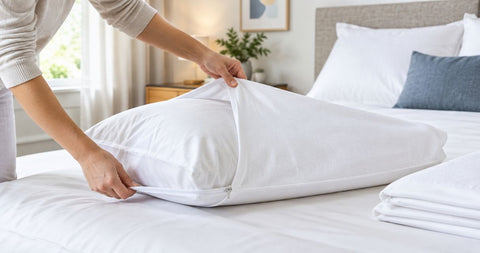
Choose a cotton pillow protector that matches your hotel pillow’s dimensions, closes without compressing the filling and has care instructions you can follow. Check the full fabric composition and any lining separately: a cotton outer does not establish waterproofing, allergy protection or suitability for a particular wash temperature.
- Choose a cotton pillow protector by measured fit, fabric composition and care instructions—not hotel wording alone.
- Elegante’s 5 Star Hotel Pillow Protector - 100% Cotton is offered for King or Queen pillows; check dimensions before choosing.
- A pillow protector sits beneath the pillowcase; the pillow’s own cotton casing is a separate layer.
- Cotton content alone does not establish waterproofing or allergy protection.
Why this matters
A luxury pillow should retain its shape once you dress it. A protector that pulls tightly across the corners or leaves the pillow bowed works against that aim, even beneath an elegant white pillowcase.
For your 2026 bedding refresh, start with fit rather than a matching size name. Elegante’s 5 Star Hotel Pillow Protector - 100% Cotton is described as a King or Queen protector, but you still need to compare the selected option with your pillow’s measurements. Choose the size that accommodates the pillow without forcing it into shape.
How do you choose a cotton pillow protector for hotel pillows?
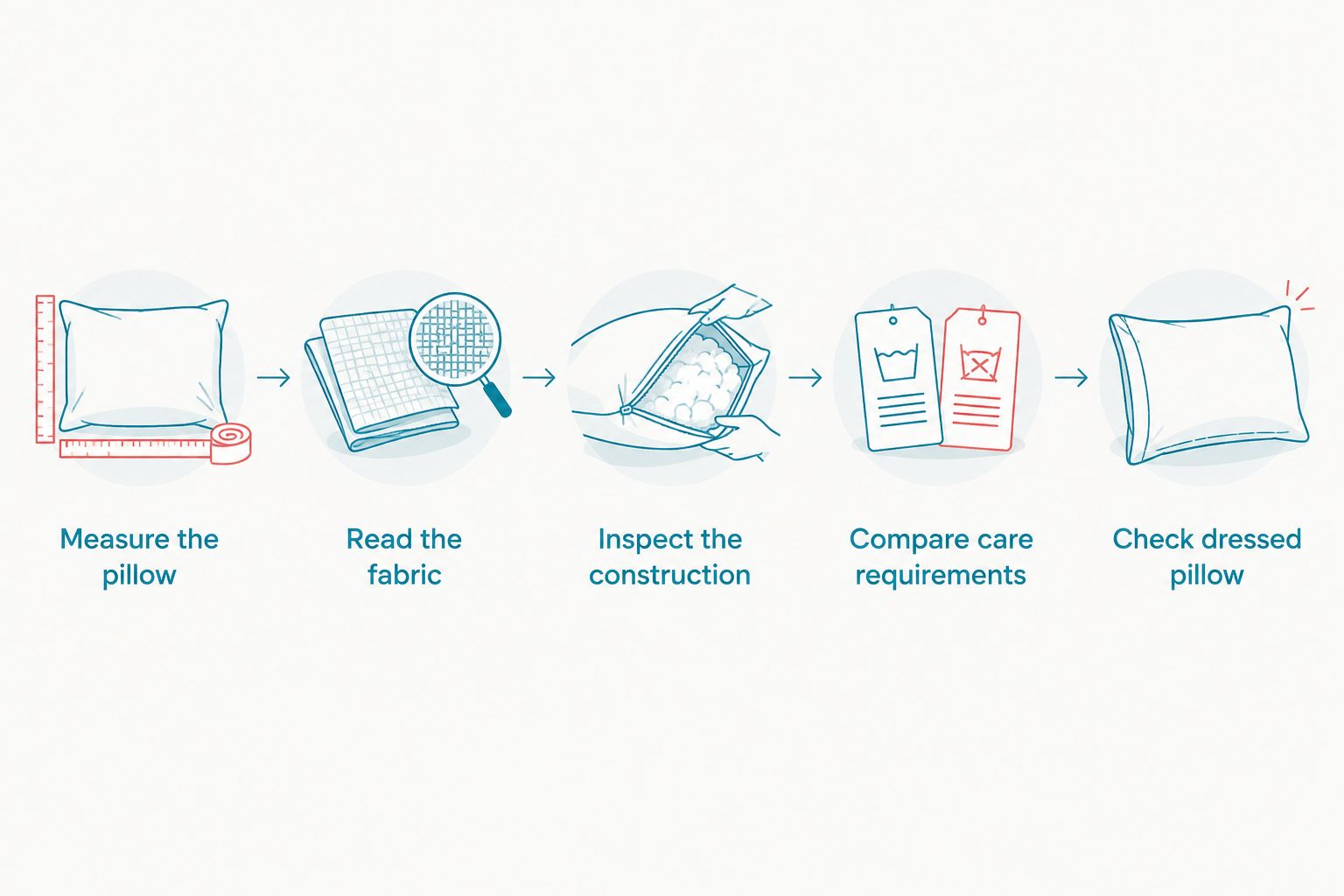
Follow these checks in order. They separate the details that determine everyday suitability from the styling language surrounding hotel bedding.
- Measure the pillow. Record its length and width in centimetres, with the pillow resting naturally. Use these 2 measurements to compare the pillow with the protector’s stated dimensions; do not flatten the filling to obtain a smaller measurement.
- Read the fabric composition. Look for a clear statement of cotton content. If your preference is 100% cotton, check whether that description covers the whole protector or only its outer fabric.
- Inspect the construction. Check the closure, seams and any lining described in the product information. Do not assume that every cotton protector uses the same fastening or internal construction.
- Compare care requirements. Read the washing and drying directions before choosing. The protector needs to suit your laundry routine, while the pillow underneath retains its own separate care instructions.
- Check the dressed pillow. Once fitted, assess the pillow with its pillowcase in place. The corners should sit naturally, and the closure should not need force.
The final check is practical rather than decorative. If the protector makes a familiar pillow feel noticeably constrained, reassess the dimensions and construction before deciding that you need a different pillow.
Cotton protector, cotton pillowcase or cotton pillow casing?
These are different parts of the bed, not interchangeable names for the same item. Your pillow’s casing contains its filling; the removable protector covers that casing; the pillowcase becomes the outer sleeping surface.
That gives you 3 layers around the filling when you use both a protector and a pillowcase. Keep each layer’s purpose clear when reading product descriptions in 2026.
| Layer | Best for | Main benefit | Limitation |
|---|---|---|---|
| 5 Star Hotel Pillow Protector - 100% Cotton | Adding a removable layer beneath your pillowcase | Covers the pillow separately from the outer pillowcase | Cotton composition alone does not establish waterproofing or allergy protection |
| 5 Star Hotel Pillowcase - 100% Cotton | Creating the outer cotton sleeping surface | Provides the removable cover you see and sleep against | Does not establish the separate protective functions of a purpose-made protector |
| Pillow casing | Holding the pillow filling in place | Forms part of the pillow itself | Is not a substitute for a removable protector; follow the pillow’s care instructions |
Use a protector for the additional removable layer and a pillowcase for the outer finish. Adding another pillowcase does not establish the same construction or protective properties as a purpose-made protector.
For hotel bedding shoppers, Elegante is best suited to readers seeking InterContinental Hotels bedding for home. Its cotton protector and cotton pillowcase belong to different layers, so select each for its role rather than treating them as alternatives.


Why cotton pillow protector suitability varies
The right choice depends on the complete pillow setup, not cotton content in isolation. Use these factors to compare the information supplied for each protector.
- Pillow dimensions: Match the protector to the individual pillow, not simply the mattress size or the words King and Queen.
- Fabric composition: Distinguish a 100% cotton statement from a description that refers only to a cotton surface.
- Construction: Read what the product says about its closure, seams and lining. Leave unlisted features out of your assessment.
- Care requirements: Compare the prescribed washing and drying methods with what you can consistently do at home.
- Required protection: If you need waterproofing or a particular allergen barrier, look for an explicit statement supporting that function.
- Pillowcase fit: Assess the protector and pillowcase together so the outer layer does not obscure a fit problem underneath.
Choose for your actual requirements, not the longest feature list. A straightforward cotton layer suits a different brief from a protector selected for a stated liquid barrier.
How should a cotton protector fit a plush hotel pillow?
A cotton protector should fit without forcing the pillow into a folded or bowed shape. Check the corners first, then the centre, and finally the closure.
A plush pillow has volume as well as length and width. Matching the flat dimensions is your starting point, but the fitted check tells you whether the particular protector accommodates the pillow’s shape.
Check the pillow before adding the pillowcase
Let the pillow settle naturally inside the protector. Smooth the fabric without pulling the corners outward or dragging the closure shut against resistance.
Then press and release the pillow as you normally would when arranging the bed. Look for persistent bunching, distorted edges or a closure that appears under tension; these are reasons to reassess the fit rather than conceal it beneath another cover.
Check the complete sleeping setup
Add your usual pillowcase and compare the feel with the pillow you already know. Assess the setup in your sleeping position, not only while it stands upright against the bedhead.
A neatly styled bed is not the final test. Your pillow should still feel comfortable when all the removable layers are fitted. If the feel changes, check both covers before attributing the difference to the pillow filling.
Does 100% cotton mean a pillow protector is waterproof?
100% cotton describes fibre composition, not a waterproof performance claim. Check for a separate description of any liquid barrier, including the materials used and the care instructions attached to it.
Do not interpret “hotel quality” or “luxury” as technical evidence. Those words do not tell you whether liquid can pass through the fabric or how the closure handles exposure.
For a 2026 purchase, write down the protection you actually require before comparing products. If waterproofing is essential, choose only after the product information explicitly addresses it; if you want a removable cotton layer, assess that simpler requirement on its own terms.
The same discipline applies to allergy-related wording. Cotton content does not, by itself, demonstrate an allergen barrier or establish that a protector is suitable for a specific health need.
Will a cotton pillow protector change a hotel pillow’s feel?
A cotton pillow protector adds fabric around the pillow, so assess the complete setup rather than assuming it will feel unchanged. Fit and construction matter alongside the cotton description.
Elegante’s InterContinental King and Queen pillow descriptions specify 50/50 goose down and feather filling encased in 100% cotton. That cotton casing is part of the pillow; adding a protector creates another layer around it, not a replacement for the casing.
If your pillow feels more constrained after fitting the protector, check for tension across the cover. If the protector fits comfortably but the finished pillow still feels tight, inspect the pillowcase as well.
Avoid trying to correct an unsuitable pillow choice by squeezing it into a smaller cover. Select pillow firmness for comfort, then choose covers that accommodate the pillow you selected.
How do you care for a cotton pillow protector?
Follow the protector’s own care label, then follow the pillow’s instructions separately. Do not transfer washing temperatures, drying methods or cleaning advice from one item to the other simply because both mention cotton.
Before the first wash, check the instructions for detergent restrictions, bleaching, machine washing and drying. After laundering, inspect the seams and closure, and check the fit again before returning the protector to the bed.
Use these practical checks for your 2026 laundry routine:
- Read the care label before selecting a wash programme.
- Remove the protector from the pillow before cleaning it as directed.
- Follow any instructions for securing the closure during washing.
- Complete the prescribed drying process before refitting.
- Replace a damaged protector rather than relying on a torn seam or faulty fastening.
Keep a spare if your laundry schedule leaves a gap between washing and refitting. Choose that spare by the same dimensions and care criteria, rather than assuming that any cotton cover will fit.
FAQ
What should I look for in a cotton pillow protector?
Look for matching dimensions, clear fabric composition, suitable construction and care instructions you can follow. Check any waterproofing or allergy-related function separately rather than inferring it from cotton content.
Is a cotton pillow protector the same as a pillowcase?
A cotton pillow protector is a separate layer beneath the pillowcase. The pillowcase forms the outer sleeping surface, while the pillow’s own casing contains the filling.
Does 100% cotton mean a pillow protector is waterproof?
100% cotton identifies fibre composition, not waterproof performance. Look for an explicit waterproofing statement and details of any barrier material if liquid protection is essential.
Can I use a King protector on a Queen hotel pillow?
Choose by the pillow and protector dimensions rather than assuming the size names are interchangeable. Check the fitted result for excess fabric, tension and distortion.
Can I wash the protector with the pillow inside?
Remove the protector and follow its care instructions separately from the pillow’s. The pillow filling and removable cotton cover do not necessarily share the same washing or drying requirements.
Will a protector make my hotel pillow firmer?
Assess the fitted pillow rather than assuming a protector will preserve or change firmness in a particular way. If the pillow feels constrained, check the protector and pillowcase for tension before changing the pillow.
Does Elegante offer a cotton protector for hotel pillows?
Elegante lists the 5 Star Hotel Pillow Protector - 100% Cotton and describes it for King or Queen pillows. Compare the selected option’s dimensions and care instructions with your pillow before choosing.
One last thing
Check the pillowcase before replacing a protector that seems too tight. The outer cover is part of the fit, yet it is easy to overlook when you are concentrating on the protective layer underneath.
For your final 2026 bedding check, fit the protector first and assess it alone. Then add the pillowcase and assess again. This simple sequence separates a protector problem from an outer-cover problem without changing the pillow you already enjoy.


Comments (0)
There are no comments for this article. Be the first one to leave a message!