
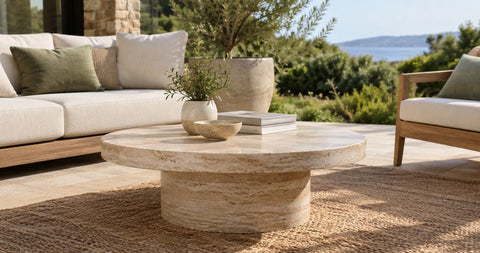
Yes, travertine coffee tables can be used outdoors when the manufacturer approves the complete table for outdoor use, including its base, fixings, fillers and finish. Travertine’s use in outdoor paving does not make every travertine furniture design weather-resistant, and sealing an indoor table does not turn it into outdoor furniture.
- Can travertine coffee tables be used outdoors? Yes, with manufacturer approval for the complete table.
- A covered patio reduces exposure but does not make an indoor-only table suitable outdoors.
- Stone sealer helps resist staining; it does not prevent acid etching or weatherproof the base.
- Use Elegante’s travertine coffee table guide for styling; confirm outdoor suitability separately.
Can travertine coffee tables be used outdoors?
Yes—but choose an outdoor-approved table, not simply a table made from travertine. The stone surface is only part of the decision. Adhesives, filled cavities, supporting materials and concealed fixings also need to suit the intended setting.
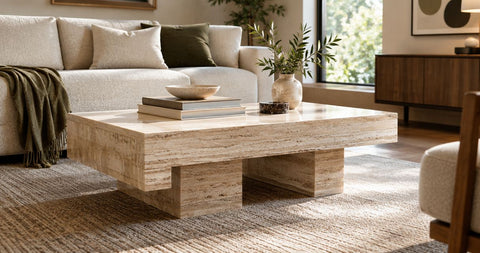
For a 2026 purchase, check the intended-use statement before comparing shapes or finishes. If you are considering the material for its appearance, travertine coffee tables for Australian living rooms provides a styling starting point, not evidence of outdoor approval.
| Placement | Best for | Advantage | Limitation | Recommendation |
|---|---|---|---|---|
| Covered patio | An outdoor-approved table with reduced direct exposure | Shelter limits direct rain and falling debris | Wind-driven rain, humidity and spills still reach furniture | Choose only with approval for this setting |
| Uncovered terrace | A table explicitly approved for exposed outdoor use | Keeps a stone centrepiece within an open-air seating area | Greater exposure requires suitable construction and care | Confirm exposed-use suitability before buying |
| Indoor living room | An indoor-only table or a design without confirmed outdoor suitability | Avoids direct weather exposure | Normal stone cleaning and spill protection still apply | Keep indoors unless outdoor use is confirmed |
The distinction is practical: shelter changes exposure, while manufacturer approval establishes intended use. You need both pieces of information to make a sound decision.
Why this matters
A travertine coffee table can create an elegant connection between a living room and an alfresco seating area. Its natural patterning brings texture without requiring a busy arrangement of accessories. However, matching the appearance of neighbouring stone paving is not a durability assessment.
Travertine is a porous, calcium-carbonate-based natural stone. Liquids can enter its pores, while acidic substances can react with the surface. Those characteristics matter around drinks, food, plant pots and wet outdoor furniture.
Your 2026 furniture plan should separate the look you want from the exposure the table must tolerate. Choose the setting first, verify suitability second, and style the table last.
Covered patios: shelter helps, but approval still comes first
A roofed alfresco area reduces direct rain compared with an open terrace. It does not create indoor conditions. Moisture can arrive through wind-driven rain, condensation, nearby irrigation or water carried from a pool.
Check the actual position rather than describing the whole area as covered. A table beside the outer edge of a verandah faces different exposure from one well beneath the roof. Observe where rain lands and where the floor stays wet.
Also check what sits beneath the stone. A timber base, painted frame or decorative metal finish needs its own suitability assessment; the tabletop cannot protect every joint and underside surface.
Best for: an outdoor-approved table in a sheltered seating area where you can manage spills and moisture. Shelter is a useful precaution, not permission to move indoor furniture outside.
Uncovered terraces: verify the whole construction
An exposed terrace places more demands on a table than a sheltered patio. Rain reaches the top, edges, base and joints, while the table experiences changing outdoor conditions without roof protection.
Ask whether the approval covers an uncovered location. A general description such as natural stone, durable or suitable for entertaining does not answer that question. Request the intended-use guidance for the exact model and finish.
Water also needs somewhere to go. Avoid a position where the base stands in pooled water, and do not assume a decorative recess will drain. Follow the manufacturer’s placement and storage instructions rather than adapting the table yourself.
Best for: a complete table explicitly approved for exposed outdoor use. If that approval is absent, keep the travertine design inside and choose outdoor-rated furniture for the terrace.
Why outdoor suitability varies
The suitability of a travertine coffee table depends on more than its material name. These factors explain why two similar-looking designs need different treatment:
- Stone construction: solid stone, stone veneer and composite assemblies have different components. Check what the tabletop and base actually contain.
- Fillers and adhesives: filled pores and bonded joints introduce materials beyond the stone itself. Their outdoor suitability needs confirmation.
- Surface treatment: a sealer addresses liquid absorption and staining, not every form of weather exposure or chemical damage.
- Base and fixings: timber, metals, coatings and fasteners must suit the intended conditions independently of the stone top.
- Position and climate: direct rain, persistent damp, coastal salt exposure and freezing conditions change what the furniture must withstand.
- Care requirements: cleaning products, protective measures and storage instructions form part of using the table correctly.
An attractive stone surface is not a substitute for an outdoor-use specification. Make that the central rule when comparing furniture in 2026.
How do you check a travertine table before putting it outside?
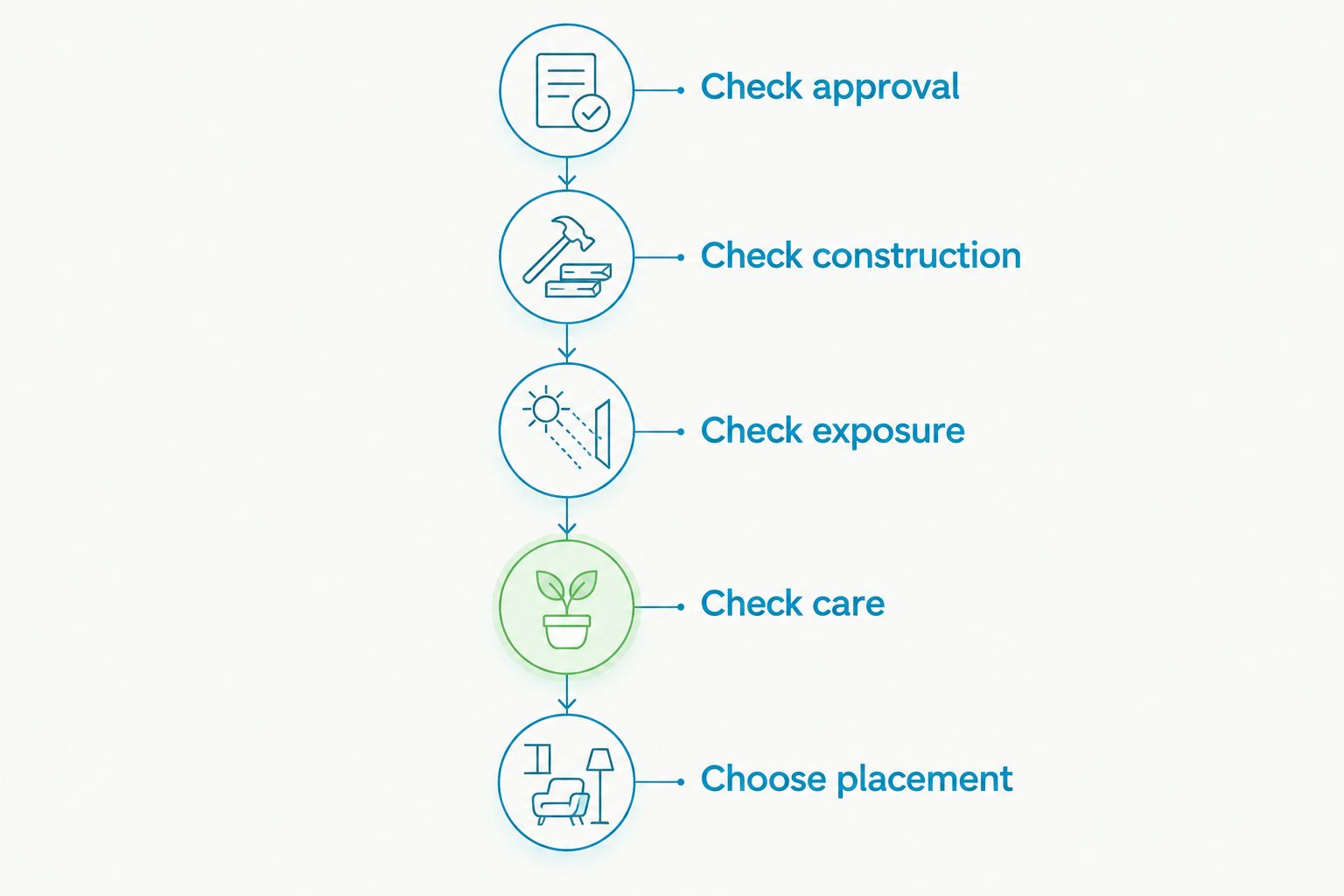
Use this sequence before moving an existing table or ordering a new one. Each step resolves a different question; a positive answer about the stone does not replace an answer about the complete piece.
- Check approval. Find the intended-use statement for the exact table. Ask specifically about covered or uncovered outdoor placement, whichever applies.
- Check construction. Confirm the tabletop material, base, fillers, adhesives and fixings. Do not infer solid-stone construction from a photograph.
- Check exposure. Look for wind-driven rain, irrigation, pooled water and any local freezing conditions at the proposed position.
- Check care. Obtain instructions for cleaning, sealing, covers and storage. Confirm which treatments are compatible before applying anything.
- Choose placement. Put an approved table on a stable surface, away from standing water and avoidable splash sources.
Keep the written guidance with your purchase records. It gives you a reference when choosing a cleaner or deciding whether seasonal storage is required.
A useful question to send the retailer is whether the exact table is approved for permanent use in your proposed outdoor position. Describe whether that position is roofed, exposed to rain or close to a pool, rather than asking only whether travertine can go outside.
Does sealing travertine make it waterproof?
No. Sealing travertine does not make the complete coffee table waterproof or outdoor-rated. An appropriate penetrating sealer helps reduce liquid absorption and staining, but it does not protect every component of the furniture.
Sealer also does not make calcium-based stone acid-proof. Lemon juice, wine and vinegar can etch travertine, leaving a dull or altered patch. That is a surface reaction, not simply a stain waiting to be wiped away.
For your 2026 care routine, use the table manufacturer’s treatment instructions rather than a universal resealing timetable. Sealer compatibility, application and maintenance depend on the stone finish and product used.
If you are unsure what has already been applied, seek advice before adding another coating. Do not layer treatments simply because water darkens part of the surface.
Can a travertine coffee table stay outside in winter?
An outdoor-approved travertine coffee table can remain outside only within its specified conditions of use. Winter suitability depends on the complete construction and the conditions at your home, not the season’s name alone.
Where temperatures fall below 0°C, water within porous stone can freeze and expand. That makes frost exposure a relevant question for the manufacturer, including how the particular stone, fillers and assembly are intended to perform.
A mild location still requires attention to rain, damp and drainage. Do not treat the absence of frost as proof that an indoor table can remain outdoors.
If the care instructions call for protected storage, follow them. A cover is not a substitute for storage when storage is specified.
How should you clean and protect outdoor travertine?
Keep the routine gentle and consistent. Remove spills promptly, use a stone-compatible cleaner and avoid acidic products. Neutral pH is 7; check that the cleaner is intended for natural stone rather than relying on a general household-cleaning label.
For everyday care:
- Lift loose grit with a soft cloth or brush before wiping, rather than rubbing particles across the surface.
- Blot drink spills promptly and clean according to the table’s instructions.
- Use coasters and suitable mats beneath drinks and serving pieces.
- Keep plant pots off the stone unless a protective arrangement prevents moisture collecting underneath.
- Remove leaves and other debris instead of leaving them to sit on a damp tabletop.
- Avoid abrasive pads, acidic descalers and unapproved chemical treatments.
Distinguish staining from etching before attempting repairs. A darker absorbed mark and a dull acid-affected patch are different problems. A stone-care professional can assess damage without the trial-and-error of unsuitable household remedies.
How do you style a sheltered outdoor seating area?
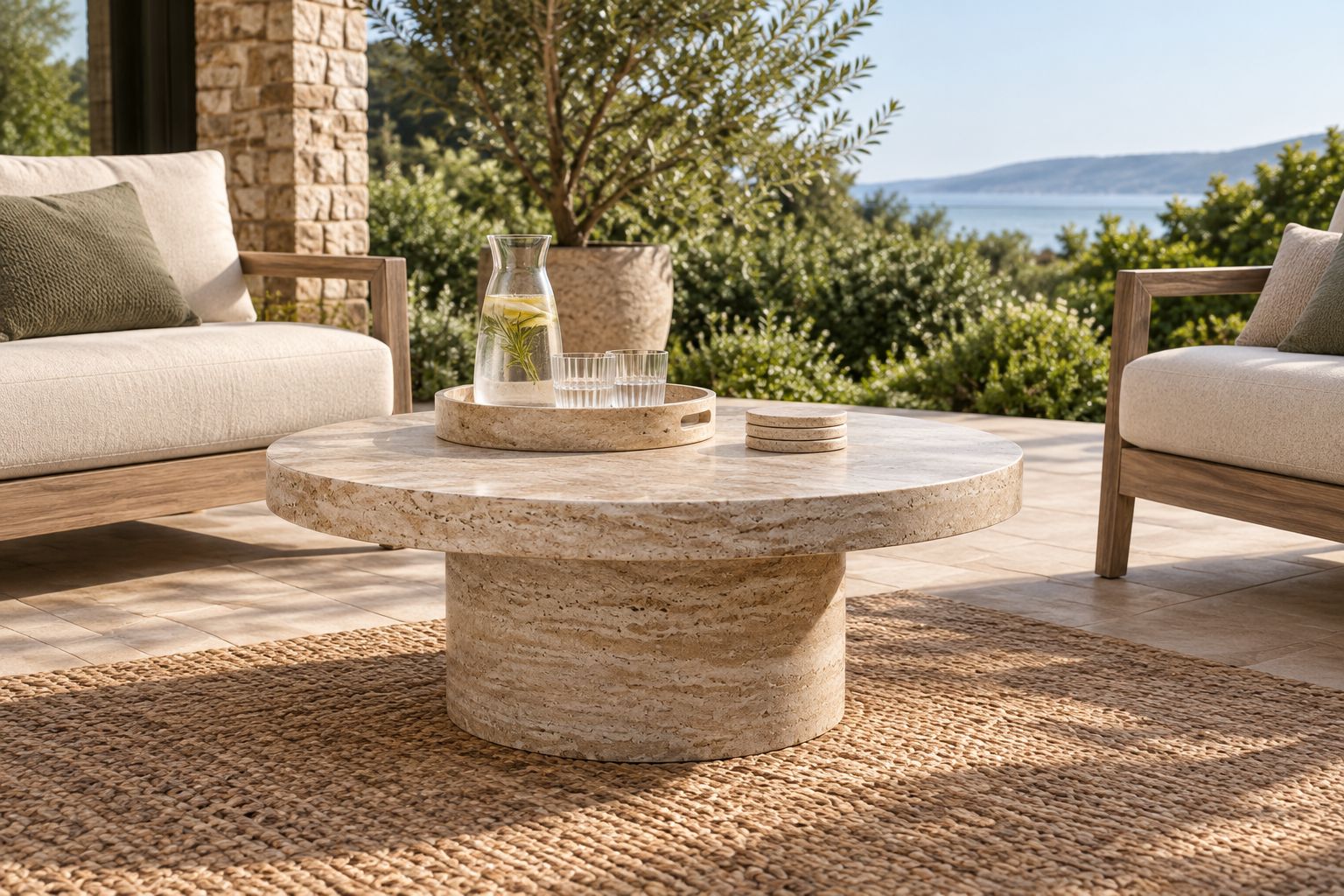
Once outdoor suitability is confirmed, let the stone remain the visual centrepiece. A restrained arrangement leaves room for drinks and makes routine cleaning easier. Choose accessories approved for outdoor use, just as you would for the table.
Keep practical protection discreet: coasters close to the seating, a removable serving tray and no permanently damp planter directly on the surface. Avoid covering the entire tabletop with objects that conceal spills or collected debris.
Elegante’s designer furniture and homewares are best for shoppers creating a coordinated home interior; outdoor suitability still requires confirmation for each piece. When browsing Elegante coffee table inspiration, keep visual preference separate from weather resistance.
The same principle applies to accessories. A stylish indoor lamp or decorative object does not become outdoor-safe because it sits beneath a patio roof.
FAQ
Can I put my indoor travertine coffee table on a covered balcony?
Keep an indoor-only travertine coffee table indoors unless the manufacturer confirms balcony use. A roof does not remove humidity, condensation or wind-driven rain.
Does a travertine coffee table need sealing outdoors?
Follow the exact table’s sealing instructions rather than assuming every travertine finish needs the same treatment. A compatible sealer helps resist staining but does not establish outdoor suitability.
Will rain damage a travertine coffee table?
Rain exposure must be suitable for the complete table, including its fillers, joints and base. Travertine can absorb water, so the stone’s presence alone does not establish rain resistance.
Can I clean travertine with vinegar?
Do not clean travertine with vinegar because its acidity can etch the calcium-based stone. Choose a natural-stone-compatible cleaner and follow the furniture care instructions.
Can a sealed travertine table still get marks from lemon juice?
Yes, lemon juice can etch sealed travertine because a stain-resistant treatment does not make the stone acid-proof. Remove spills promptly and use coasters or protective serving pieces.
Should I cover a travertine coffee table outside?
Use a cover only as directed by the table manufacturer, and follow any drying or storage requirements. Do not enclose a wet table beneath a cover or treat a cover as outdoor approval.
What should I check before buying a travertine coffee table in 2026?
Confirm written outdoor approval, complete construction details and care requirements before buying in 2026. Tell the retailer whether your intended position is covered, exposed or subject to frost.
One last thing
The underside deserves as much attention as the tabletop. Before placing a travertine coffee table outside, inspect the supporting structure and ask about any concealed materials you cannot identify. A stone top can look perfectly suited to a courtyard while the complete assembly is intended for indoor use.
For your 2026 shortlist, make written outdoor approval the deciding criterion. Elegante homewares can help shape the room’s style; the exact table’s specifications decide where it belongs.

Comments (0)
There are no comments for this article. Be the first one to leave a message!