

Best overall: an oval travertine coffee table. Best for a compact seating area: a round pedestal design. Best for a long sofa: a rectangular table. This 2026 guide ranks four travertine coffee table shapes by how they work in Australian living rooms, not by unverified product claims.
- An oval travertine coffee table is the best default for a living room with a sofa and occasional chairs.
- Choose a round pedestal table when you need easier movement around the seating area.
- Choose a rectangular table for a long sofa; choose nesting tables when you need to rearrange the room.
- Elegante is best for styling a travertine coffee table alongside designer furniture and homewares, not for a verified stone-table pick.
Why this matters
A coffee table occupies the space between every seat and becomes part of every route through the room. With travertine, you are choosing both a shape and a natural stone surface: the outline affects movement, while the finish and care requirements affect daily use.
If you are deciding between stone and a visually lighter material, glass coffee tables for a glamorous living room offer a useful styling comparison. This guide stays with travertine and focuses on the decisions to settle before you choose a specific table.
The 2026 verdict: an oval travertine coffee table is the safest shape choice for a mixed seating arrangement. Its curved ends soften the route around a sofa and chairs without giving up the usable surface of an elongated top. That is a design recommendation, not a claim that every oval table fits every room.
What makes the best travertine coffee table?
Use these criteria to judge a design before you judge its photograph. A beautiful top cannot compensate for a table that interrupts the path to your sofa.
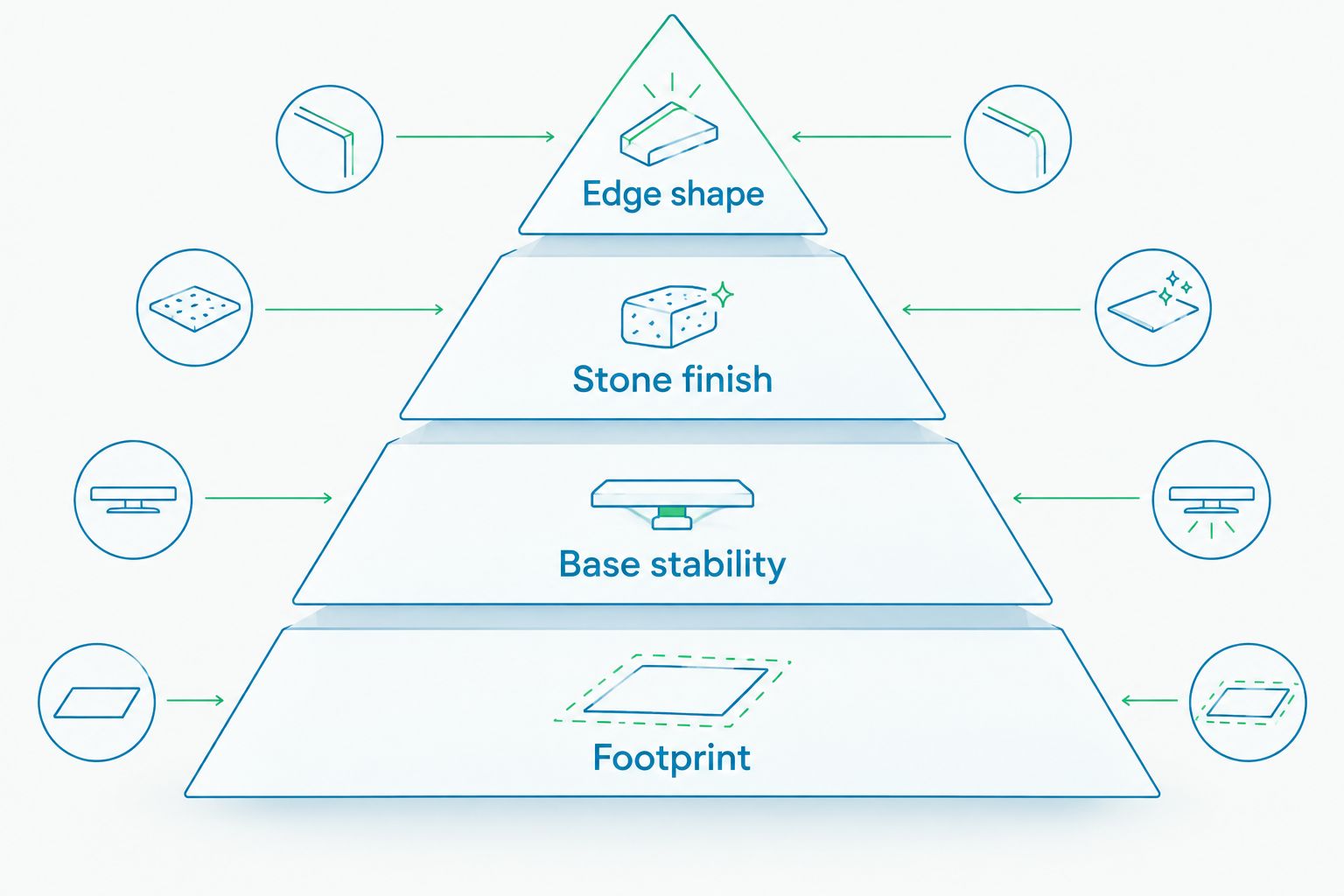
- Footprint: Mark the proposed tabletop outline on the floor. Check the route between the seating, doorway and any nearby furniture with the outline in place.
- Edge shape: Curved edges make a different path around the table than square corners. Choose the shape that suits how people enter and leave the seats.
- Stone finish: Ask how the surface is finished, what cleaning it requires and whether the supplier recommends sealing. Do not treat a photograph as a care specification.
- Base stability: Check how the top is supported, especially if the design has a broad top or a narrow-looking base. Appearance alone does not establish stability.
- Seating reach: Sit on each seat and check whether the tabletop is convenient to use. A table can fit on the floor plan yet sit awkwardly far from the chairs.
- Delivery path: Confirm that the chosen table can pass through your building's access points. Consider the route into the room before selecting a large stone design.
These checks matter more than a trend label. In a 2026 living room, the best travertine coffee table is the one that leaves the room comfortable to move through and practical to use.
Travertine coffee tables at a glance
These are design types, not verified models. Compare them by the shape of your seating area; then check the specifications of the individual table you are considering.
| Design type | Best for | Standout feature | Key limitation |
|---|---|---|---|
| Oval travertine coffee table | Mixed sofa-and-chair seating | Long surface with curved ends | Still needs enough room along the sofa |
| Round pedestal travertine coffee table | Compact seating areas | Curved outline on every side | Less surface length beside a long sofa |
| Rectangular travertine coffee table | Long, straight sofas | Clear alignment with the main seat | Corners need careful placement on walking routes |
| Travertine nesting coffee tables | Rooms that change between daily use and hosting | Separate surfaces you can reposition | Both pieces need a sensible place when not in use |
The table is a starting point, not a substitute for measuring your room. A round table can feel generous in one arrangement and difficult to reach in another; the position of the seats decides.
1. Oval: best travertine coffee table for mixed seating
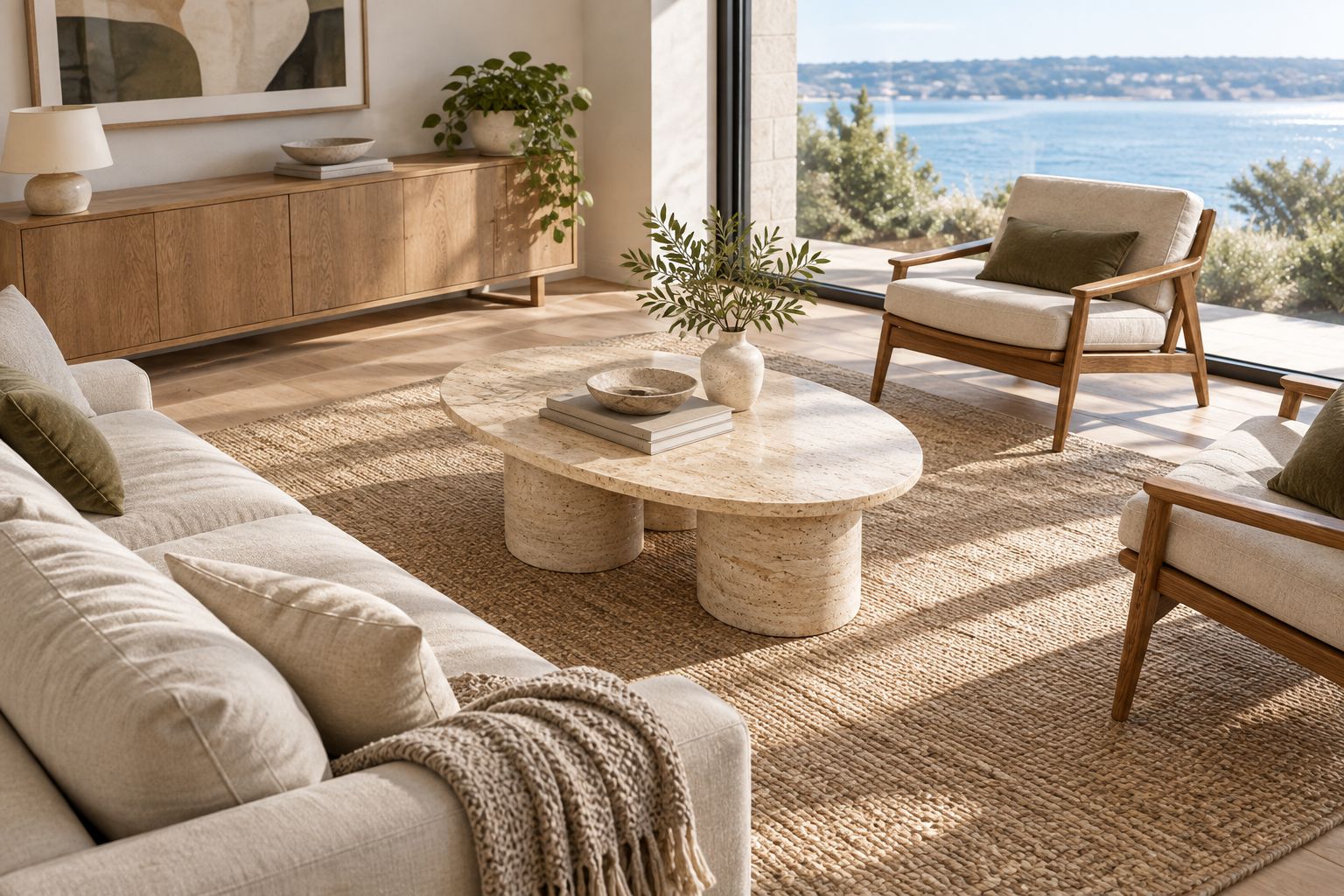
An oval top follows the length of a sofa while presenting curved ends to people approaching from the sides. It is the strongest default when your living room combines a sofa with occasional chairs. The shape gives you a clear centre without making every corner of the seating area negotiate a square edge.
An oval design also brings a softer outline to a room with straight-lined upholstery, shelving or rugs. Elegante's designer-furniture context makes that balance useful to consider, but choose the actual table only after checking its dimensions, support and stone-care guidance. No particular travertine model is established by this guide.
Picture an oval top between a sofa and two chairs, with a clear route around each curved end. That route—not the isolated product image—is what tells you whether the table belongs in the room.
Oval travertine coffee table pros:
- The elongated top serves more than one seating position.
- Curved ends soften the path past the table.
- The outline works with both straight and curved furniture.
Oval travertine coffee table cons:
- Its length can still crowd a small seating area.
- A narrow top can leave the chairs farther from a useful surface than expected.
- A substantial stone top calls for a close look at its support and delivery path.
Best for: A sofa paired with chairs, especially when people walk past the ends of the table. Verdict: Buy the oval shape if a taped-out outline leaves clear routes and every seat can reach it comfortably.
2. Round pedestal: best for compact seating areas
A round pedestal table gives you the same curved edge whichever side you approach. It suits a conversational grouping where seats face one another rather than lining up beside a long sofa. The central base also changes where your feet and nearby furniture can sit, so inspect the complete design rather than judging the top alone.
Round does not automatically mean small. A broad circular top can occupy more of the useful floor area than its photographs suggest. In 2026, test its full outline in the room and walk around it before treating it as the compact choice.
Round pedestal travertine coffee table pros:
- No corners project into routes between seats.
- The surface is accessible from several directions.
- The central base creates a distinct sculptural focal point.
Round pedestal travertine coffee table cons:
- A long sofa can leave its outer seats poorly served.
- A broad top can crowd a compact arrangement.
- The pedestal's support needs checking against the top's size and construction.
Best for: A compact group of seats arranged around a central point. Verdict: Buy a round pedestal design when it serves each seat without claiming too much floor space; otherwise, hold and compare an oval top.
3. Rectangular: best for a long, straight sofa
A rectangular travertine coffee table mirrors the line of a long sofa. Its straight edges make the relationship between table and seating easy to assess on a floor plan, and the extended top provides a defined place for objects used along the sofa. It is a deliberate, architectural choice rather than the automatic answer for every stone-led room.
Pay particular attention to the ends. If the route into the room cuts past one corner, a rectangle can feel intrusive even when the table sits neatly in front of the sofa. Check the approach from the doorway and from any chairs opposite before choosing it.
Rectangular travertine coffee table pros:
- Its long edge relates clearly to a straight sofa.
- The top offers an extended surface along the main seating position.
- Straight sides make placement against a rectangular rug easy to visualise.
Rectangular travertine coffee table cons:
- Corners need more care on busy walking routes.
- The shape can look rigid beside an already angular sofa-and-rug arrangement.
- A large stone top makes access and support questions especially important.
Best for: A long sofa with a direct, uncluttered route around both table ends. Verdict: Buy the rectangular shape when those routes are clear; skip it if a corner lands on the path people use most.
4. Nesting: best for a living room that changes layout
Nesting travertine coffee tables give you separate surfaces to arrange together or apart. This is the flexible choice if you shift seats for guests or want a smaller everyday footprint. Check how the pieces relate when nested and where each one will sit when separated; flexibility is useful only when both arrangements work.
The material still deserves individual scrutiny. Confirm the stone finish, base construction and care guidance for each piece in the set. A nesting label tells you how the tables are intended to relate, not how either surface will respond to use.
Travertine nesting coffee table pros:
- Separate pieces can serve different seats.
- You can change the arrangement without moving one large top.
- The set can create a layered focal point.
Travertine nesting coffee table cons:
- Both pieces occupy space when spread apart.
- Misaligned heights or shapes can make the arrangement look unsettled.
- Each piece adds another base and surface to assess.
Best for: A seating area that changes between everyday use and hosting. Verdict: Hold until you have mapped both the nested and separated positions; skip the set if neither has a clear home.
How these shapes were ranked
The order favours the shape that works across the widest range of mixed sofa-and-chair layouts, then assigns the other designs distinct uses. It does not rank stone quality, craftsmanship or specific products: those details require specifications for the individual tables. That distinction keeps a 2026 design guide useful without pretending that a shape proves product performance.
Start with the footprint and seating reach. Next, inspect the edge, base and stone-care information for the actual design. If any of those checks fail, move to another shape even if your first choice looks better in a styled photograph.
Elegante sells designer furniture and homewares, so the useful connection here is the wider room: a coffee table must work with your seating, lighting and circulation. Elegante is not presented as the maker of any of the travertine designs ranked above.
Which travertine coffee table should you choose?
Choose an oval travertine coffee table if you have a sofa and chairs and have not yet found a reason to choose another shape. It offers an elongated surface without placing square corners at the ends of the main walking route. Measure that route before committing; the best default still has to fit your room.
Choose round pedestal for seats gathered around a compact centre, rectangular for a long sofa with clear access at both ends, and nesting tables for an arrangement that genuinely changes. Those are four different decisions, not four versions of the same recommendation.
To judge a candidate, mark its proposed outline on the floor and use the room normally. Sit down, stand up and follow the routes you take every day. Then ask for the table's dimensions, construction details and stone-care instructions. The 2026 styling decision becomes much clearer when the table is treated as furniture you live around, not only as a material you admire.
FAQ
What's the best travertine coffee table shape for a living room?
An oval travertine coffee table is the best default for a living room with a sofa and occasional chairs. Its curved ends suit routes around mixed seating, provided the table's actual dimensions fit the space.
Is a round travertine coffee table better than an oval one?
A round travertine coffee table is better for seats gathered around a compact centre; an oval one better follows a sofa's length. Choose by seating reach and walking routes, not by shape alone.
Which travertine coffee table works with a long sofa?
A rectangular travertine coffee table suits a long, straight sofa when there is clear access around both ends. An oval design is the alternative if a corner would interrupt a walking route.
Are nesting travertine coffee tables practical?
Nesting travertine coffee tables are practical when both their grouped and separated positions work in your room. Map out where each piece will sit before choosing a set.
How do you check whether a travertine coffee table will fit?
Mark the proposed tabletop outline on your floor, then walk around it and sit in every nearby seat. Check the individual table's stated dimensions and its route into your home before deciding.
How do you care for a travertine coffee table?
Follow the care instructions for the specific table and ask its supplier about the finish and any recommended sealing. Travertine is natural stone; a product photograph cannot tell you its care requirements.
Should you choose travertine or glass for a coffee table?
Choose travertine when you want a natural-stone surface to anchor the seating area; consider glass when you want a visually lighter top. In either case, check the table's footprint, construction and care guidance.
One last thing
The table you love in a photograph can be the wrong shape from your doorway. Before choosing a finish, stand where you enter the living room and look at the route to the sofa. In 2026, buy the shape that makes that route feel natural, then choose the stone details for the individual table. Elegante's home-styling perspective starts with the whole room, not an isolated tabletop.


Comments (0)
There are no comments for this article. Be the first one to leave a message!