

Best overall linen bed head for a hotel-style bedroom in 2026: a tailored, plain upholstered panel. Best for a dramatic master bedroom: a linen wingback. Best for a smaller room: a slim, low-profile panel. These are design types, not named products; choose the shape first, then confirm the fabric and dimensions before you buy.
- A tailored upholstered panel is the best overall linen bed head for a hotel-style bedroom in 2026.
- Choose a linen wingback for a stronger focal point; choose a slim panel when floor space is tight.
- Check whether the upholstery is linen or a linen blend before ordering.
- Style the bed head with pillows and a quilt that suit its height and shape.
Why this matters
A bed head sets the outline of the room before you add pillows, lighting or bedside furniture. Get that outline right and the bed looks considered; get it wrong and even beautiful bedding has to compete with an awkward shape. For more ideas beyond the bed head, see this guide to creating a five-star hotel bedroom at home.
The term linen bed head also needs a closer look. It can describe linen upholstery, a linen blend or simply a linen-like appearance. A photograph will not settle the distinction. Read the fabric composition, then check the dimensions against your bed and the space around it.
What makes the best linen bed head?
- A proportionate outline. The bed head should frame your bed without crowding the bedside furniture or disappearing behind the pillows.
- A shape that suits the room. Plain panels keep the composition quiet. Wings and channels add detail, but ask for more visual space.
- Clear fabric information. Confirm the stated upholstery composition rather than treating a natural-looking weave as proof of linen.
- Practical upholstery care. Check the maker’s cleaning instructions, particularly if the bed head will be touched often or exposed to direct sunlight.
- Compatible construction. Confirm how the bed head stands or attaches, and whether it works with your existing bed frame.
- A complete bedside scheme. Consider the pillows, quilt, lamps and bedside tables you already have. The best design gives those pieces room to work together.
A hotel-style bedroom does not require the most ornate bed head. It needs a clear focal point and enough restraint for the rest of the bed to feel inviting. In 2026, start with the silhouette, not the upholstery colour: you can compare shades more usefully once you know how much visual weight the shape will add.
Linen bed heads at a glance
| Bed head type | Best for | Standout feature | Key limitation |
|---|---|---|---|
| Tailored plain panel | A balanced hotel-style bedroom | Clean upholstered backdrop | Can look flat without considered bedding |
| Wingback | A spacious statement bedroom | Defined frame around the bed | Can crowd nearby furniture |
| Slim low-profile panel | A smaller bedroom | Visually light outline | Less presence behind tall pillows |
| Channelled panel | A bedroom needing texture | Repeated upholstered detailing | Competes with patterned bedding |
| Slipcovered panel | A softer, relaxed scheme | Looser upholstered appearance | Less sharply tailored look |
These are design recommendations, not a ranking of verified retail models. No particular bed head’s fabric composition, measurements or construction is established here. Treat the table as a decision guide, then inspect the specifications of any product you consider.
1. Tailored plain panel: best linen bed head overall
A plain upholstered panel gives the bed a defined backdrop without making the room feel busy. Its uninterrupted surface works particularly well when the bedding supplies the softer shapes: pillows at the back, a quilt across the bed and a restrained arrangement in front. For most hotel-style bedrooms, this is the default choice.
The restraint is useful because it leaves you free to change the bedding later. A quiet panel can sit behind crisp white sheets or a more textured quilt cover without asking you to redesign the entire room. Elegante’s hotel bedding can inform that layered look, but confirm the bed head itself separately: the bedding range does not establish a particular linen bed head.
Tailored plain panel pros:
- Gives pillows and bedding a calm backdrop.
- Suits both restrained and more decorative bedside styling.
- Makes fabric texture easier to notice without additional detailing.
Tailored plain panel cons:
- A very plain design can lack presence on a large wall.
- Its upholstery finish and edges remain highly visible.
Best for: Someone who wants a sophisticated hotel look without committing to a strong decorative feature. Verdict: Buy if its scale suits your bed and its stated fabric composition meets your brief.
2. Wingback: best linen bed head for a statement bedroom
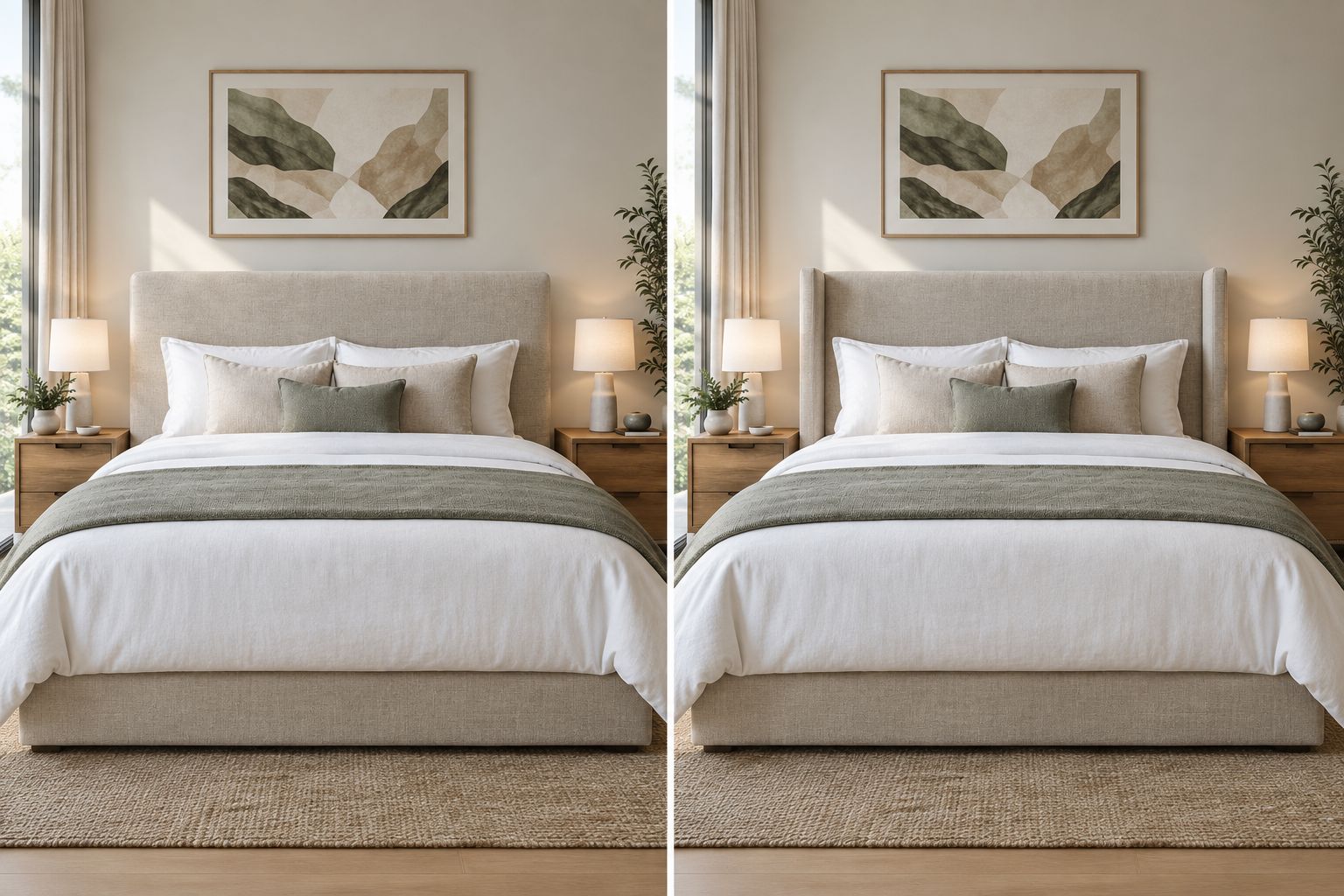
A wingback brings the sides of the bed head forward, creating a more enclosed outline around the sleeping area. It gives the bed a stronger architectural role. Use that emphasis when the wall behind your bed feels empty and the bedside pieces have room to breathe.
The trade-off is width and visual weight. A wingback can make closely placed lamps or bedside tables feel squeezed, even when the bed itself fits. Check the full outer dimensions rather than assuming the mattress width tells you how much wall space the bed head occupies. In a hotel-style scheme, let the wings be the main detail and keep competing shapes quieter.
Wingback pros:
- Establishes a clear focal point.
- Frames the bed and its pillow arrangement.
- Gives a simple bedding palette more presence.
Wingback cons:
- Can visually crowd a narrow room.
- Wing depth and attachment details need checking before purchase.
- Strong curves or angles can compete with decorative bedside furniture.
Best for: A room where the bed should be the dominant feature. Verdict: Buy for a spacious scheme; hold if the bedside layout is already tight.
3. Slim low-profile panel: best for a smaller bedroom
A slim panel offers an upholstered backdrop without the visual weight of wings or deep detailing. A lower outline can leave more of the wall visible, helping a compact room feel less crowded. It is a deliberate design choice, not a lesser version of a taller bed head.
Look at the bed when it is made, not just when the mattress is bare. Tall pillows can conceal much of a low panel. If your preferred hotel look depends on a layered pillow arrangement, compare the visible bed-head height with your usual setup before deciding. Elegante’s InterContinental Hotels king pillow is one bedding option to consider when planning that arrangement; check its details against the cases and bed size you intend to use.
Slim low-profile panel pros:
- Keeps the room’s outline visually light.
- Leaves space for wall art or other features above the bed.
- Works with simple bedside furniture.
Slim low-profile panel cons:
- Can disappear behind a tall pillow stack.
- Offers less of a statement on an expansive wall.
- Low height does not, by itself, confirm compatibility with a bed frame.
Best for: A compact bedroom where every piece needs a clear visual role. Verdict: Buy if you prefer a pared-back bed; hold until you check how much panel remains visible behind your pillows.
The difference is easiest to judge in a furnished room: a wingback draws your eye to its outer edges, while a slim panel lets your eye move past the bed to the surrounding wall.
4. Channelled panel: best for understated texture
A channelled panel adds repeated upholstered lines behind the bed. Vertical channels can draw attention upward; broader detailing creates a more deliberate rhythm across the wall. Either way, the bed head contributes texture before you add a patterned quilt cover or cushions.
That makes editing essential. If the channels are the feature, let the bedding provide contrast through smooth and softly rumpled surfaces rather than several competing patterns. The finish matters too: inspect how the channels meet the edges and whether the photographed fabric matches the stated upholstery composition.
Channelled panel pros:
- Adds detail without relying on a bold colour.
- Gives a simple made bed a stronger backdrop.
- Can make the upholstery itself the decorative feature.
Channelled panel cons:
- May compete with patterned bedding or a detailed feature wall.
- Recesses and seams deserve closer attention when checking care instructions.
- The repeated detail is less adaptable than a plain panel.
Best for: A bedroom with restrained bedding that needs a little more surface detail. Verdict: Buy if the room’s other patterns are quiet; skip if the wall and bedding already carry strong designs.
5. Slipcovered panel: best for a relaxed hotel feel
A slipcovered bed head softens the outline of the bed with a less rigid upholstery appearance. It suits a room where you want natural texture and an inviting, slightly informal finish rather than precise seams and sharp corners. That can be elegant, provided the relaxed shape looks intentional beside the bedding.
Do not assume a slipcover is removable or washable. Those are product-specific details, and the name alone does not establish them. Read the care and construction information before treating easy cleaning as a reason to buy.
Slipcovered panel pros:
- Creates a softer, less formal outline.
- Pairs naturally with relaxed bedding layers.
- Keeps the emphasis on fabric texture.
Slipcovered panel cons:
- Will not deliver the crispest tailored look.
- Cover removal and cleaning depend on the product.
- A loose-looking fit can feel at odds with highly structured bedside furniture.
Best for: Someone who prefers an inviting, relaxed bedroom over a sharply tailored suite. Verdict: Buy for that softer direction; skip if precise hotel tailoring is the goal.
How we ranked these bed heads
The ranking prioritises versatility, visual balance, fabric clarity, practical care and compatibility with a complete bed. A plain panel takes first place because it lets the bedding and bedside furniture change without changing the room’s main outline. Wingbacks, slim panels, channels and slipcovers are stronger choices when your room calls for their particular shape.
This is a style ranking, not a performance test or a list of available products. Fabric composition, fittings and care requirements vary by bed head. In 2026, compare those details on the exact item you intend to order rather than applying a design-type verdict to every model with the same name.
Which linen bed head should you choose?
Choose a tailored plain panel if you are undecided. It is the easiest starting point for a hotel-style bedroom because it frames the made bed without demanding attention from every other piece in the room. Choose a wingback when the bed needs to command a larger space, or a slim panel when you want the room to feel lighter.
If texture is the missing element, choose channels before adding more patterns to the bedding. If softness matters more than crisp tailoring, consider a slipcovered shape. In every case, measure the available wall space and read the upholstery description before you commit. Linen-look is a visual description, not confirmation of fibre content.
For a cohesive finish, place the bed head decision beside the bedding decision. Elegante sells hotel bedding, including pillows, sheets and quilts; choose the bed-head outline to complement the layers you actually intend to use, rather than styling around an empty mattress. The result should look composed when the bed is made and comfortable when you use it.
FAQ
What is the best linen bed head for a hotel-style bedroom in 2026?
A tailored plain upholstered panel is the best all-round design choice for a hotel-style bedroom in 2026. It frames layered bedding without competing with bedside furniture; verify the fabric composition of the specific product before buying.
Is a wingback bed head better than a plain panel?
A wingback is better when you want the bed to be the room’s main statement. A plain panel is more adaptable and generally easier to pair with varied bedding and bedside styling.
What is the best linen bed head for a small bedroom?
A slim low-profile panel is the best design starting point for a small bedroom. Check how much of it will remain visible behind your usual pillows.
Does linen-look mean a bed head is made from linen?
No. Linen-look describes appearance and does not confirm fibre content. Read the stated upholstery composition to distinguish linen from a blend or another fabric.
Can I put a linen bed head behind a layered hotel bed?
Yes, provided the bed head remains visible above and beside the bedding arrangement you prefer. Compare its dimensions with your bed, pillows and surrounding furniture before choosing.
Are slipcovered bed heads washable?
A slipcovered design is not automatically washable. Check the specific product’s cover construction and care instructions rather than assuming the cover can be removed or machine washed.
Should I choose a channelled or plain bed head?
Choose a channelled bed head when the bed needs more texture and the bedding is restrained. Choose a plain panel when you want greater freedom to change patterns, colours and bedside pieces.
One last thing
The most revealing test is to picture the made bed, not the bed head on its own. In 2026, a beautiful linen bed head that vanishes behind your pillows is the wrong height for the look you want. Set out your preferred bedding layers first, then choose the outline that remains visible and balanced.


Comments (0)
There are no comments for this article. Be the first one to leave a message!