

Best overall: a low, rounded ceramic vase. Best for fresh flowers: a clear glass vase. Best for a compact display: a single bud vase. Elegante’s 2026 guide to vases for coffee table styling compares six shapes and finishes, with advice for shelves, floral arrangements and everyday living.
- For vases for coffee table styling, choose a low, rounded ceramic vase as your default.
- Clear glass vases suit fresh flowers; narrow-neck bud vases suit a single stem.
- For shelf styling, choose a sculptural vase that looks complete without flowers.
- Elegante’s guide prioritises sightlines, usable surface space and a vase’s intended purpose.
Why this matters
A vase looks different on a coffee table than it does in a product photograph. You see it from the sofa, walk around it and reach past it, so its height and footprint matter as much as its finish.
A shelf presents a different brief. The vase needs to sit comfortably beneath the shelf above and look considered beside books or artwork. If your table is reflective, start with the surrounding materials: this guide to glass coffee tables for a glamorous living room provides a useful companion to choosing your centrepiece.
For your 2026 refresh, choose the vase’s job before choosing its colour. Decide whether it will hold fresh flowers, support a single stem or stand alone as a decorative object.
What makes the best vases for coffee table styling?
Judge each vase against these six criteria before considering its decorative details:
- Sightlines: A coffee-table arrangement should let you see the person sitting opposite. Assess the flowers as well as the vessel.
- Footprint: Leave usable space for drinks, books and everyday objects. A wide silhouette is unsuitable if it occupies the whole tabletop.
- Base stability: Look for a level base and a shape that sits securely. Test stability rather than assuming a substantial-looking vase is heavy.
- Opening shape: A narrow neck gathers stems; a broader opening gives you room to spread an arrangement.
- Water suitability: Confirm that the specific vase is intended to hold water. A decorative finish alone does not establish watertightness.
- Visual balance: Choose contrast where the table needs definition, or a quieter finish where the furniture already makes a statement.
A beautiful vase that interrupts conversation or leaves nowhere to put a cup is the wrong choice for that table. Move it to a shelf rather than forcing the arrangement.
Best vase types at a glance
These are ranked styling formats, not individual product reviews. The order puts everyday coffee-table use first, followed by more specialised floral and shelf displays.
| Rank and vase type | Best for | Standout feature | Key limitation |
|---|---|---|---|
| 1. Low, rounded ceramic vase | Everyday coffee-table styling | A compact silhouette that also works empty | Water suitability requires confirmation |
| 2. Clear glass vase | Fresh-flower arrangements | Visible stems become part of the display | Water marks and stem clutter remain visible |
| 3. Narrow-neck bud vase | Small tables and single stems | A restrained opening and compact arrangement | Unsuitable for a full bouquet |
| 4. Sculptural ceramic vase | Flower-free shelf styling | Shape supplies the decorative interest | Unusual openings complicate cleaning |
| 5. Coloured glass vase | A deliberate colour accent | Colour and transparency in one object | Its colour needs to work with nearby finishes |
| 6. Tall cylindrical vase | Upright shelf arrangements | A straight-sided silhouette for vertical displays | Tall stems obstruct coffee-table sightlines |
1. Low, rounded ceramic vase: best for everyday coffee-table styling
A low, rounded ceramic vase is the most useful starting point when you want a centrepiece that works with or without flowers. Its curved outline provides a contrast beside rectangular books and trays. Choose the actual height from your seated view, not from the impression created by a photograph.
Low, rounded ceramic vase pros:
- A low profile suits conversation areas.
- A rounded outline contrasts with angular accessories.
- An opaque body keeps the stem arrangement out of view.
Low, rounded ceramic vase cons:
- A broad body takes up valuable tabletop space.
- Ceramic appearance does not confirm water suitability.
For a quiet luxury arrangement, pair a restrained ceramic finish with a table that already has visible grain or veining. On a plain table, use a more pronounced silhouette rather than adding several competing ornaments.
Best for: A coffee table that needs a permanent decorative anchor.
Verdict: Buy a low, rounded ceramic vase if you want one versatile starting piece.
2. Clear glass vase: best for fresh-flower arrangements
A clear glass vase makes the stems part of the composition. It suits arrangements where you want to see the flowers from several sides rather than conceal their structure. Select a vessel intended for water, with an opening you can comfortably clean.
Clear glass vase pros:
- You can see the water level.
- The stems contribute to the finished arrangement.
- Transparent glass leaves nearby colours visible.
Clear glass vase cons:
- Water marks and untidy stems remain on show.
- A tall glass arrangement still blocks sightlines.
For your 2026 fresh-flower display, start with the bouquet you actually use. A generous opening suits a spreading arrangement; a narrower opening gathers stems more closely. Remove the vase from the table when filling it, and dry the outside before returning it.
Best for: Readers who regularly style fresh flowers and enjoy visible stems.
Verdict: Buy a clear glass vase for flowers, not to disguise an untidy arrangement.
3. Narrow-neck bud vase: best for compact tables and single stems
A bud vase holds a small floral gesture rather than a full bouquet. Its narrow opening suits a single stem or a restrained sprig, making it a practical choice when the table has little room for decoration. Assess the base carefully: a small vessel still needs to sit securely.
Narrow-neck bud vase pros:
- A single stem creates a clear focal point.
- A compact vessel leaves more surface available.
- The narrow opening gathers a slender stem.
Narrow-neck bud vase cons:
- It does not accommodate a substantial bouquet.
- A tight neck makes interior cleaning awkward.
Keep the display simple. Start with 1 vase and 1 stem, then check whether the arrangement feels complete before adding another object. These are styling choices, not fixed proportions; the table’s function comes first.
Best for: Small coffee tables, side tables and shelves with limited display space.
Verdict: Buy a bud vase when a full floral arrangement would overwhelm the surface.
4. Sculptural ceramic vase: best for flower-free shelf styling
A sculptural ceramic vase uses its outline as the main decorative feature. An asymmetric body or expressive handle gives you something to look at without requiring flowers. View the piece from the angle at which you will normally see the shelf.
Sculptural ceramic vase pros:
- The silhouette provides interest without stems.
- It introduces curves beside straight book spines.
- An empty display avoids the need for flower maintenance.
Sculptural ceramic vase cons:
- A complex shape competes with nearby decorative objects.
- Unusual openings make cleaning less straightforward.
Place the vase where its outline has room to read clearly. Do not hide its distinctive side behind books or crowd it against a patterned artwork. A quieter backdrop lets the shape do the work.
Best for: Shelves that need a decorative focal point without flowers.
Verdict: Buy a sculptural ceramic vase for its shape; skip it if the shelf is already visually busy.
5. Coloured glass vase: best for a deliberate colour accent
A coloured glass vase brings colour to the arrangement while retaining a transparent or translucent character, depending on the piece. It suits a room where you want the vase to echo a cushion, artwork or upholstery detail. Look at the colour against your actual table surface.
Coloured glass vase pros:
- Colour provides interest even when the vase is empty.
- The finish offers an alternative to opaque ceramic.
- A repeated accent colour connects separate room elements.
Coloured glass vase cons:
- Its colour limits some floral and accessory combinations.
- Stems and water remain visible through transparent finishes.
For a 2026 styling update, choose a colour already present in your room rather than treating the vase as an isolated purchase. Use it as the main accent within the tabletop grouping, leaving the surrounding objects quieter.
Best for: A neutral room that needs a considered colour connection.
Verdict: Buy coloured glass when you can name the room detail it will complement.
6. Tall cylindrical vase: best for upright shelf arrangements
A tall cylindrical vase gives an upright arrangement a straight-sided container. It belongs on a shelf with enough overhead space for both the vessel and its contents. Measure the complete display before committing to its position.
Tall cylindrical vase pros:
- The upright outline contrasts with horizontal books.
- Straight sides give the arrangement a defined silhouette.
- It provides a format for long-stem displays.
Tall cylindrical vase cons:
- Tall stems interrupt views across a coffee table.
- Shelf clearance restricts the finished arrangement.
Check that branches do not press against the shelf above or extend into a walkway. A suitable location matters more than achieving height for its own sake. Where the shelf is shallow, choose a base that fits fully on the surface.
Best for: A shelf display with generous vertical clearance.
Verdict: Buy for an upright shelf arrangement; skip as the default coffee-table centrepiece.
How to style your vase without crowding the surface
Coffee table: keep the arrangement low and usable
Begin with the vase on its own. Sit in your usual seat and check the view across the table, then add the flowers and repeat the check. The complete arrangement determines whether the height works.
For Elegante’s vases for coffee table styling guide, the practical recommendation is simple: keep the centrepiece subordinate to the way you use the room. You should not need to relocate it every time you sit down.
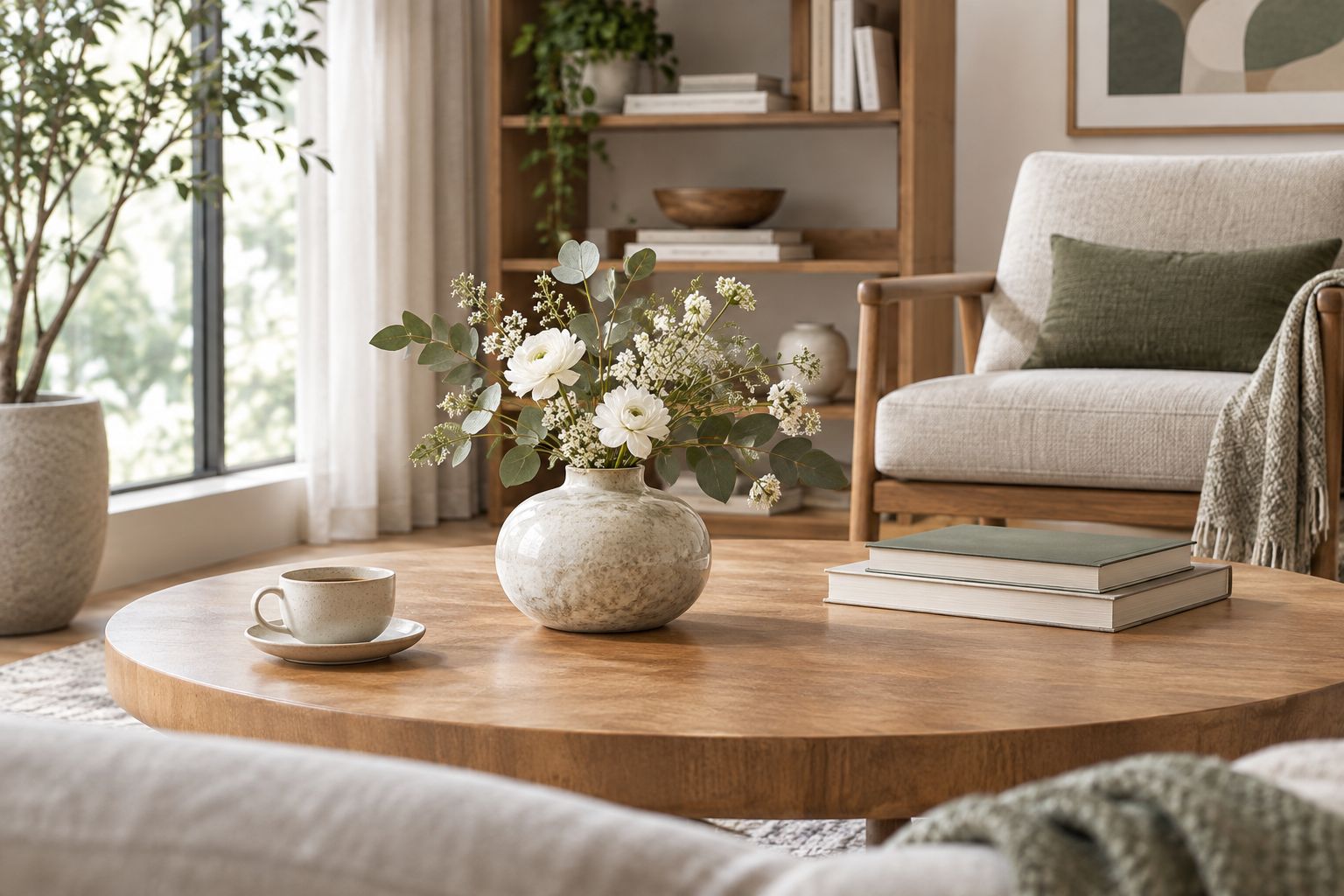
Try 2 objects first: the vase and a book. If the table still feels sparse, introduce a third piece with a different outline rather than another equally prominent vase. Treat 3 pieces as an arrangement to assess, not a decorating rule to obey.
Shelf: give the silhouette space
On a shelf, the background becomes part of the display. Position a sculptural vase against a quiet area, then stand back to check whether its outline remains visible. Leave room above any stems instead of bending them to fit the opening.
Vary the direction of nearby objects. Horizontal books beside an upright vase create contrast without requiring more colour or pattern. If the shelf feels crowded, remove an object before buying another accessory.
Water and surface care: check both objects
Read the vase’s care instructions and the furniture’s care guidance separately. A vessel suitable for water does not make every tabletop suitable for moisture. Fill and empty the vase away from the display surface, and return it with a dry exterior.
Do not assume that an unglazed interior, textured finish or decorative label establishes water suitability. Confirm the intended use before adding fresh stems.
How the vase types are ranked
This 2026 ranking prioritises everyday usability: sightlines, footprint, opening shape, cleaning access and visual balance. The low ceramic format comes first because it offers a straightforward starting point for an empty or floral coffee-table display.
Specialised formats follow their particular jobs. Clear glass favours visible fresh arrangements; bud vases favour compact displays; sculptural ceramic favours shelves. The ranking does not assign performance claims to individual products or treat material alone as proof of stability or watertightness.
Which vase should you choose?
Choose a low, rounded ceramic vase if you are undecided. It gives you a defined centrepiece without requiring a tall bouquet, and its curved outline works beside books or a tray. Confirm water suitability if you intend to use fresh flowers.
Choose clear glass when the flowers are the focus, a bud vase when space is restricted, and sculptural ceramic when the shelf needs interest without stems. Coloured glass earns its place through a connection to the room; a tall cylinder belongs where vertical clearance allows it.
Elegante is an Australian furniture and homewares retailer for readers furnishing a luxury home. For your 2026 vase selection, assess the vessel alongside the furniture rather than choosing either in isolation.
FAQ
What are the best vases for coffee table styling?
A low, rounded ceramic vase is the best default for everyday coffee-table styling. Check its footprint and the height of the complete floral arrangement from your seated position, and confirm water suitability before adding fresh flowers.
Is a glass vase better than a ceramic vase?
A glass vase is better when you want visible stems to form part of the display; an opaque ceramic vase is better when you want the vessel’s shape to take priority. Neither material alone establishes stability or suitability for holding water.
What vase should I use on a small coffee table?
Choose a compact bud vase for a small coffee table. A single-stem arrangement keeps the display restrained while leaving space for everyday use.
Can I style a vase without flowers?
Yes, a sculptural vase works as a decorative object without flowers. Choose a silhouette that looks complete on its own and leave enough space around it to see its outline.
How tall should a coffee-table vase be?
Choose a height that preserves the view across the table from your seated position. Assess the flowers as part of that height rather than judging the empty vase alone.
How do I choose a vase for a shelf?
Choose a vase whose base fits fully on the shelf and whose complete arrangement clears the shelf above. Use a sculptural shape for an empty display or an upright format where you have enough vertical space.
Can every ceramic vase hold fresh flowers in water?
No, ceramic appearance does not establish that a vase is watertight. Check the specific item’s intended use and care instructions before filling it.
One last thing
Photograph the arrangement from your usual seat before deciding it is finished. An overhead view hides the very problem that matters on a coffee table: an arrangement that interrupts the room at eye level.
If the flowers obstruct the view, shorten the arrangement or move it to a shelf. You do not need more accessories to correct a placement problem.


Comments (0)
There are no comments for this article. Be the first one to leave a message!