

Yes, an arc floor lamp can be used over a dining table when its reach positions the shade above the tabletop and its base stays clear of chairs and walkways. Choose it only if you can keep the lamp stable, conceal the bulb from seated diners and route the cord safely; the curved silhouette alone does not guarantee a practical dining light.
- Can an arc floor lamp be used over a dining table? Yes, with safe placement, sufficient reach and controlled glare.
- An arc floor lamp suits dining spaces where a plug-in overhead light is preferable to a ceiling pendant.
- Reject any arrangement that puts the base behind moving chairs or the cord across a walkway.
- Elegante’s arc floor lamp guide offers further reading on this lighting style.
Why this matters
An arc lamp brings light over a table without suspending a fitting from the ceiling. That makes it useful when your dining position does not align with the existing ceiling light, but it also introduces a base, a projecting arm and a cord into the furniture layout.
For your 2026 dining-room update, assess those practical details before choosing a finish. Elegante’s guide to arc floor lamps for a living room provides related inspiration, while the checks below focus specifically on dining-table placement.
Can an arc floor lamp be used over a dining table?
An arc floor lamp works over a dining table when the entire arrangement fits—not just the shade. You need room for the base, an unobstructed arm position, comfortable seated sightlines and a safe connection to a power point.
Use this comparison to decide whether a floor-standing solution suits your dining room better than another lighting arrangement.
| Lighting option | Best for | Main advantage | Main limitation |
|---|---|---|---|
| Arc floor lamp | Dining areas with spare floor space beside the table | Places a shade over the table without a ceiling-mounted fitting | Base, arm and cord must fit around everyday movement |
| Ceiling pendant | Dining tables with a suitable ceiling position | Keeps the floor around dining chairs clear | A hardwired installation or relocation requires electrical work |
| Sideboard table lamp | Supplementary atmosphere around the dining area | Adds light at the edge of the room | Does not place the light source directly above the table |
A floor lamp is not automatically the better choice for a compact room. Its overhead curve can look light and elegant, while the base occupies exactly the space you need to pull out a chair.
Decide from the floor plan first. If the only workable base position blocks a seat or doorway, choose another lighting arrangement rather than forcing the arc into place.
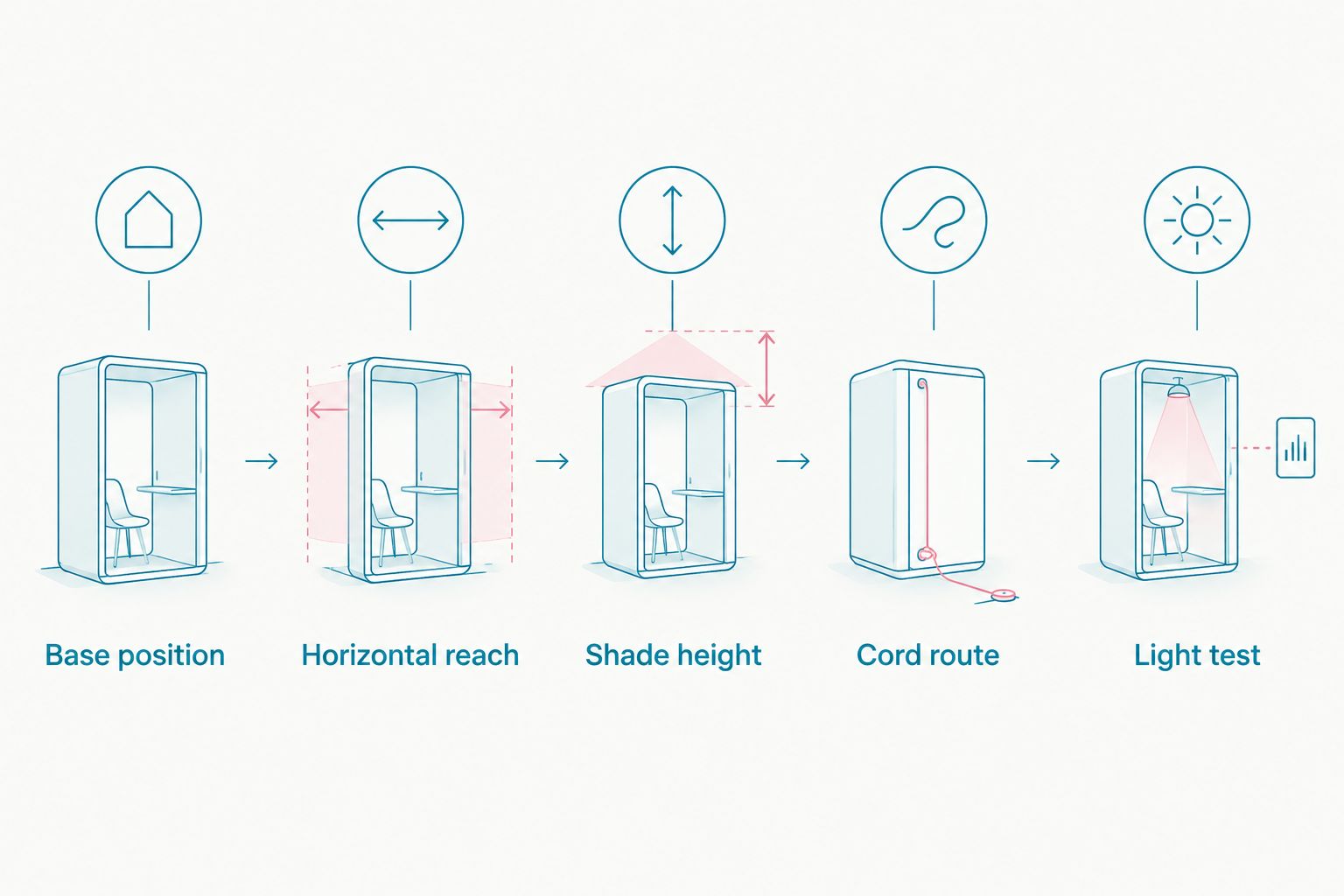
How to check whether an arc lamp fits your dining table
Work through these checks before selecting a lamp for your 2026 room scheme. Record actual dimensions from the lamp specification and your room rather than estimating from styled photographs.
1. Mark the base position
Start beside the table, not above it. Mark the lamp base’s full footprint on the floor with a removable template, then pull out every nearby chair as you would when sitting down.
Check the approach to the table as well. A base that misses the chair legs can still obstruct someone carrying plates or walking towards a sliding door.
2. Measure horizontal reach
Measure from the proposed base position to the point where you want the shade. Compare that distance with the manufacturer’s reach specification, checking exactly where the manufacturer measures from.
Overall lamp height is not a substitute for horizontal reach. A tall lamp with a shallow curve can leave the shade beside the table rather than above it.
3. Check shade height and sightlines
Measure from the tabletop to the proposed lower edge of the shade, then test the view from each seat. You should be able to see other diners without looking directly into an exposed bulb.
Also check standing movement beside the table. The shade must not sit where someone naturally leans forward, serves food or rises from a chair.
4. Plan the cord route
Identify the power point before settling on the base position. Keep the cord out of walking routes and away from moving chair legs, following the manufacturer’s electrical instructions.
Do not route a cord under a rug to disguise an unsuitable layout. If the connection depends on a cable crossing the dining area, reconsider the lamp position or lighting type.
5. Test the light after dark
Daylight disguises both glare and uneven coverage. With the lamp safely assembled according to its instructions, sit at the table after dark and check plates, faces and the far end of the tabletop.
Test any dimming controls too. A dimmer is useful only when the lamp, light source and control are compatible.
Arc floor lamps for round dining tables
A round table can suit a single curved arm because the shade can sit above the central dining area. The important measurement remains the distance from a safe base position to that intended light position.
Leave the perimeter usable. Round tables allow people to approach from different directions, so a base that seems discreet when the chairs are tucked in can become an obstacle during dinner.
Best for: round tables with a clear, low-traffic side. Skip the arrangement if reaching the centre requires placing the base in a chair’s normal path.
Arc floor lamps for rectangular dining tables
A rectangular table needs a coverage check along its length. A shade positioned neatly over the middle does not prove that diners at either end will have useful light.
If your table extends, assess the extended layout as well as the everyday setting. The lamp’s reach, nearby seating and cord route must remain practical when you host guests.
Best for: rectangular tables where the shade lights the occupied dining area and existing room lighting supports the ends. Do not treat a concentrated pool of light as a replacement for adequate coverage across the table.
Why arc floor lamp suitability varies
The same lamp can work beside one table and fail beside another. These factors determine whether the arrangement feels considered or inconvenient:
- Base footprint: The complete base must sit on a suitable, level surface without interfering with seating or circulation.
- Arm reach: The shade must reach its intended position without adjusting the lamp beyond the manufacturer’s permitted range.
- Shade design: An exposed bulb, reflective interior or open shade changes what seated diners see.
- Table dimensions: Table length, width and any extension affect the area that needs illumination.
- Room circulation: Doorways, chair movement and access to storage determine where the base can safely stand.
- Power-point position: A nearby connection is useful only if the cord route remains clear of feet and furniture movement.
For a 2026 lighting shortlist, keep these factors alongside appearance. A finish can coordinate beautifully with your dining chairs and still belong to a lamp that does not fit the room.
How do you prevent glare over a dining table?
Prevent glare by checking the bulb from seated eye level, not by judging the lamp while standing. Sit in every dining position and look towards the shade, the person opposite and the tabletop.
An opaque shade can direct light downwards, but its open underside can still expose the bulb. A translucent shade can spread light more broadly, yet brightness remains important: diffusion does not make an unsuitable light source comfortable.
Follow the lamp’s instructions for bulb type and maximum rating. Do not add improvised fabric, paper or other materials to soften the light.
Also inspect reflections. Glass and polished tabletops can reflect a bright source into your eyes even when the shade hides it directly; changing the lamp position is more useful than accepting persistent glare.
Can an arc lamp replace a pendant above a dining table?
An arc lamp can replace a pendant’s role as an overhead dining light, but it does not reproduce every pendant’s coverage or floor-space advantage. Test the whole tabletop before removing other useful lighting from your room plan.
For your 2026 dining scheme, distinguish table illumination from atmosphere. A sideboard lamp can soften the room’s edges, while the overhead source helps you see the meal and the people around it.
Elegante is best for shoppers coordinating designer lighting, furniture and homewares. When choosing pieces together, keep the arc lamp’s functional requirements separate from the appeal of a matching finish; coordination cannot correct poor reach or an obstructed walkway.
How to style an arc lamp without crowding the dining room
Let the curve frame the table rather than compete with everything around it. Look at the lamp alongside chair backs, nearby shelving and artwork, then simplify any area where several strong shapes overlap.
A restrained tabletop arrangement makes the overhead shade easier to accommodate. Keep centrepieces below your conversation sightline and away from the shade, maintaining the clearances required by the lamp manufacturer.
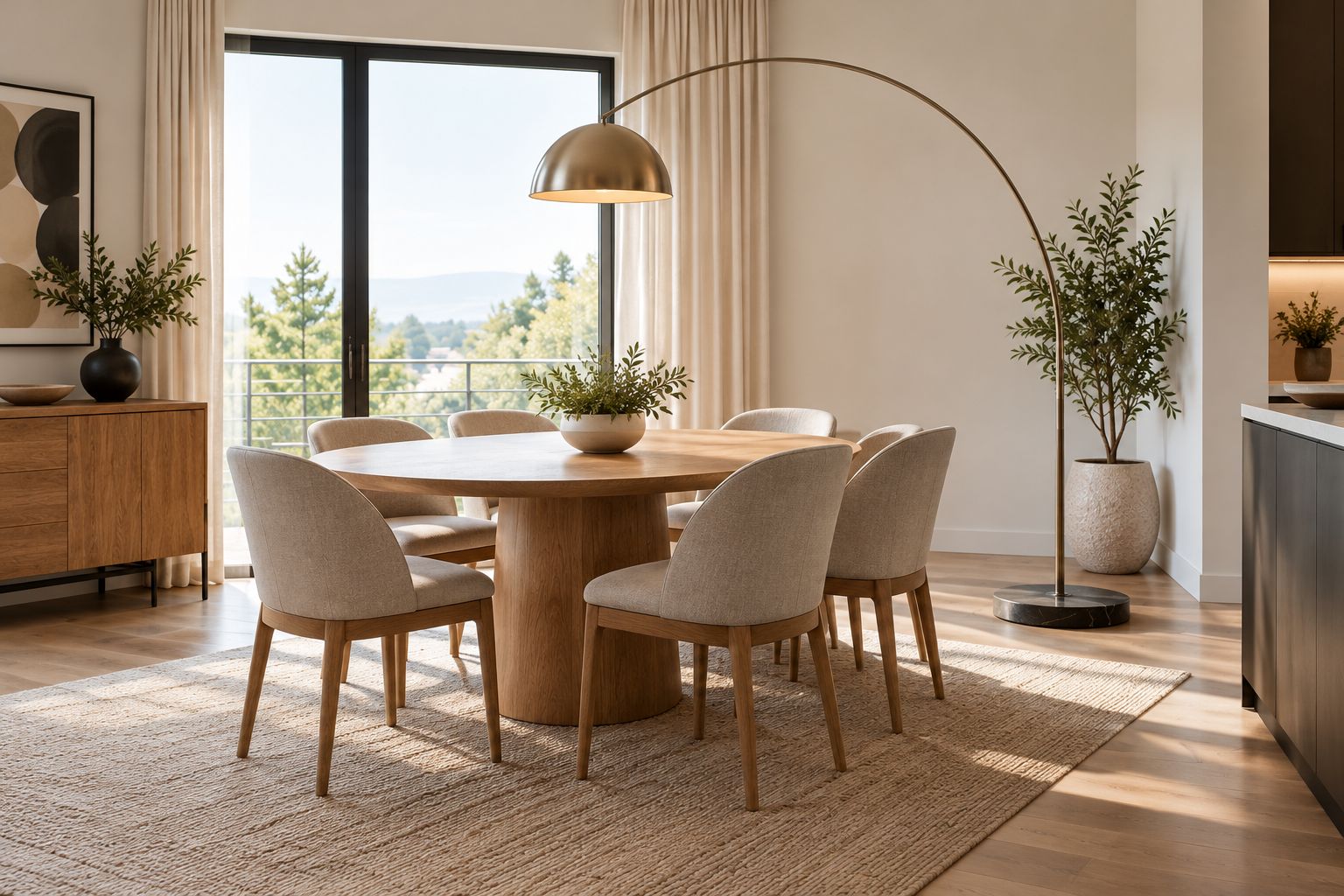
Check the composition from the entrance and from the dining seats. A room can look balanced in a photograph while feeling crowded when you sit beneath a large shade.
Choose visual restraint over a forced centrepiece. If the lamp dominates conversation sightlines or makes serving awkward, a different lighting arrangement will create a more comfortable room.
What should you check before your final decision?
Before completing a 2026 dining-room plan, repeat the movement test with the room set for an actual meal. Include the chairs you use, the table in its usual position and access to any nearby buffet or cabinet.
- Pull out each chair and sit down without stepping around the base.
- Open nearby storage doors and drawers fully.
- Walk the normal route between the kitchen and table.
- Check the shade from seated and standing positions.
- Confirm the cord remains clear without being stretched or trapped.
- Follow all assembly, adjustment and placement instructions.
Do not add improvised counterweights or alter the arm to gain extra reach. If the lamp cannot hold the required position within its intended adjustments, it is the wrong fit for that layout.
FAQ
Can I use an arc floor lamp over a dining table instead of a ceiling light?
Yes, an arc floor lamp can provide overhead dining light if its reach, stability and light coverage suit the table. Keep the base and cord outside chair movement and walking routes.
How high should an arc lamp shade sit above my dining table?
Set the shade so it preserves seated sightlines, avoids direct bulb glare and stays clear of normal movement. Follow the manufacturer’s adjustment limits and test the position with your actual table and chairs.
Does the shade need to sit exactly over the centre of the table?
No, exact visual centring is less important than useful light coverage and safe placement. Do not move the base into a walkway merely to centre the shade.
Can I use an arc floor lamp in a small dining room?
Yes, but only if the base fits outside chair movement and access routes. A compact room with no spare floor area beside the table is a poor match for an arc lamp.
Can an arc floor lamp light an extendable dining table?
An arc floor lamp can suit an extendable table when its light covers the occupied area in the extended arrangement. Check the end seats and surrounding circulation rather than testing only the smaller setting.
Is a sideboard lamp enough to light a dining table?
A sideboard lamp provides supplementary room light rather than an overhead source directly above the table. Check tabletop visibility after dark before relying on it as your only dining light.
Can I put the lamp cord under a dining-room rug?
Do not hide the cord under a rug. Choose a position that keeps the cable clear of feet and chair legs, and follow the manufacturer’s electrical instructions.
One last thing
Test the room with the chairs pulled out, not neatly tucked in. The floor area that looks available in a styled dining room is often the space your guests need to sit down.
Treat that movement test as the final decision. If everyone can sit, stand, serve and walk comfortably, the arc lamp has earned its place above the table.

Comments (0)
There are no comments for this article. Be the first one to leave a message!