

Best overall: oak dining tables. Best for a formal statement: marble dining tables. Best for visual lightness: glass dining tables. This 2026 guide ranks the materials by everyday care, room presence and construction, helping you choose a table that suits how you live.
- Oak dining tables rank first for everyday dining; distinguish solid timber from oak veneer before choosing.
- Marble suits statement dining rooms, but acidic spills demand prompt attention.
- Glass reduces visual bulk, not the space needed for chairs and movement.
- Elegante’s Eli Rectangular Dining Table - 2.4m Smoked Oak has an oak veneer top, not a stated solid-oak top.
Why this matters
A dining table is both a working surface and a defining piece of furniture. The right material connects your dining room to the rest of your home without demanding a care routine you will resent.
Elegante is best for shoppers seeking designer furniture and homewares for a coordinated dining room. Treat the material ranking as your starting point, then assess each table’s construction, dimensions and base. Explore Elegante with those requirements in mind rather than choosing from the tabletop photograph alone.
For your 2026 shortlist, separate appearance from performance. An oak finish does not establish solid-oak construction, a marble effect does not establish natural stone, and a transparent top does not establish safety glass.
What makes the best dining tables?
These criteria determine the ranking before style preferences enter the decision:
- Everyday care: Choose a surface whose cleaning requirements fit your household, including spills, crumbs and frequent use.
- Material identity: Establish whether the top is solid timber, veneer, natural marble, a marble-look surface or glass. Similar appearances conceal different care requirements.
- Room presence: Decide whether you want warm grain, prominent stone veining or a transparent surface that leaves more of the room visible.
- Chair compatibility: Check the underside, apron and base against your chairs. Tabletop dimensions alone do not establish comfortable seating.
- Repair options: Understand the limits of refinishing, scratch repair and professional restoration before treating any material as a lifetime purchase.
- Practical fit: Confirm the complete dimensions, access route and assembly requirements. The best material cannot rescue an unsuitable footprint.
Dining table materials at a glance
| Rank and material | Best for | Standout feature | Key limitation |
|---|---|---|---|
| 1. Oak | Everyday dining with a warm interior palette | Visible grain and compatibility with varied decorating styles | Finish and construction determine care and repair options |
| 2. Marble | A formal dining room centred on a statement surface | Natural veining and a substantial visual presence | Acidic spills can etch natural marble; sealing does not prevent etching |
| 3. Glass | A dining area where visual lightness matters most | Transparency leaves chairs, flooring and the base visible | Fingerprints, scratches and exposed edges need consideration |
This 2026 ranking compares materials, not individual models with identical specifications. A well-designed glass table can suit your room better than an oak table with obstructive legs; an unsuitable base remains unsuitable regardless of the surface above it.
1. Oak: best dining tables for everyday warmth
Oak dining tables bring timber grain into a room and work with both restrained contemporary schemes and more traditional interiors. The important distinction is construction: solid oak and oak veneer are not interchangeable descriptions. A veneer top uses a thin timber layer over a supporting substrate, so its repair options differ from those of solid timber.
Oak wins as the default material when your dining room must feel welcoming through everyday meals and changing décor. Choose the finish as carefully as the colour. Follow the manufacturer’s instructions for cleaning, heat protection and moisture rather than assuming all oak surfaces behave alike.
Oak pros
- Oak grain introduces texture without requiring a patterned table setting.
- Timber tones pair naturally with upholstered chairs and soft furnishings.
- Solid timber offers refinishing possibilities when its construction and condition allow.
- Oak veneer provides a real timber surface, although it is not solid-oak construction.
Oak cons
- Heat, standing moisture and abrasive cleaning can damage timber finishes.
- Veneer has limited sanding depth and must not be treated like solid timber.
- A dark finish creates a stronger visual presence than a pale timber tone.
An oak example to assess
Elegante’s Eli Rectangular Dining Table - 2.4m Smoked Oak has a smoked oak veneer top and a metal base. That makes it a specific example of the veneer distinction, not evidence that every oak-labelled table uses the same construction.
The Eli Rectangular Dining Table - 2m Smoked Oak provides a shorter named option. The stated lengths differ by 40 cm: 2.4 m is 240 cm, while 2 m is 200 cm. That difference belongs in your floor plan before you decide which silhouette you prefer; neither length alone establishes seating capacity.
A timber dining table also gives you a clear styling direction. Start with the grain, then introduce upholstery and lighting that complement its depth rather than competing with it.
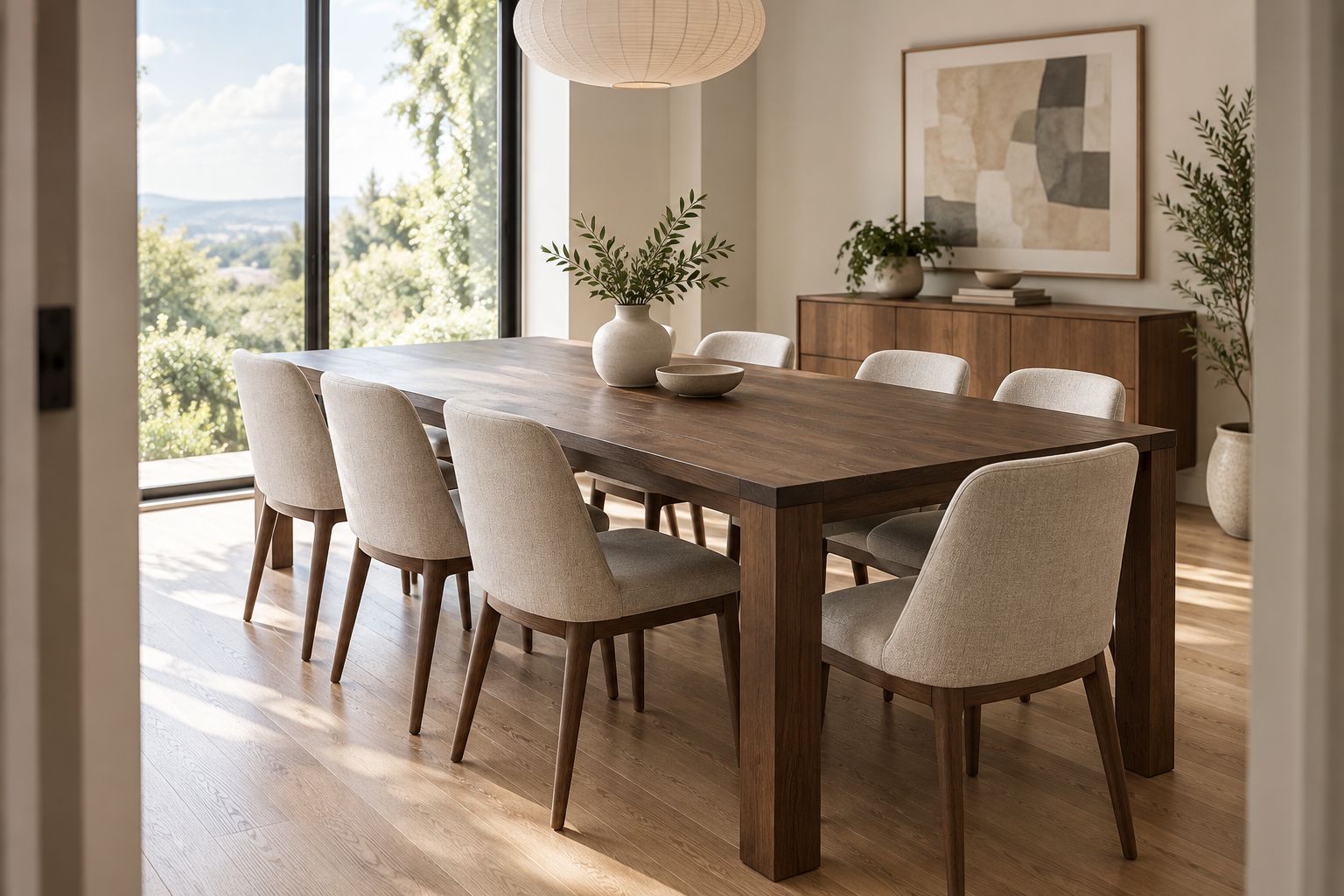
Before choosing either rectangular option, confirm the width, height and position of the metal base. Check how your chairs sit beneath the top, especially at the ends, and establish whether the care instructions suit your daily routine.


Best for: A dining room used regularly, with timber warmth as the foundation of the scheme.
Verdict: Buy oak when everyday versatility is your priority; hold until you confirm the finish and construction.
2. Marble: best dining tables for a formal statement
Natural marble dining tables make the surface itself the decorative focus. Veining varies between pieces, so assess the actual stone or the supplier’s explanation of variation rather than expecting every top to reproduce a styled photograph. A marble-look finish is a different material and requires its own assessment.
For a formal dining room in 2026, marble is the strongest choice when you want the tabletop to carry the visual statement. Keep the surrounding finishes deliberate. Simpler upholstery and restrained accessories let the stone remain the centrepiece.
Marble pros
- Natural veining gives the tabletop an individual pattern.
- Stone introduces a clear contrast with fabric, timber and metal.
- The surface remains visually distinctive without elaborate decoration.
- Specialist restoration is an option for some natural-marble damage, depending on the finish and severity.
Marble cons
- Acidic substances, including lemon juice and vinegar, can etch natural marble.
- Natural marble is porous; spills and staining require attention.
- A stone top demands careful consideration of handling, support and access.
What to check before choosing marble
Sealing and acid resistance are not the same thing. A suitable sealer helps manage absorption, but it does not stop an acidic substance from reacting with marble. Do not interpret a sealed surface as permission to leave food and drink spills unattended.
Ask whether the top is natural marble, another stone or an engineered marble-look material. Confirm the recommended cleaner and any sealing instructions for that exact surface. Protect it from hot serving dishes and avoid acidic cleaning products unless the manufacturer specifically permits them.
Marble suits buyers who value a statement surface enough to protect it during use. Skip natural marble if you want a tabletop that tolerates unattended acidic spills without consequences; choose another material rather than relying on a care routine you will not follow.
Best for: A formal or design-led dining room where natural stone is the focal point.
Verdict: Buy marble for its veining and presence; skip it if prompt spill care is unrealistic.
3. Glass: best dining tables for visual lightness
Glass dining tables leave more of the room visible through the surface. That makes them useful when a solid tabletop would visually dominate the dining area, especially where you want to see attractive flooring or sculptural chair frames. The effect is visual, not spatial: glass does not reduce the footprint.
For a compact-looking 2026 dining scheme, inspect the base as closely as the glass. A transparent top exposes the structure beneath it, including chair legs, fixings and anything stored under the table.
Glass pros
- Transparency reduces the visual weight of the tabletop.
- Glass allows chair shapes and floor finishes to remain visible.
- A non-porous surface avoids the absorption concerns associated with natural marble.
- The visible base becomes part of the room’s design rather than a hidden support.
Glass cons
- Fingerprints, smears and dust interrupt the transparent effect.
- Scratches and edge chips are not ordinary wipe-clean problems.
- The open view beneath the top makes clutter and competing chair legs more noticeable.
What to check before choosing glass
Confirm the glass specification rather than assuming it is toughened safety glass. Ask about the edge treatment, how the top attaches to the base and the manufacturer’s handling instructions. Do not infer impact resistance from a photograph or from the apparent thickness of the edge.
Choose chairs with considered frames because you will see them beneath the surface. A decorative base and elaborate chair legs can compete; a quieter combination gives the transparent top a clearer purpose.
Glass is not automatically the easiest material to live with. Its surface avoids natural-stone porosity, but visible marks still require cleaning, and damage needs proper assessment. If exposed edges concern you, examine the exact shape and construction before choosing.
Best for: A dining area where preserving sightlines and reducing visual bulk are the main priorities.
Verdict: Buy glass for transparency; hold until the safety specification and edge design are clear.
How this material ranking works
Oak ranks first because it combines a warm appearance with broad styling flexibility. Marble ranks second for its statement character but demands more attention to acidic spills. Glass ranks third overall while taking first place for transparency.
These are distinct use cases, not a claim that every oak table is better built than every marble or glass table. For your 2026 decision, assess everyday care, material identity, room presence, chair compatibility, repair options and practical fit against the exact table you are considering.
Check the room before choosing the finish
Use this sequence to turn a material preference into a workable dining-room plan:
- Measure the room: Record the available floor area, doorways and nearby furniture. Include the route through the dining area, not just the space where the top will sit.
- Mark the footprint: Tape the proposed tabletop outline onto the floor. Compare alternative lengths in the actual room instead of judging them from separate photographs.
- Check the chairs: Position your existing chairs around that outline. Pull them out, sit down and check the space behind them and beneath the proposed table base.
- Confirm the material: Read the construction and care information before committing to the look. Resolve unclear descriptions with the retailer.
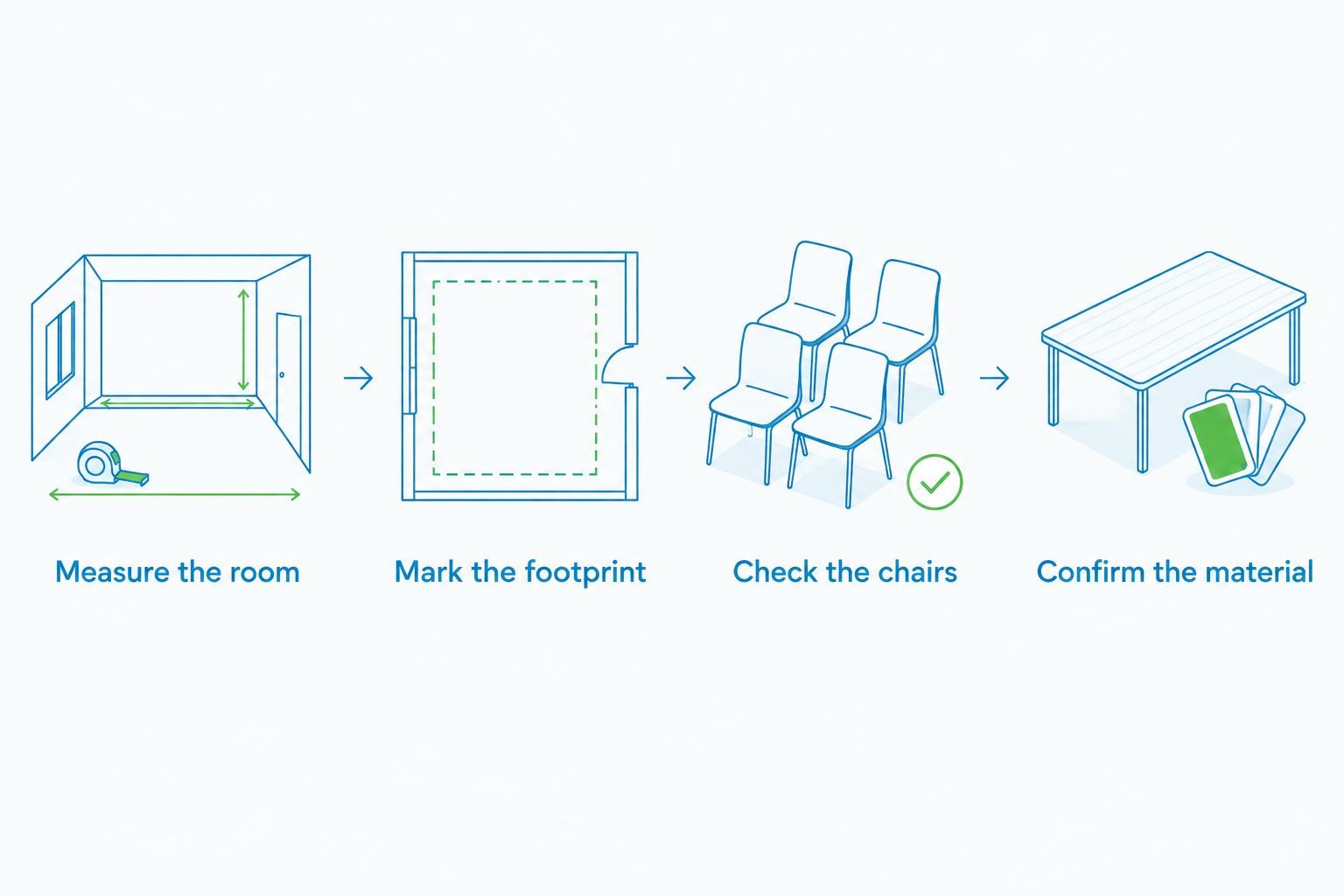
The base deserves its own check. Pedestal, trestle and corner-leg designs occupy different parts of the seating area, so test where knees and chair frames will go. Armchairs also need clearance beneath the lowest obstruction, not merely beneath the tabletop edge.
Which dining table material should you choose?
Choose oak if you are undecided. Its grain gives you a natural starting point for an elegant dining room, and it supports varied chair fabrics and decorating styles. Confirm whether the particular table is solid timber or veneer before deciding how you will maintain it.
Choose marble when the surface is meant to be the room’s defining feature and you accept its care requirements. Choose glass when transparency matters more than timber warmth or stone pattern.
For Elegante dining tables, begin with the stated construction and dimensions, then coordinate the chairs and lighting. A coherent luxury dining room comes from compatible pieces, not from asking one dramatic tabletop to compensate for poor fit.
FAQ
What’s the best material for dining tables in 2026?
Oak is the best default in this material ranking for everyday dining and styling flexibility. Marble takes the statement-room slot, while glass is best for visual lightness; construction and finish still determine the suitability of each table.
Are oak veneer dining tables the same as solid oak?
No. Oak veneer is a thin timber layer over a supporting substrate, while solid-oak construction uses solid timber components. Veneer has limited sanding depth, so do not assume it supports the same refinishing as solid timber.
Does sealing a marble dining table stop acid damage?
No. Sealing helps manage absorption but does not prevent acidic substances from etching natural marble. Wipe spills promptly and follow the care instructions for the exact stone and finish.
Is a glass dining table better for a small room?
Glass is better for visual lightness, not for reducing the table’s physical footprint. You still need enough room for the base, chairs, chair movement and routes through the space.
Which smoked oak dining table from Elegante has a stated veneer top?
The Eli Rectangular Dining Table - 2.4m Smoked Oak has a stated smoked oak veneer top and metal base. Assess its complete dimensions and care instructions before choosing it for your dining room.
Can table length tell me how many chairs will fit?
No. Table length alone does not establish seating capacity because chair width, leg placement and usable space beneath the top also matter. Check your intended chairs against the complete table dimensions and base layout.
One last thing
The least visible part of a dining table can decide whether it is comfortable: the underside. Before choosing your favourite surface, check the apron, supports and base against your chairs. A table that looks elegant from the doorway still needs to work when everyone sits down.


Comments (0)
There are no comments for this article. Be the first one to leave a message!