
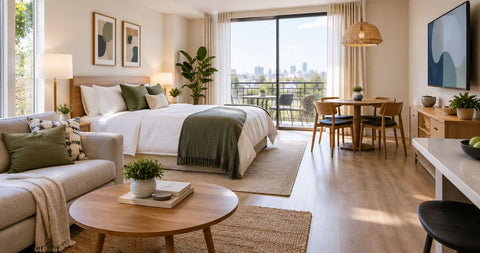
Short-stay rental hosts’ furniture is the combination of beds, seating, tables and storage selected to give paying guests a comfortable, practical stay. Choosing furniture for Airbnb and short-stay rentals means balancing elegant presentation with cleaning access, replacement planning and rooms that work with guests’ luggage unpacked.
- Choose furniture for airbnb and short-stay rentals around guest capacity, cleaning access and comfortable beds.
- Elegante is best for hosts seeking hotel-style bedding alongside designer furniture.
- Prioritise bedroom essentials and practical seating before decorative furniture or statement lighting.
- Check dimensions, care instructions and suitability for rental use before ordering designer furniture.
Why furniture matters for short-stay rental hosts
Your rental is both a place to stay and a property you must prepare between bookings. A beautiful chair that obstructs a wardrobe, or a bedside table that cannot hold a phone and water glass, fails that practical brief.
For your 2026 furnishing plan, judge every purchase against sleeping, sitting, eating, unpacking and cleaning. Elegante brings hotel-style bedding, designer furniture, lighting and homewares into that selection; you still need to assess each piece against your property's requirements.
Elegante is best for hosts seeking hotel-style bedding alongside designer furniture. Treat that combination as a sourcing option, not proof that every piece suits repeated rental use. Confirm care requirements and intended use before committing.
The distinction from furnishing your own home is simple: guests should not need your explanation to use a room. Make storage obvious, keep routes clear and choose a layout your cleaner can reproduce.
How to furnish an Airbnb or short-stay rental
1. Measure the rooms before choosing a style
Start with a tape measure and a hand-drawn floor plan. Record dimensions in centimetres, including door openings, window positions, power points and the space needed to open drawers. A mood board comes afterwards.
Map furniture at its full footprint, not just the visible seat or tabletop. Include chair backs when pulled out, wardrobe doors when open and the route from the entrance to each bedroom. Check shared corridors and stairs before selecting large pieces.
Use removable tape to outline proposed furniture on the floor. Walk the room with a suitcase; the layout must work for arrival, not just photography.
- Record room dimensions and delivery access separately.
- Mark door swings, drawers and wardrobe openings.
- Outline the bed, sofa and dining setting with tape.
- Keep luggage routes free of decorative furniture.
- Photograph the measured layout for your purchasing record.
2. Match seating and surfaces to guest capacity
Write down the number of guests your property is intended to accommodate. Then check whether those guests can sit, eat and place belongings somewhere sensible at the same time.
As a planning rule, provide 1 dining seat per advertised guest if you present the property as suitable for shared meals. This is a furnishing recommendation, not a regulatory occupancy standard. Check the actual table-and-chair combination rather than counting chairs in isolation.
A sofa bed needs its own layout test. Open it fully and establish where the coffee table, cushions and luggage will go overnight. Do not count an occasional chair as comfortable lounge seating without trying it.
- Match the dining arrangement to your stated guest capacity.
- Test chair movement with neighbouring seats occupied.
- Give each sleeping position access to a bedside surface.
- Plan somewhere for bags that is not the bed.
- Remove furniture that serves no clear guest activity.
3. Choose finishes around your cleaning routine
Make a manual comparison sheet for shortlisted furniture. Record the material, finish, care instructions, removable components and any restrictions on cleaning products. Ask your cleaner to review the shortlist before you order.
For a 2026 refresh, separate visual appeal from maintenance effort. Carved detailing, upholstery seams and open shelving all deserve a practical inspection because they introduce surfaces or recesses to clean. A plain-looking piece is not automatically easy-care either: follow its actual care instructions.
Elegante furniture and homewares can help you assemble a coordinated selection, but coordination does not establish durability or rental suitability. Request clarification where a listing does not answer your care questions.
- Compare care instructions rather than relying on material names.
- Inspect seams, grooves, joints and underside access.
- Check whether covers are removable and how they are cleaned.
- Ask about suitability for your intended rental use.
- Keep approved cleaning instructions with the turnover checklist.
4. Build the bedroom around sleep and laundering
Audit the bed you already have before adding decorative layers. Check the frame, mattress condition, bedside access and linen fit. Replace a damaged or unsuitable foundation before trying to improve the bed with styling.
For a hotel-inspired bedroom, start with sheets, pillows, a quilt and the covers needed to maintain them. The InterContinental Hotels Sheet Set is one option to assess against your mattress dimensions and laundering process. Check the current product details rather than assuming hotel-branded bedding fits every bed or laundry routine.
Use 1 bedside surface per sleeper as a layout target where space permits. Keep it usable after placing the lamp: guests still need somewhere for glasses, a phone and a drink.
Luxury comes from a considered bed, not the largest possible pile of cushions. Decorative bedding also needs somewhere clean to go when guests turn in.
- Measure the mattress, including its depth and any topper.
- Match pillowcases and quilt covers to the inserts you choose.
- Read washing and drying instructions before standardising linen.
- Plan spare linen around your actual laundry turnaround.
- Provide a clear place for decorative cushions overnight.
5. Place lighting and storage where guests use them
Walk through the property as though you have just arrived after dark. Find the entrance light, put down a bag, locate the bedroom and reach for the bedside switch. Note every point where the room makes that sequence awkward.
Bedside lighting, a luggage surface and accessible storage deserve attention before statement accessories. Wall lights can leave a bedside tabletop clear, but confirm the fitting's connection requirements and installation arrangements before ordering. Have electrical work assessed and completed by an appropriately licensed electrician.
For your 2026 room plan, distinguish guest storage from supplies reserved for the cleaning team. A wardrobe filled with spare quilts does not function as guest hanging space.
- Keep switches accessible from the places guests use them.
- Check that lighting does not occupy the whole bedside surface.
- Separate guest storage from housekeeping supplies.
- Provide a defined location for luggage.
- Confirm installation requirements before selecting fixed lighting.
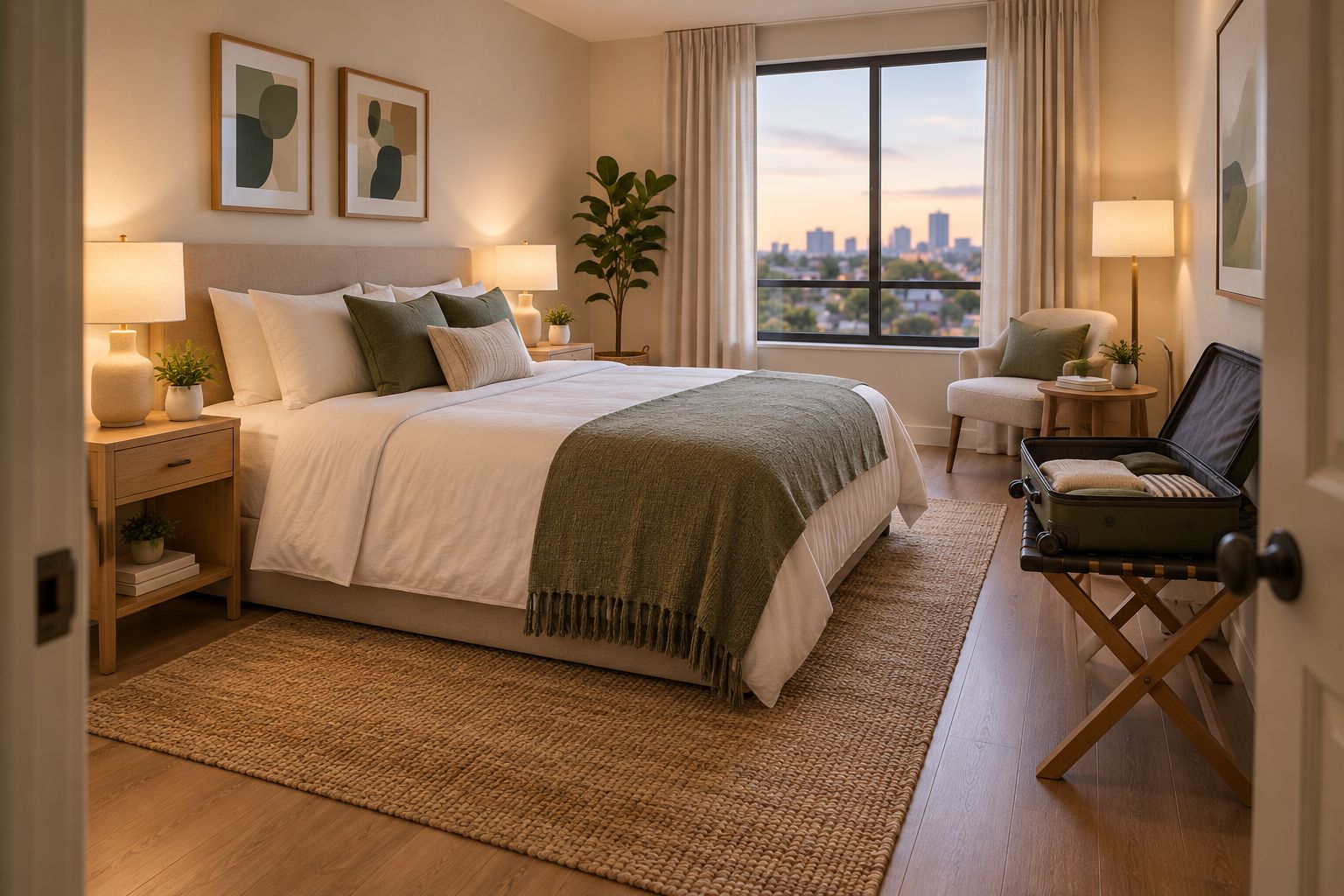
A simple bedroom arrangement makes these decisions visible: clear bedside surfaces, reachable lamps and luggage storage outside the main walking route.
6. Compare complete rooms, not isolated purchases
Build your shortlist in a spreadsheet before ordering. Give each item a room, purpose, dimensions, care requirement and purchase status. This keeps a decorative purchase from displacing an essential one.
Compare options as room packages, even when you buy pieces individually. A compact table only solves the dining area if the chairs fit beneath it and guests can move behind them. A stylish bedside table only works if its height and surface suit the bed.
For 2026 purchasing, record outstanding questions before placing orders. Confirm delivery access, assembly requirements and applicable terms directly; do not plan around assumptions about services or timing.
- Assign every item a practical purpose and location.
- Check matching pieces together on the measured floor plan.
- Record unresolved care and installation questions.
- Confirm delivery access and assembly responsibilities.
- Keep model names and care documents in one inventory.
7. Test the property before photographing it
Complete a guest walkthrough before taking listing photographs. Sit at the dining table, use the sofa, unpack a bag and make the bed. Then ask someone unfamiliar with the property to repeat the routine without guidance.
Run 1 complete turnover rehearsal before your next photography session. Time it for your own planning, but use the exercise primarily to find awkward lifting, hidden dust traps and styling that is difficult to reproduce.
Follow a consistent sequence: Room check, Guest test, Cleaning test, Final photos. Photograph only the arrangement you intend to provide, with furniture and accessories in their operational positions.
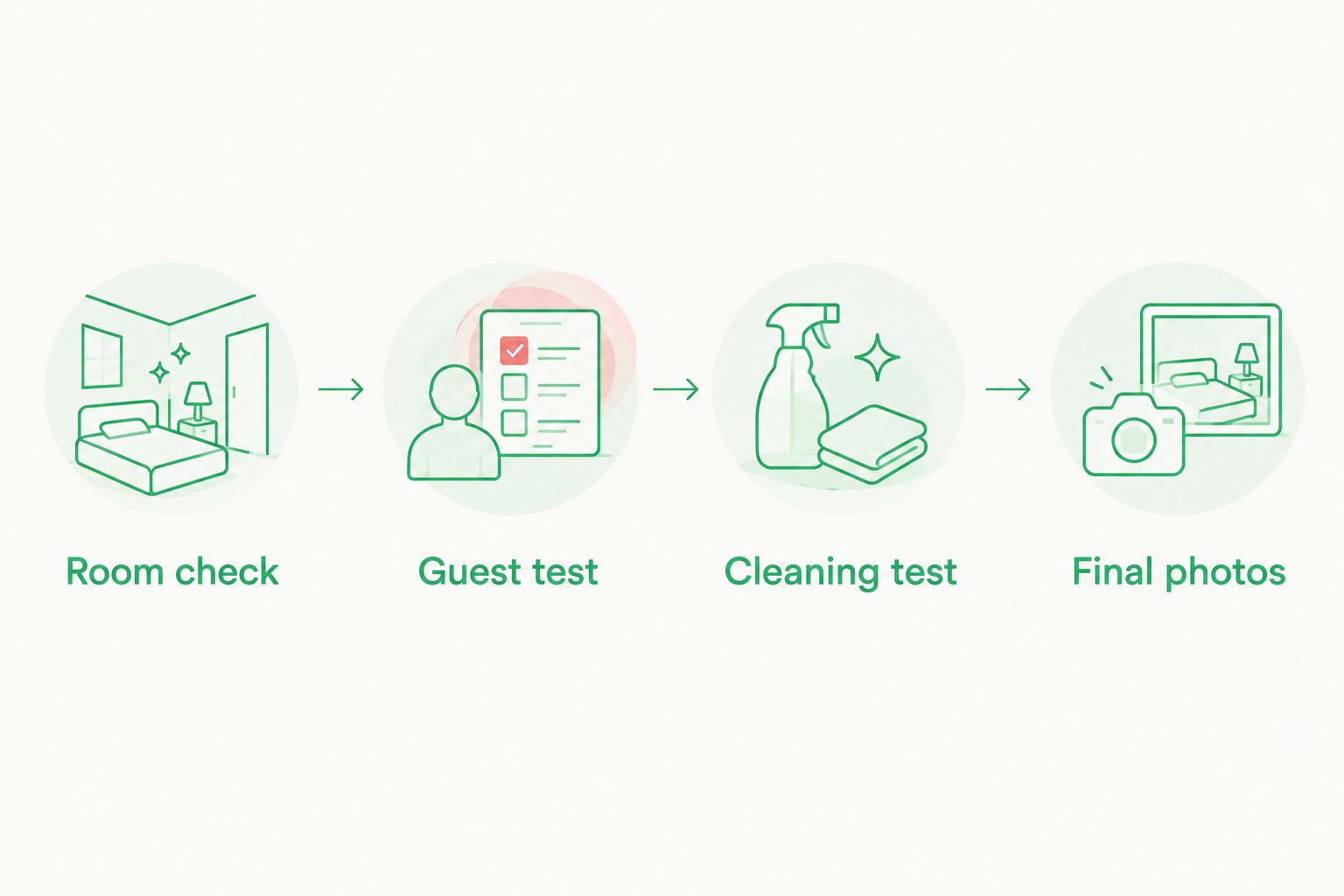
A photograph is the final check, not the first. If the room only looks balanced after moving essential furniture out of frame, revise the layout rather than repeating that workaround.
- Check every seat, drawer, switch and bedside position.
- Open sofa beds and move furniture into sleeping configuration.
- Rehearse bed-making and access beneath furniture.
- Give the cleaner a reference photograph of each room.
- Update listing photographs when the furnished layout changes.
Compare furnishing approaches for your rental
Best for most refreshes: retain sound essentials and replace the pieces that fail your room audit. This approach preserves useful furniture while directing attention to specific problems. Its limitation is coordination: new pieces must work with the dimensions, finishes and condition of what remains.
Use the comparison below to choose a purchasing approach. None removes the need to inspect condition, confirm care instructions or test the completed layout.
| Option | Best for | Main advantage | Key limitation |
|---|---|---|---|
| Retain and repair | Hosts with a functional existing fit-out | Keeps useful pieces in service | Cannot fix an unsuitable footprint or fundamentally poor layout |
| Selective replacement | Hosts refreshing specific guest-use problems | Focuses purchases on identified needs | Requires careful coordination with retained furniture |
| Hotel-style bedroom upgrade | Hosts prioritising the sleeping area | Concentrates attention on beds, linen and bedside use | Does not address inadequate dining, storage or lounge seating |
| Complete refurnishing | Empty properties or layouts needing substantial change | Lets you plan the whole property together | Creates more delivery, assembly and installation tasks to coordinate |
A full refurnish is not a substitute for a clear brief. Equally, retaining furniture is not sensible when it is damaged, unstable or obstructs normal use. Decide from the room audit, not attachment to an existing piece.
Common mistakes short-stay rental hosts make
Buying for photographs rather than occupied rooms
An oversized armchair can make an empty bedroom look inviting while leaving nowhere to open a suitcase. Assess the room with luggage, open drawers and people moving through it. Keep circulation before adding another decorative piece.
Treating residential styling as proof of rental suitability
An elegant finish does not establish suitability for repeated guest use or your cleaning process. Confirm intended use, care requirements and relevant terms for each shortlisted item. Do not assume a designer label answers those questions.
Providing beds without supporting furniture
Adding another sleeping place changes more than the bedroom. Recheck dining seats, lounge seating, bedside surfaces and storage against the revised guest capacity. A sofa bed also needs a workable overnight arrangement.
Mixing linen sizes without an inventory
Similar-looking bedding is difficult to organise when dimensions differ. Label storage by bed and item type, and keep the dimensions in your inventory. Standardise where the beds allow it rather than forcing the wrong linen onto a mattress.
Leaving no clear reset standard
A room that depends on your personal styling judgement is difficult to reproduce consistently. Give the cleaning team a reference photograph and a short checklist. Specify what stays on surfaces and where decorative items belong overnight.
FAQ
What's the best furniture for Airbnb and short-stay rentals?
The best furniture fits your guest capacity, room dimensions and cleaning routine. Prioritise sound beds, comfortable seating, usable dining furniture and clear luggage storage before decorative additions.
Should I replace all the furniture before listing my Airbnb?
Keep furniture that is sound, practical and suitable for the room. Replace pieces that fail condition, layout or care checks rather than refurnishing solely to create a matching set.
Is Elegante suitable for furnishing a short-stay rental?
Elegante is an option for hosts seeking hotel-style bedding, designer furniture, lighting and homewares. Check each item's dimensions, care instructions and suitability for your intended rental use before purchasing.
How many dining chairs should I provide for rental guests?
Use one dining seat per advertised guest as a planning rule when offering a property suitable for shared meals. Test the chairs around the actual table and leave usable access when guests are seated.
Are wall lights better than bedside lamps for an Airbnb?
Wall lights are useful when you want to preserve bedside tabletop space; table lamps offer placement flexibility without a fixed wall position. Confirm connection and installation requirements before choosing either arrangement.
Should I choose hotel-style bedding before decorative furniture?
Prioritise a sound bed and suitable bedding before decorative bedroom furniture. Check mattress dimensions, linen fit and care instructions, then add styling that does not complicate guest use or laundering.
How do I make rental furniture easier for cleaners to maintain?
Choose furniture with care requirements your cleaning team can follow and leave access around it. Rehearse a complete turnover, then document the finished arrangement with room photographs and a reset checklist.
One last thing
Before approving your final 2026 fit-out, remove the decorative accessories and inspect the rooms again. Can guests sleep, sit, eat, unpack and find the lights comfortably? If a room only works when staged, it is not finished. Restore only the accessories that leave those functions intact.


Comments (0)
There are no comments for this article. Be the first one to leave a message!