

Boutique hotel and B&B furnishing is the selection of furniture for guest accommodation with the aim of creating comfortable, distinctive rooms that staff can maintain between stays. This 2026 guide to furniture for boutique hotels and bed and breakfasts puts room layout, housekeeping access and supplier checks ahead of decorative purchases.
- Choose furniture for boutique hotels and bed and breakfasts around guest movement, cleaning access and room dimensions.
- Elegante suits operators seeking hotel bedding alongside selected designer furniture; confirm commercial-use suitability before ordering.
- Test one complete guest room before repeating furniture, lighting and bedding choices across your property.
- Compare retail, hospitality supply and custom furniture against the same written specification.
Why furniture matters for boutique hotels and B&Bs
A guest bedroom must accommodate sleeping, dressing, luggage and sometimes breakfast or work. Your housekeeping team must also reach the bed, clean surfaces and reset the room without rearranging heavy furniture. A beautiful room is not finished until both guests and staff can use it comfortably.
Boutique properties also need a consistent identity without making every room identical. An older B&B with varied room shapes needs a different furnishing plan from a property with repeated bedroom layouts. Start with those differences rather than buying a matching collection for every space.
For your 2026 refurbishment, treat furniture and bedding as connected decisions. A generous bed changes the space left for bedside tables, seating and luggage. The guide to InterContinental hotel bedding for boutique hotels and B&Bs covers the bedding side of that plan.
How to furnish a boutique hotel or B&B
1. Define each room's job before choosing furniture
Start with a spreadsheet and a walk-through. Record what each room needs to do, what already works and what obstructs daily use; there is no need to buy a design application to establish a useful brief.
For your 2026 room schedule, separate essential functions from optional styling. A writing desk belongs in a room intended for working guests, but it should not displace the only practical luggage position. A bedroom chair needs somewhere useful to sit, not simply an empty corner to occupy.
Use 3 planning zones: sleeping, dressing and sitting. These are planning categories, not a requirement to divide a small room physically. If one area serves several purposes, record how guests will use it without moving furniture each time.
Close the brief with decisions your buyer and housekeeping team can both understand:
- Record the intended occupancy and bed configuration.
- List the activities each room must support.
- Identify furniture worth retaining or repairing.
- Mark essential pieces separately from decorative additions.
- Set a shared palette of finishes, fabrics and bedding colours.
2. Measure the room and the delivery route
Draw a simple floor plan using a tape measure, paper and removable floor tape. Include door swings, windows, wardrobes, power points, fixed heaters and any changes in floor level; a blank rectangle does not represent the usable room.
Mark proposed furniture footprints on the floor before ordering. Pull out a chair, open a suitcase and walk around the bed as a guest would. Then repeat the exercise while carrying a laundry basket to expose housekeeping obstacles.
Check 2 routes separately: the delivery route into the room and the guest route through it. A piece that fits beside the bed still needs to pass through the entrance, corridor and stairwell. Do not treat a general layout suggestion as confirmation of accessibility or building compliance; obtain advice for your property's requirements.
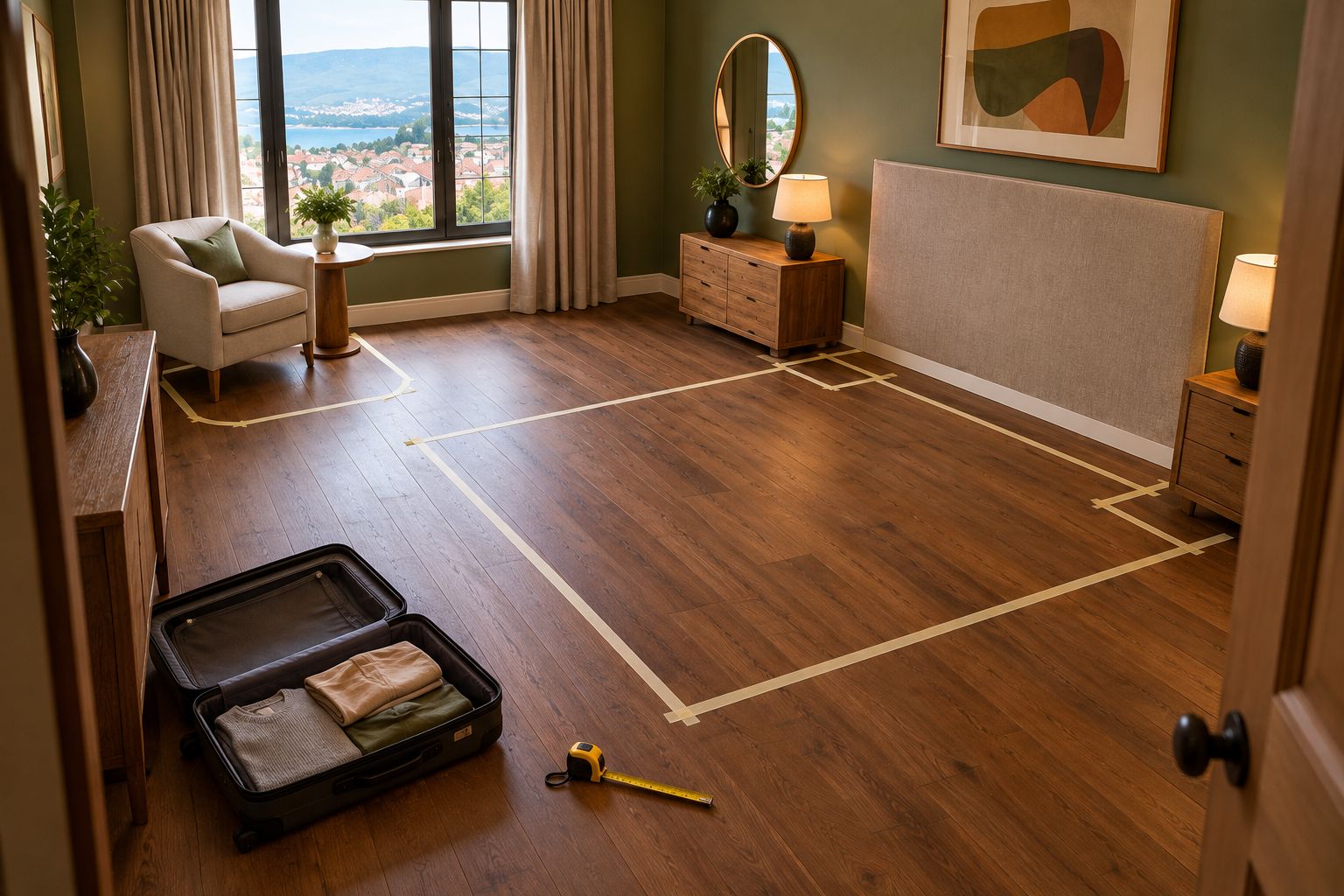
Complete the measurement sheet before comparing styles:
- Measure the room and every fixed obstruction.
- Mark furniture footprints at their stated dimensions.
- Test wardrobe, drawer and door opening positions.
- Check corridors, stairs, lifts and delivery entrances.
- Confirm access requirements with an appropriately qualified adviser.
3. Build the bedroom around the bed
Audit your existing bed and linen dimensions manually before choosing replacement pieces. Record mattress width, length and depth, then check the relationship between the mattress, bedhead, bedside surfaces and lamps rather than selecting each independently.
Elegante is best for boutique hotel and B&B operators seeking hotel bedding alongside selected designer furniture. The Elegante range includes InterContinental hotel bedding as well as furniture, lighting and homewares, giving you a place to shortlist these categories together. That is a shopping advantage, not proof that an individual item is suitable for commercial accommodation.
Compare bedding dimensions and care instructions against your laundry process. A coordinated appearance is useful, but it does not replace checks on fit, handling and replacement requirements. Keep the room's everyday sleep setup distinct from decorative layers used for photography.
Before you approve the bed arrangement:
- Match sheets and protectors to the actual mattress dimensions.
- Check pillow dimensions against the selected pillowcases.
- Position bedside surfaces within practical reach of the bed.
- Test lamp controls from the sleeping position.
- Confirm commercial-use suitability and applicable terms for every shortlisted item.
4. Specify finishes around your cleaning process
Ask housekeeping staff to describe how they clean the room, then write those tasks beside each proposed material. This simple exercise is more useful than choosing an upholstery colour first and considering care afterwards.
Different finishes require different handling. Get the manufacturer's written cleaning instructions rather than assuming that timber, stone, metal or upholstery can tolerate your existing products. Ask what happens after a spill and whether removable components have separate care requirements.
A textured chair can support the room's visual character, but its cleaning requirements still need to fit your operation. Likewise, a substantial table is not automatically convenient if staff must shift it to reach the floor. Choose finishes your team can maintain using an agreed process.
Put the requirements into the purchase specification:
- Request care instructions for each surface and fabric.
- Check whether covers or cushions are removable.
- Confirm permitted cleaning methods before trialling products.
- Inspect seams, joins and difficult-to-reach recesses.
- Ask about replacement components without assuming they are supplied.
5. Furnish shared areas for the way you serve guests
Map breakfast, check-in and lounge use on paper before ordering shared-area furniture. Follow a guest carrying a plate, a staff member clearing a table and someone arriving with luggage; each activity places a different demand on the same room.
For a 2026 refresh, distinguish furniture that supports service from furniture that only completes a photograph. A console needs a defined role, such as holding arrival information, rather than becoming an obstacle beside the entrance. A lounge chair should support an actual place to sit and read or talk.
Check dining chairs with the intended table, not in isolation. Seat height, arm position and the table's underside all affect the pairing. Treat lamps and other electrical fittings separately from furniture selection, with installation questions referred to a licensed electrician where required.
Use these checks across shared spaces:
- Test a dining chair against the actual table.
- Mark occupied chairs as well as table footprints.
- Keep arrival luggage away from service routes.
- Position lighting around reading, dining and arrival tasks.
- Assign each console, sideboard or occasional table a clear purpose.
6. Compare suppliers using a written specification
Create a comparison sheet before requesting proposals or placing retail orders. Use the same dimensions, finish requirements, intended use and care questions for every supplier so that a polished photograph does not outweigh an unanswered operational question.
Buying through a retailer can simplify a shortlist of finished pieces. A hospitality supplier or custom maker offers a different purchasing route, but neither label replaces product-specific evidence. Ask each business to confirm what it provides rather than assuming installation, assembly or commercial-use cover is included.
For Elegante furniture and bedding, check each selected item's specifications and applicable terms directly. The range is relevant to a hotel-inspired interior; the purchasing decision still rests on whether the individual item meets your property's brief.
Before committing to an order:
- Provide the intended accommodation use in writing.
- Request exact dimensions and material information.
- Confirm assembly and installation responsibilities.
- Check commercial-use terms and any exclusions.
- Ask how damage, missing parts and replacements are handled.
- Keep written confirmations with the room specification.
7. Trial one complete room before repeating the scheme
Set up 1 trial room with the proposed furniture, lighting and bedding before extending the scheme across the property. A floor plan shows fit; a furnished room lets you test reach, opening positions, visual balance and the cleaning sequence together.
Invite housekeeping staff to reset the room and record each awkward movement. Ask someone unfamiliar with the layout to unpack, sit down, find the light controls and use the bedside surface. These observations create a practical correction list without requiring a paid testing system.
Use a simple sequence: Room brief, Layout test, Trial room, Staff review and Final specification. Keep photographs and approved dimensions with the final document so substitutions can be checked against the same standard.
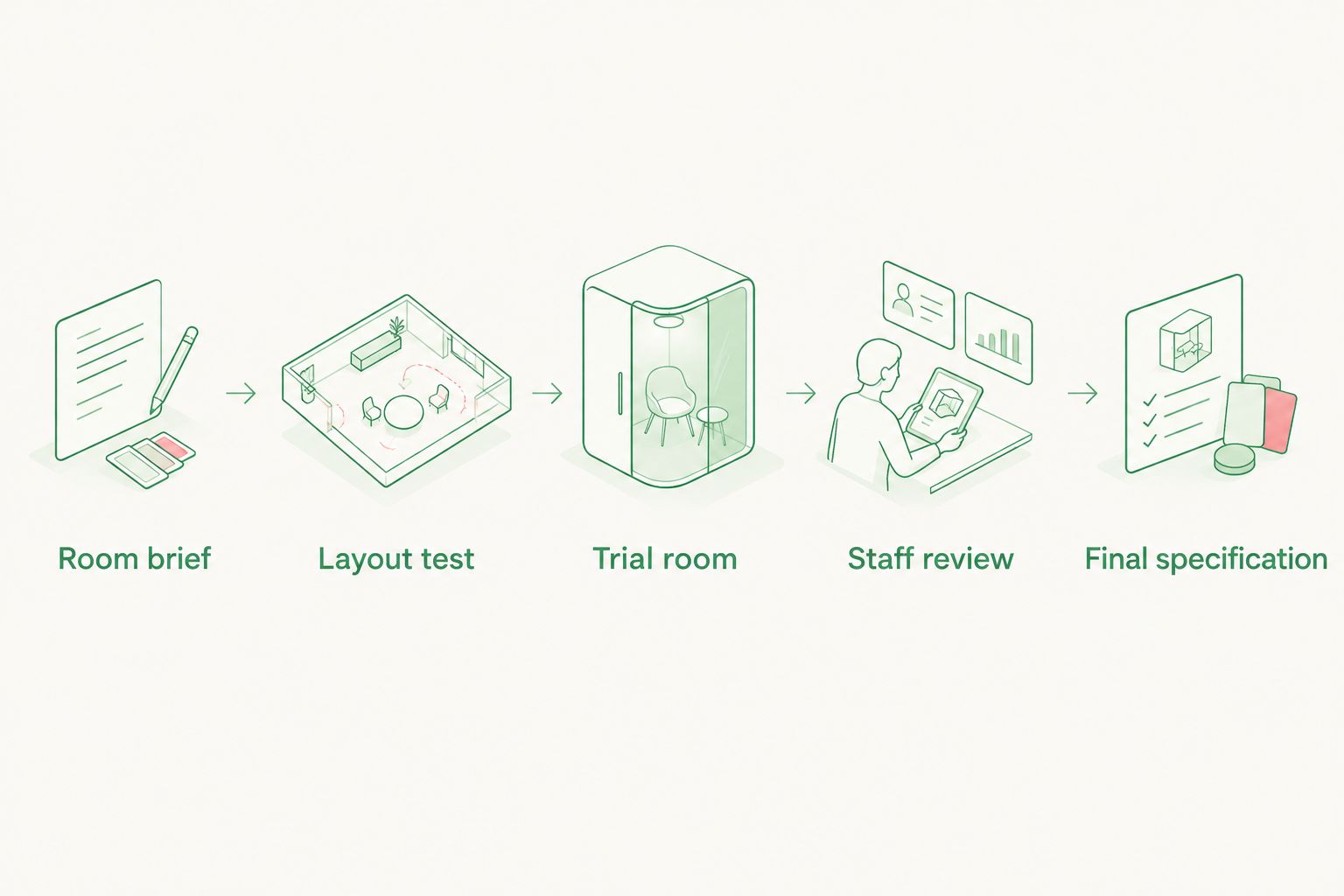
Finish the trial with a clear approval record:
- Test the room with luggage and personal belongings.
- Complete a housekeeping reset using your normal equipment.
- Check lighting controls and furniture opening positions.
- Record approved dimensions, finishes and care instructions.
- Resolve substitutions before repeating the order.
Compare furnishing options for your property
Choose a purchasing route by the problem you need it to solve. This comparison separates sourcing approaches rather than ranking unverified products; your written specification remains the deciding document.
| Option | Best for | Main advantage | Key limitation |
|---|---|---|---|
| Retain and selectively refresh | Properties with serviceable furniture | Keeps useful pieces within the scheme | Existing dimensions and condition constrain the result |
| Elegante retail selection | Operators seeking hotel bedding and selected designer pieces | Brings bedding, furniture, lighting and homewares into one shortlist | Individual commercial-use suitability requires confirmation |
| Hospitality furniture supplier | Operators seeking a project-specific supplier proposal | Lets you request a response to an accommodation brief | Scope, supporting evidence and service responsibilities need checking |
| Custom furniture maker | Rooms needing a specified shape or size | Lets you brief furniture around a particular layout | Requires detailed design approval and agreement on responsibilities |
For your 2026 project, compare the complete room specification—not isolated pieces. Include handling, cleaning and installation requirements in the decision, even when different suppliers provide different parts of the room.
Common mistakes boutique hotels and B&Bs make
Choosing the largest bed before testing the room
A bed affects every other furniture position. Test the complete layout first, including open luggage and wardrobe doors, rather than treating the remaining floor area as automatically usable.
Assuming residential styling proves hospitality suitability
A room photograph demonstrates appearance, not commercial-use approval. Ask about the intended use, care requirements and applicable terms for each item, including pieces bought from a homewares retailer.
Making every bedroom identical despite different layouts
A matching furniture list does not guarantee a consistent guest experience. Keep the design language consistent while adapting furniture dimensions and functions to each room's actual constraints.
Ordering bedding separately from the furniture plan
Bed height, mattress depth, pillow proportions and bedside reach belong in the same room specification. Check the complete arrangement before ordering bedding or approving bedside furniture.
Finishing the room without housekeeping input
Decorative layers need somewhere to go when guests remove them, and furniture needs a workable cleaning approach. Include the person responsible for resetting the room in your 2026 approval process, not just the person selecting finishes.
FAQ
What's the best furniture for a boutique hotel bedroom?
The best furniture fits the room, supports the intended guest activities and meets your documented care and use requirements. Start with the bed, reachable bedside surfaces, luggage space and appropriate storage before adding occasional seating.
Can I use residential furniture in a bed and breakfast?
Assess residential furniture item by item rather than assuming it is suitable for accommodation use. Confirm intended-use guidance, care instructions, applicable terms and any property-specific compliance requirements before ordering.
Is Elegante suitable for furnishing a boutique hotel?
Elegante is relevant for operators seeking luxury hotel bedding alongside selected designer furniture, lighting and homewares. Confirm each shortlisted item's dimensions, care requirements and commercial-use suitability directly before purchase.
Should I buy matching furniture for every guest room?
Use a consistent design language rather than forcing identical furniture into different room layouts. Coordinate finishes and visual proportions while adapting dimensions and functions to each room.
How do I choose dining chairs for a B&B breakfast room?
Test the chair with the intended dining table and the room's service layout. Check seat and arm positions, occupied-chair space, cleaning instructions and suitability for the proposed use.
What should I check before placing a furniture order?
Confirm dimensions, access, materials, care instructions, intended-use suitability and applicable terms. Agree who handles assembly, installation and problems with the order, and retain those confirmations in writing.
Should I furnish one room before ordering for the whole property?
Yes—trial one complete room before repeating the scheme. Test guest activities and housekeeping tasks together, then correct the specification before extending the order.
One last thing
Photograph the room in its everyday operating state, not only its styled state. Open the suitcase, pull out the chair and set down a guest's belongings. That view reveals whether the furniture supports the stay or simply fills the image.
Before signing off your 2026 scheme, ask housekeeping to demonstrate the reset. Approve the room only when its appearance and daily operation work together.


Comments (0)
There are no comments for this article. Be the first one to leave a message!