
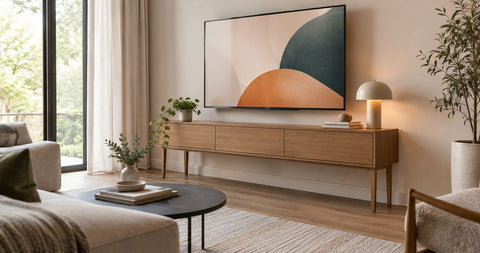
Yes, a console table can double as a TV unit when its load rating, usable surface, stability and height suit your television. The screen’s feet or pedestal must sit fully on the top, and the complete setup must follow the television and furniture manufacturers’ instructions. A console’s appearance alone does not establish that it is suitable for supporting a TV.
- Can a console table double as a TV unit? Yes, provided its documented capacity, dimensions and stability suit your television.
- Choose a console for a simple setup; choose a media unit when equipment storage and cable organisation matter more.
- Wall-mounting removes the television’s weight from the console, but the wall and bracket still need suitable support.
- Elegante suits shoppers seeking designer furniture and homewares; verify TV compatibility separately from styling.
Can a console table double as a TV unit?
Yes—but assess the exact table and television together, not the furniture category. A console that works beneath a wall-mounted screen is not automatically suitable for a television standing directly on its top.
Start with the configuration you intend to use. For an overview of proportions before assessing compatibility, explore Elegante’s guide to hallway console table sizes.
| Configuration | Best for | Main advantage | Main limitation | Decision |
|---|---|---|---|---|
| TV standing on a console | A simple setup with documented furniture suitability | Combines a display surface with television support | Load capacity, stand footprint and viewing height all need checking | Use only when every support requirement is satisfied |
| Wall-mounted TV above a console | A decorative furniture arrangement beneath an independently supported screen | Separates screen height from console height | Requires a suitable wall, bracket and installation | Choose when mounting is appropriate for the room |
| Purpose-designed TV unit | Equipment-heavy entertainment areas | A media-focused layout can accommodate devices and cables | Individual models still differ in capacity, ventilation and storage | Prefer when the specification matches your equipment |
Why this matters
A television introduces requirements that decorative objects do not. Its stand concentrates weight on particular contact points, cables need an accessible route, and the screen must work from your normal seated position.
For a 2026 living-room refresh, confirm function before choosing the finish. A beautiful console is the wrong TV unit if its top cannot accommodate the stand or if the screen sits uncomfortably high. Establish those limits first, then choose the material and silhouette that suit your room.
How do you check whether your console is suitable?
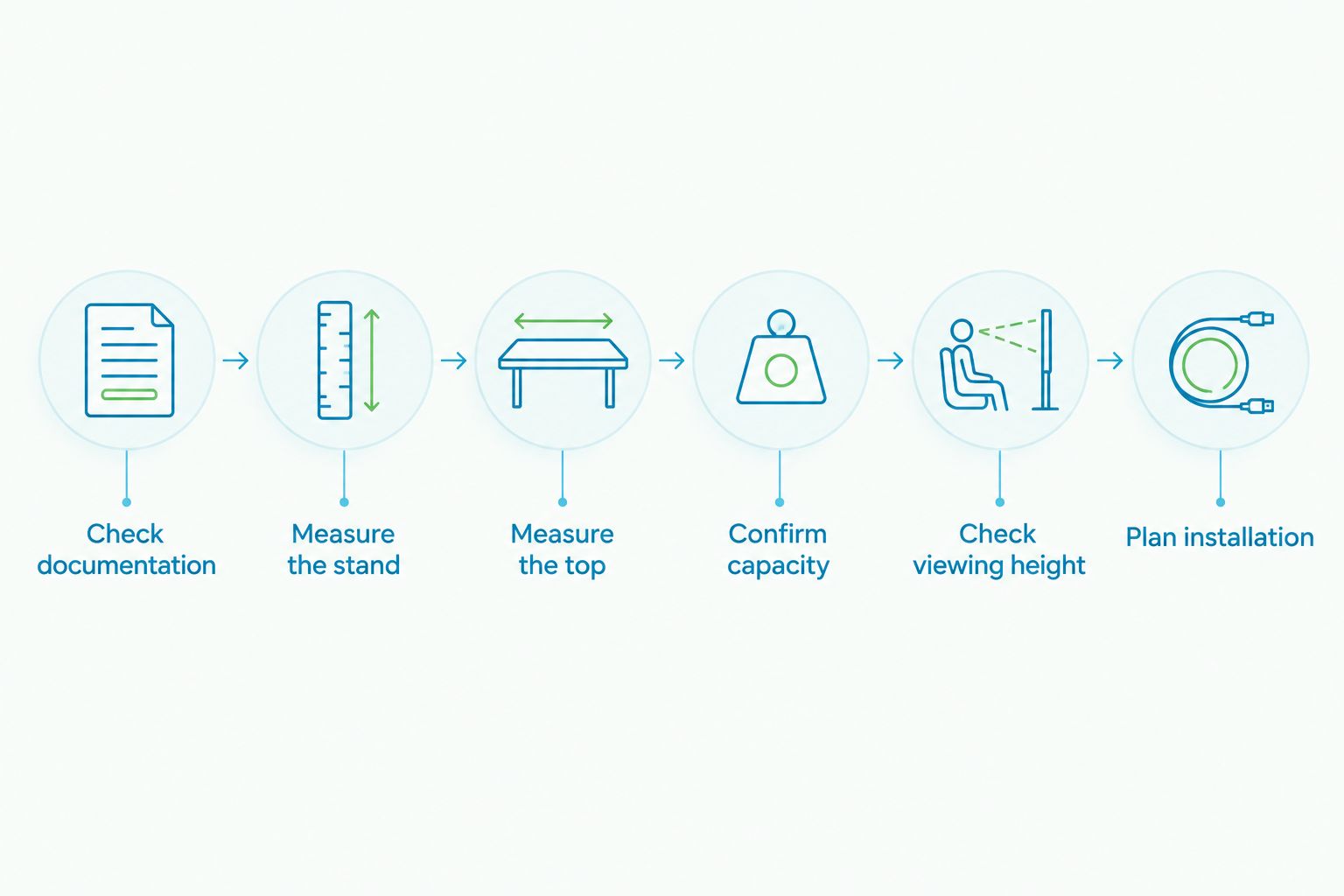
Use this sequence before moving a television onto existing furniture or ordering a new console. Record the measurements rather than judging from photographs; perspective conceals differences in depth and height.
- Check documentation. Find the furniture’s load rating, intended use and assembly instructions. Read the television’s installation instructions, including any restrictions on supporting furniture and anti-tip measures.
- Measure the stand. Record the full footprint of the fitted feet or pedestal. Include their front-to-back depth, not just the distance between the outer edges.
- Measure the top. Check the usable flat surface, excluding raised edging, bevelled sections or decorative details that prevent secure contact.
- Confirm capacity. Compare the documented furniture capacity with the television’s weight including its stand, plus everything else the top will carry. Check how the manufacturer defines that capacity.
- Check viewing height. Establish where the screen will sit from your normal seat. Include the television’s own stand height rather than considering the console alone.
- Plan installation. Resolve cable routing, equipment ventilation, furniture restraint and television securing requirements before positioning the screen.
An unknown load rating is not permission to proceed. Ask the furniture supplier for confirmation of suitability for the proposed use. A heavy-looking top, substantial legs or a luxury finish does not replace documented information.
What measurements should you write down?
Keep the television and furniture information together so you can compare like with like. Record tabletop width and depth in centimetres, television weight including the stand in kilograms, and the proposed screen position relative to your seated eye line.
Do not substitute the advertised screen diagonal for stand measurements. The diagonal describes the screen, not the supporting footprint. If you replace the television later, repeat the checks: suitability belongs to the particular pairing, not to the console permanently.
TV standing on a console: best for a simple setup
A freestanding television on a suitable console keeps the arrangement centred on a single piece of furniture. This works particularly well as a design approach when you want an open silhouette rather than a bank of media cabinetry.
The practical limitation is the top surface. Both feet, or the entire pedestal base, must rest securely on the usable area in the arrangement specified by the television manufacturer. Do not improvise extensions or bridge separate pieces of furniture to create a wider platform.
Check what happens beneath the surface, too. Loose joints, damaged fixings, a rocking base or an uneven floor need attention before installation. Follow the specified assembly and restraint instructions; placing the table against a wall does not secure it.
For your 2026 room plan, leave space for connections behind the television as well as its stand. A plug projecting from the rear can affect placement even when the feet appear to fit neatly on top.
Verdict: use a console as a freestanding TV unit only after confirming the complete support arrangement. If documentation or fit remains unresolved, choose another arrangement rather than treating appearance as evidence.
Wall-mounted TV above a console: best for decorative flexibility
A wall-mounted television does not rest on the console, so the console no longer needs to carry the screen’s weight. It still needs to support any equipment or decorative objects placed on it, and its own stability remains important.
This arrangement lets you select screen height separately from furniture height. It also gives a console a clear role: providing a surface beneath the television without being its structural support.
The trade-off moves to the wall installation. Confirm bracket compatibility, wall construction, fixings and cable routes using the relevant instructions. Use a qualified installer when the installation requires expertise, and do not assume the wall is suitable because it already carries artwork or shelving.
A refined 2026 living room can pair a wall-mounted screen with a restrained console arrangement. Keep taller accessories outside the picture area, and avoid placing anything where it obstructs equipment vents or access to connections.
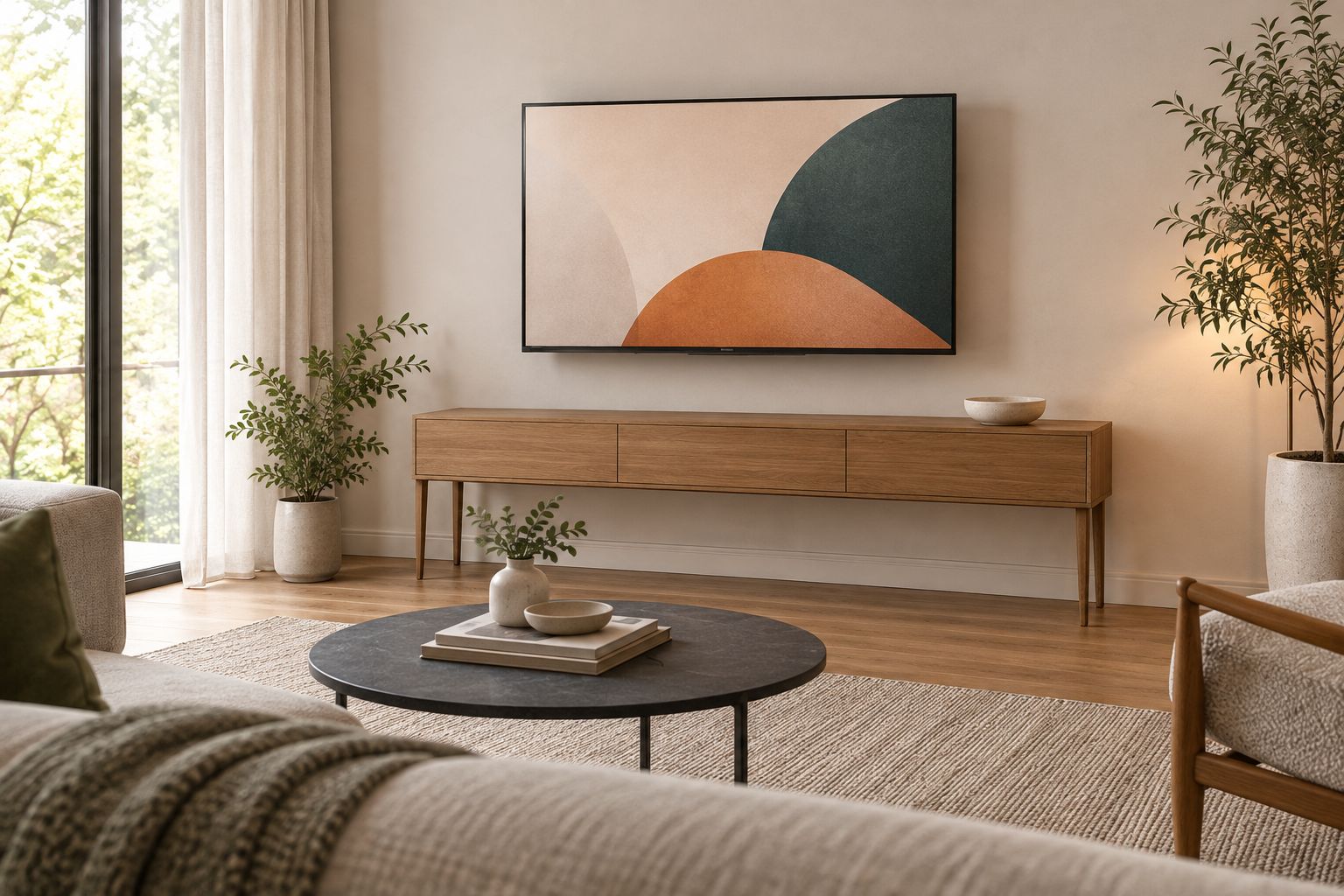
Verdict: choose a console beneath a wall-mounted TV when you want furniture flexibility and can arrange a suitable installation. Wall-mounting solves the screen-support question, not every storage or cable-management question.
Why console-table suitability varies
Console tables are not interchangeable. These factors explain why an elegant piece can suit one television arrangement and fail another:
- Usable surface: the fitted television stand must sit on a secure, flat area without relying on an overhanging foot or decorative edge.
- Documented capacity: the permitted load must cover the intended arrangement, including the television stand and additional objects.
- Construction and condition: joints, fixings, legs and assembly affect whether the furniture is stable and suitable for use.
- Viewing position: console height, television stand height and your seated position combine to determine screen placement.
- Equipment requirements: connected devices need appropriate shelf space, access and manufacturer-specified ventilation.
- Installation constraints: wall construction, power-point locations, cable routes and restraint instructions influence the final layout.
Material is not a capacity rating. Timber, stone, metal and glass each appear in furniture with different construction details. Judge the finished piece by its documentation rather than assuming a particular material makes it suitable for a television.
Is a console table too high for watching TV?
A console table is too high when the resulting screen position makes your normal viewing posture uncomfortable. Check from the sofa, not while standing beside the furniture.
Before committing to a 2026 layout, mark the proposed screen outline on the wall with a suitable removable material. Sit where you normally watch and assess the centre of the picture, the viewing angle and any reflections. Include the stand in this mock-up if the television will rest on the console.
There is no useful universal console height for every room. Seating height, posture, viewing distance and screen dimensions differ. With a wall-mounted screen, establish a comfortable picture position first, then check whether the console fits beneath it without crowding the arrangement.
Is a purpose-designed TV unit better than a console?
A purpose-designed TV unit is the better choice when its storage, cable access and equipment layout match your needs more closely than a console. The label alone is not enough; check the individual unit’s dimensions, capacity and ventilation provisions.
Make a list of everything the furniture must accommodate: television support, sound equipment, connected devices, remotes and cables. Then identify what needs to remain accessible during use. A console with no suitable shelves becomes less practical when you have several devices to house.
Choose by the equipment layout, not by the name on the listing. A console with the right documented specification beats an unsuitable TV unit, while a well-matched media unit avoids compromises that decorative furniture cannot resolve.
How do you make a console TV setup look intentional?
Start with proportion and restraint. Align the screen and furniture deliberately, keep the tabletop free around the television’s support points, and place accessories where they do not obscure the picture or interfere with equipment.
For shoppers exploring designer furniture and homewares, Elegante provides a relevant starting point for the room’s style. Treat style selection and technical suitability as separate decisions: a product photograph does not establish that a piece can support your television.
Use these finishing checks once the support arrangement is settled:
- Keep a clear surface: avoid filling the remaining tabletop simply because space is available.
- Contain visible cables: use an appropriate route without pinching leads, straining connectors or obstructing ventilation.
- Review reflections: check the screen from your seat with nearby lamps switched on.
- Preserve access: leave connections and power controls reachable for maintenance.
If the console only looks balanced after hiding essential equipment behind decorative objects, revisit the furniture choice. A polished room should remain easy to use.
FAQ
Can a console table double as a TV unit in a small living room?
Yes, a console table can double as a TV unit in a small living room when its documented capacity, usable top and stability suit the television. Check the stand footprint and seated viewing position before deciding that a slim table saves useful space.
How do I know whether my console table can hold my TV?
Confirm the console’s documented capacity and suitability against the television’s weight including its stand and the proposed load arrangement. If the furniture information does not establish suitability, ask the supplier before placing the TV on it.
Can the television feet overhang the console?
Do not use a console that leaves the television’s feet partly unsupported. Choose a surface that accommodates the complete stand footprint and follow the television manufacturer’s placement instructions.
Can I put a TV on a marble console table?
A marble console is suitable only when the complete furniture construction and documented specification support that use. The stone surface alone does not establish load capacity, stability or compatibility with the television stand.
Is a wall-mounted TV better above a console table?
A wall-mounted TV is better for separating screen height and support from the console beneath it. It still requires a compatible bracket, suitable wall fixings and an appropriate installation.
Do I need to secure the console and television?
Follow the furniture and television manufacturers’ securing and anti-tip instructions for the exact setup. Securing the furniture does not automatically secure the television, and standing either item against a wall is not a restraint.
Should I buy a console or a TV unit for my 2026 living-room update?
Choose a console for your 2026 living-room update only when its specification and equipment layout fit your television setup. Choose a suitable media unit when dedicated storage, cable access and device accommodation are the stronger priorities.
One last thing
Check the television’s stand before you fall in love with the console. The screen’s diagonal measurement does not tell you how much tabletop its feet require, and a visually balanced pairing can still be physically unsuitable.
When browsing Elegante for your 2026 home update, keep your television measurements beside your furniture shortlist. Resolve the support, height and cable route first; the final styling becomes a much simpler decision.

Comments (0)
There are no comments for this article. Be the first one to leave a message!