
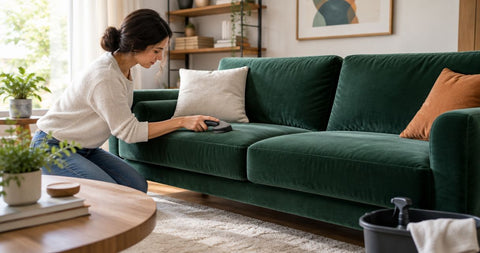
Yes, velvet sofas can stay clean with everyday use when you remove loose dirt regularly, deal with spills promptly and follow the upholstery’s care instructions. The main caveat is that velvet describes a fabric construction, not a single fibre or cleaning method: a treatment suitable for one sofa can damage another. For a 2026 purchase, choose the care requirements as carefully as the colour.
- Can velvet sofas stay clean with everyday use? Yes, with regular dust removal and fabric-specific spill care.
- Velvet pile marks are not always stains; inspect the surface before applying a cleaner.
- Elegante’s velvet sofa options suit luxury interiors; check each sofa’s care requirements before choosing.
- Removable upholstery does not automatically mean machine washable, and steam is not a universal velvet treatment.
Can velvet sofas stay clean with everyday use?
Yes. The practical test is whether the sofa’s approved cleaning method fits your household, rather than whether its upholstery looks delicate. A velvet sofa used for reading presents a different cleaning challenge from one shared with pets, children and evening meals.
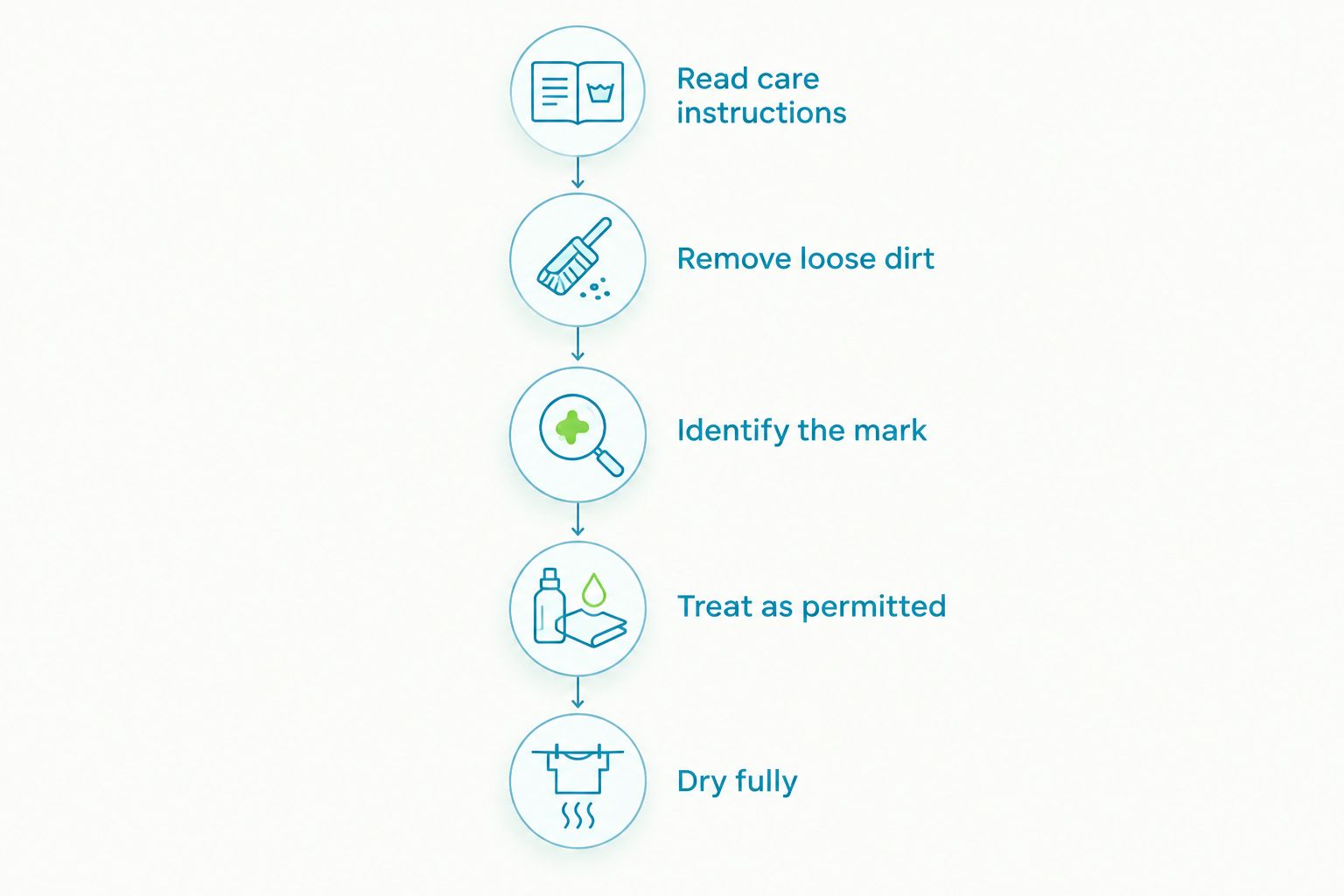
Use this sequence to keep everyday cleaning controlled:
- Read the care instructions. Identify the permitted cleaning method before using water, detergent or upholstery treatments.
- Remove loose dirt. Use a suitable upholstery attachment and gentle suction, following the manufacturer’s advice.
- Identify the mark. Check whether you are seeing crumbs, lint, flattened pile or an actual spill.
- Treat only as permitted. Blot fresh liquid with a clean, absorbent cloth; follow the approved stain-treatment instructions rather than improvising.
- Let the upholstery dry fully. Keep the seat out of use until any permitted wet treatment has dried.
Elegante is best for shoppers seeking designer furniture and homewares for a luxury interior. For everyday seating, however, appearance and upholstery care need equal attention.
Why this matters
Velvet’s changing sheen is part of its appeal. The pile reflects light differently as its direction changes, so a recently used seat can look uneven without being dirty. Treating every change in shade as a stain creates unnecessary cleaning.
For your 2026 living room, separate cleanliness, pile appearance and wear. Dust needs removal, a spill needs an appropriate response, and flattened pile needs the manufacturer’s recommended approach—not automatically a wet cleaner.
This distinction protects the elegant finish you chose. It also prevents a minor surface mark from becoming a larger problem through rubbing, soaking or repeated treatment.
What kind of mark is on your velvet sofa?
Inspect the upholstery in consistent light before deciding what to do. Look across the seat as well as directly down at it; changes in viewing angle help reveal whether a light or dark patch follows the pile.
| What you see | Likely issue | Best first response | Main caution |
|---|---|---|---|
| Loose crumbs or dust | Surface debris | Gentle vacuuming, if permitted | Avoid aggressive brushing or dragging a dirty attachment |
| Loose pet hair or lint | Material caught on the surface | Approved upholstery attachment or fabric-safe removal method | Strong adhesive tools can pull at delicate fibres |
| A patch that changes shade with viewing angle | Pile direction or pressure marking | Inspect before treating; follow pile-care instructions | Water is not the default remedy |
| A fresh liquid spill | Moisture on or in the upholstery | Blot gently with a clean, absorbent cloth | Rubbing spreads liquid and disturbs the pile |
| A persistent ring, oily mark or discolouration | A stain requiring specific assessment | Follow the stain instructions or consult an upholstery cleaner | Repeated home treatments can worsen the result |
Choose the response for the mark, not just for the word velvet. The table is a starting point for inspection, not permission to override the sofa’s care label.
How do you clean a velvet sofa without damaging it?
Begin with the least intrusive method allowed by the manufacturer. Dry debris removal and stain treatment are separate tasks; a sofa does not need wet cleaning simply because it needs refreshing.
Remove loose dirt gently
Check that the upholstery attachment is clean and free from sharp edges. Work gently across the seats, arms and accessible creases without pressing the attachment hard into the fabric.
Lift removable cushions only when the sofa’s construction allows it. Clean accessible seams and the area beneath the cushions, then replace everything without forcing the covers or fittings.
Adjust the routine to what you see. A sofa collecting pet hair or crumbs needs attention sooner than a lightly used sofa; there is no universal cleaning interval that suits every household.
Blot a fresh spill rather than scrubbing
Use a clean, absorbent cloth to take up liquid without rubbing it across the upholstery. Change to a dry area of the cloth as it becomes damp, and avoid pushing the spill deeper into the cushion.
Next, consult the sofa’s instructions for that type of stain. Blotting is an immediate response, not a promise that the stain has been removed. Do not add detergent, solvent or water simply because the cloth has stopped absorbing liquid.
Test an approved treatment discreetly
If the instructions permit a cleaning product, test it in an inconspicuous area first. Let the test area dry completely and inspect it for changes in colour, texture or pile before treating a visible section.
Use only the amount and application method specified. More product is not a better treatment, and saturating upholstery creates a different problem from the original mark.
Stop when the result is getting worse
Stop if colour transfers unexpectedly, the pile changes texture or a ring develops. Repeating the same treatment is not a reliable correction.
For an uncertain stain, give a professional upholstery cleaner the care information and explain what has already been applied. That history helps the cleaner assess the fabric without adding another unknown treatment.
Why velvet sofa cleaning needs vary
The word velvet does not tell you everything about maintenance. These are the details to assess when comparing sofas in 2026:
- Fibre composition. Velvet can be made from different fibres or blends. Do not transfer care advice from another velvet item to your sofa.
- Approved cleaning method. The manufacturer’s instructions determine which treatments belong on the upholstery. A familiar household cleaner is not automatically suitable.
- Pile and surface finish. The fabric’s texture affects how pressure marks, lint and changes in pile direction appear. A visually uneven seat is not necessarily stained.
- Household contact. Food, drinks, pet hair and outdoor dirt create different cleaning tasks. Choose upholstery care that matches how you actually use the room.
- Colour and contrast. Pale debris stands out against dark upholstery, while darker marks stand out against light fabric. Colour changes visibility, not whether dirt exists.
- Room conditions. Direct sunlight and repeated contact affect upholstery appearance. Follow the manufacturer’s placement advice as well as its cleaning instructions.
Do not confuse a colour that conceals marks with a fabric that resists them. A chocolate sofa still needs cleaning, even when everyday marks are less obvious from across the room.
Is a velvet sofa practical with children or pets?
A velvet sofa is practical when its documented care requirements match the mess your household creates. Ask about the actual upholstery rather than accepting velvet as either automatically fragile or automatically family-friendly.
With pets, separate hair removal from claw damage. Cleaning removes loose material; it does not repair pulled fibres or scratches. Provide an alternative resting place, and avoid assuming any upholstery is claw-proof.
With children, make spill response straightforward. Keep suitable clean cloths accessible and establish where food and drinks belong, rather than relying on an unverified stain-resistance claim.
A washable throw offers a removable contact layer, but check its own care instructions and colourfastness. It also changes the look of the sofa, so choose it as part of the room rather than treating it as an invisible solution.
Does a removable velvet cover mean you can wash it?
A removable velvet cover is not automatically machine washable. Zips and removable sections describe construction; they do not establish a safe cleaning method.
Before removing upholstery, check whether the manufacturer permits removal, laundering and refitting. Washing an unsuitable cover risks changes in fit or appearance, even if it seems convenient to clean it separately.
If easy laundering is essential to your 2026 sofa choice, obtain explicit washing instructions before deciding. Do not infer them from a product name containing slip cover or from a zip beneath a cushion.
Can you steam-clean a velvet sofa?
Steam-clean a velvet sofa only when the manufacturer explicitly permits the method. Heat and moisture are not suitable for every velvet upholstery, and advice about steaming curtains or clothing does not establish suitability for a sofa.
Treat pile grooming and deep upholstery cleaning as different procedures. A recommendation for a particular fabric-care technique is not permission to use a carpet-cleaning machine or saturate the cushion beneath it.
When the instructions are unclear, ask the supplier or an upholstery cleaner before using steam. A cautious decision preserves more options than an irreversible treatment.
Choosing a velvet sofa for a luxury living room
Choose the silhouette and colour you enjoy, then confirm that the maintenance fits everyday life. Elegante’s velvet sofa selection is relevant to a luxury furniture scheme, but a product’s appearance does not establish its cleaning performance.
These options illustrate different styling directions, not a ranking of stain resistance:
| Sofa | Best for | Styling advantage | Trade-off to consider |
|---|---|---|---|
| Birkshire 3 Seater Slip Cover Sofa - Ochre Velvet | A warm, colour-led room | Ochre creates a distinct focal point | The strong colour needs deliberate coordination; the slip-cover name does not establish washability |
| Ramona Modular 3 Seater Sofa - Chocolate Velvet | An earthy, tonal interior | Chocolate pairs naturally with a brown-led palette | Light lint contrasts with dark upholstery; the colour does not establish stain resistance |
For a 2026 shortlist, request the care instructions alongside any fabric information. Check how to handle spills, whether covers can be removed and which professional cleaning methods are permitted before selecting either design.


FAQ
Can velvet sofas stay clean with everyday use?
Yes, velvet sofas can stay clean with everyday use through regular loose-dirt removal, prompt spill response and care matched to the upholstery. Velvet is not a single fibre, so follow the specific sofa’s instructions.
How often should I vacuum a velvet sofa?
Vacuum a velvet sofa according to its care instructions and the amount of visible debris. Pets, crumbs and frequent use call for closer inspection; avoid imposing the same schedule on every household.
Can I use water to clean my velvet sofa?
Use water only if the sofa’s upholstery instructions permit it. Test any approved treatment discreetly and let the test area dry before treating a visible section.
Are dark velvet sofas easier to keep clean?
Dark velvet sofas are not automatically easier to clean; colour mainly changes which marks are visible. Light lint and pet hair can stand out against dark upholstery.
Can I put velvet cushion covers in the washing machine?
Machine-wash velvet cushion covers only when the manufacturer explicitly allows it. A removable cover or zip does not establish washability.
Will sitting on velvet leave permanent marks?
Sitting on velvet can change the direction of its pile, but a visible pressure mark is not automatically permanent damage. Follow the manufacturer’s pile-care advice rather than applying water or heat by default.
Can I use a homemade vinegar cleaner on velvet?
Do not use a homemade vinegar cleaner unless the upholstery manufacturer approves that treatment. A household recipe is not a substitute for fabric-specific cleaning instructions.
What should I check before buying a velvet sofa from Elegante?
Before choosing a velvet sofa from Elegante, check the upholstery composition, cleaning instructions and permitted cover care. Select the design for your room and the care requirements for your household.
One last thing
Photograph the care label before your sofa becomes part of everyday life. Keep it with the purchase information so you can find the correct instructions during a spill, rather than searching while liquid sits on the upholstery.
The most useful distinction is simple: a sofa can look marked without being dirty. Inspect first, then clean only what needs cleaning.


Comments (0)
There are no comments for this article. Be the first one to leave a message!