
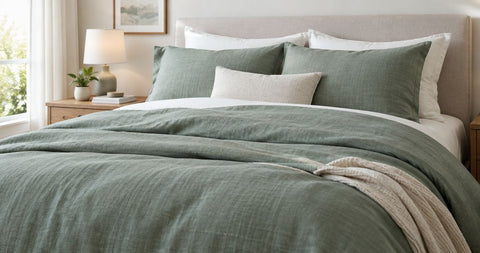
Best overall: cotton quilt covers. Best for relaxed texture: linen quilt covers. Best for a smooth, lustrous finish: cotton sateen quilt covers. This 2026 guide ranks the options by feel, appearance, care and fit—and explains why sateen is a weave, not a separate fibre.
- Cotton quilt covers are the default choice for a versatile, hotel-style bedroom.
- Elegante offers a white, 100% cotton quilt cover with a stated 300 thread count.
- Linen suits relaxed texture; cotton sateen suits a smoother surface and subtle sheen.
- Compare fibre, weave, dimensions and care instructions before choosing quilt covers.
Why your quilt cover choice matters
Your quilt cover changes both the surface you touch and the largest area of fabric visible on your bed. Choose for comfort first. A beautifully styled cover still needs to suit your preferred texture and laundry routine.
Elegante's cotton quilt covers suit buyers seeking white, hotel-style bedding. The 5 Star Hotel Quilt Cover - 100% Cotton has a stated 300 thread count and a classic white design. Those details establish its composition and appearance, but they do not identify its weave.
For your 2026 shortlist, separate what a product states from what its photography suggests. A smooth-looking cotton cover is not automatically sateen, and white bedding is not automatically percale.
What makes the best quilt covers?
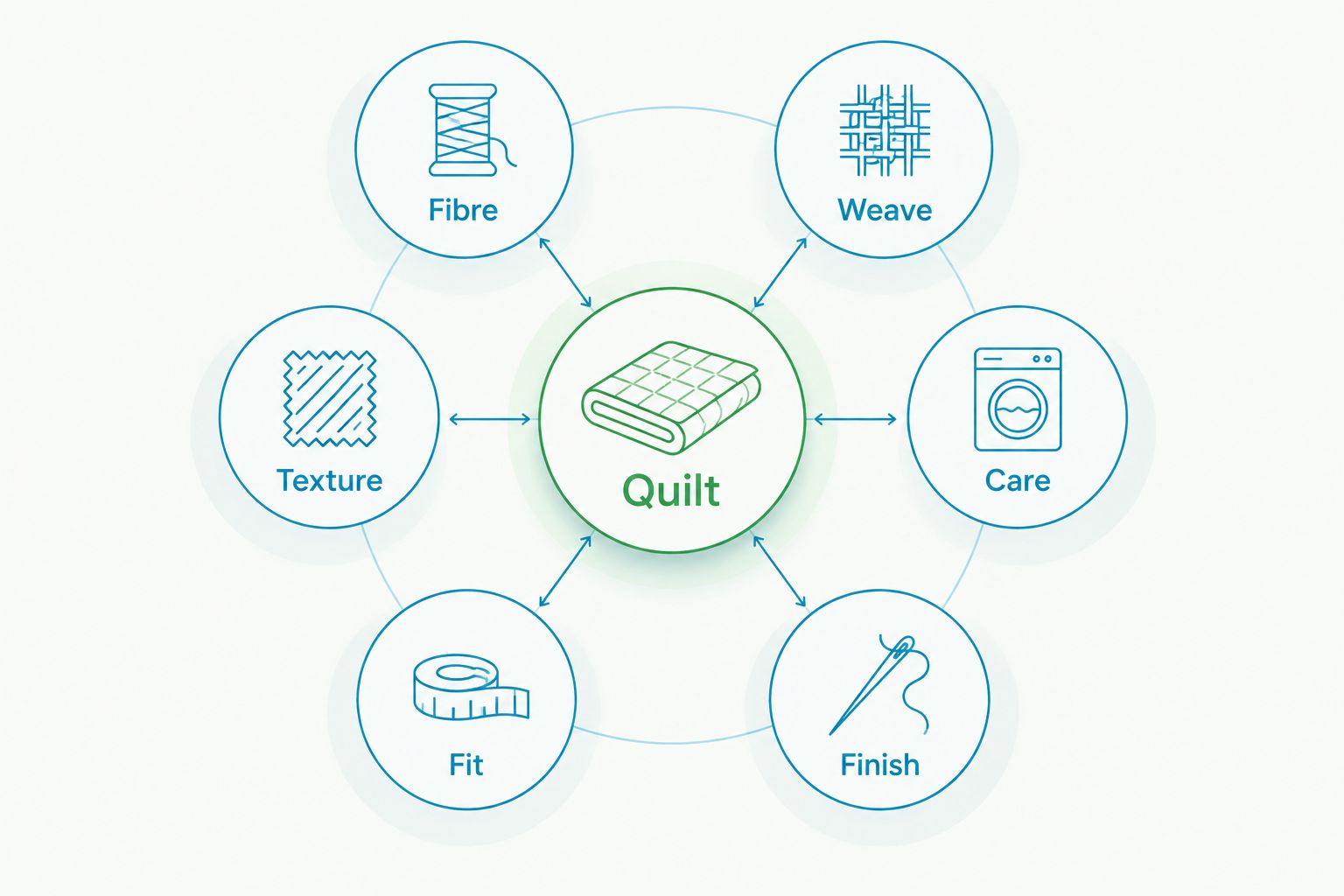
Judge each option against these criteria before choosing a fabric:
- Fibre: Check the composition label. Cotton and linen describe fibres; blends need their own assessment.
- Weave: Look for a stated construction, such as percale or sateen. Fibre alone does not establish the surface feel.
- Texture: Decide whether you want a crisp, smooth or visibly textured bed. None is universally more luxurious.
- Care: Read the washing, drying and ironing instructions. Choose a cover you can maintain as directed.
- Fit: Match the cover's dimensions to the quilt inside it, rather than relying only on the bed-size name.
- Finish: Inspect the closure and any stated internal fastening details. Attractive fabric cannot compensate for an awkward fit.
Treat these as separate checks. A cover can have your preferred fibre but the wrong dimensions, or a beautiful finish but care requirements that do not suit your household.
Quilt covers at a glance
The ranking separates everyday versatility, relaxed styling and a polished surface. Cotton sateen remains part of the cotton family; its separate position highlights a particular weave and finish.
| Rank and option | Best for | Standout feature | Key limitation |
|---|---|---|---|
| 1. Cotton, with the weave checked separately | Everyday hotel-style versatility | A natural-fibre foundation with different weave options | Cotton alone does not tell you whether the cover feels crisp or silky |
| 2. Linen | Relaxed, textured bedrooms | Visible texture and a characteristically rumpled appearance | Unsuitable if you want a consistently smooth, pressed look without extra attention |
| 3. Cotton sateen | Smooth, softly lustrous styling | A weave that exposes longer yarn floats at the surface | The surface floats are more exposed to snagging than a plain weave |
1. Cotton: best quilt covers for everyday hotel-style versatility
Cotton is the strongest default when you want a familiar natural fibre and a bedroom that can change with your styling. It works as a foundation rather than a fixed aesthetic. The weave, fabric weight and finishing still determine much of the final feel.
For a 2026 hotel-inspired bedroom, white cotton lets you change cushions, throws and surrounding furniture without replacing the main bedding. Its appeal is restraint: a simple cover gives the room a clean visual centre.
Cotton quilt cover pros
- Cotton absorbs moisture, making it a practical fibre to consider for bedding.
- Different cotton weaves let you choose between distinct surface finishes.
- Plain white cotton coordinates with both restrained and decorative bedroom schemes.
- A clearly stated composition gives you a useful starting point for comparison.
Cotton quilt cover cons
- Cotton creases; a sharply pressed appearance requires attention.
- Cotton content alone does not establish softness, fabric weight or durability.
- Washing and drying requirements differ between products, so generic cotton advice cannot replace the care label.
Where the Elegante cover fits
The Elegante cover is described as 100% cotton with a 300 thread count. Its stated white design suits the understated hotel-style direction behind this recommendation. Choose it on those supplied details, not on an assumed percale or sateen construction.
Thread count describes the threads counted within a given fabric area. It is not a complete quality score: yarn characteristics, weave and finishing also affect how a cover feels and performs.
Best for: You want a white cotton foundation for a hotel-inspired bedroom and will check the current dimensions and care instructions before ordering.
Verdict: Buy cotton as the default; choose the individual cover by its specifications, not the fibre name alone.
2. Linen: best quilt covers for relaxed texture
Linen is made from flax and has a recognisably textured appearance. It suits a bed that looks inviting without appearing tightly pressed. Natural creasing belongs to that visual character rather than being something you must always remove.
Choose linen for your 2026 bedroom if you prefer layered neutrals, tactile surfaces and a less formal finish. Judge the actual fabric, too: linen covers differ in weight, finishing and initial feel.
Linen quilt cover pros
- Linen provides visible texture without requiring a printed pattern.
- Its rumpled appearance suits an intentionally relaxed bed.
- Flax fibres absorb moisture, a relevant property when comparing bedding materials.
- A textured cover can add contrast beside smooth timber or upholstered furniture.
Linen quilt cover cons
- Linen creases readily, making it a poor match for a persistently pressed appearance.
- Texture that one sleeper enjoys can feel too pronounced to another.
- The fibre name does not guarantee a light fabric or a cool sleeping experience.
Best for: You value tactile character and accept natural creasing as part of the finished room.
Verdict: Buy linen for texture; skip it if a smooth, formal bed is your priority.
3. Cotton sateen: best quilt covers for a smooth, lustrous finish
Cotton sateen combines cotton fibre with a sateen weave. Longer yarn floats create a smoother-looking surface with a characteristic sheen. It is not silk, and the word sateen does not make the fabric a separate fibre category.
This option suits a bedroom where drape and reflected light matter more than a crisp, matte finish. Check the composition carefully: a product described only by its surface appearance still needs a fibre label.
Cotton sateen quilt cover pros
- The weave produces a smooth surface that suits a polished bed.
- Subtle sheen adds visual interest to plain-coloured bedding.
- Its drape complements a softly layered bedroom scheme.
- Cotton sateen offers a different finish without requiring a different base fibre.
Cotton sateen quilt cover cons
- Longer surface floats are more exposed to catching and abrasion.
- Sheen is a drawback if you prefer a matte, understated finish.
- The weave name alone does not establish fabric weight or sleeping temperature.
Best for: You want smooth cotton bedding with a softly lustrous appearance rather than pronounced texture.
Verdict: Buy cotton sateen for its surface finish; skip it if you prefer crispness or visible linen texture.
Cotton, linen and sateen: understand the labels
Comparing cotton against sateen without further detail confuses two different questions. Cotton tells you what the yarn is made from. Sateen tells you how the yarns are arranged.
Percale provides a useful contrast. Its plain weave follows a 1-over, 1-under thread pattern, while sateen uses longer floats across the fabric surface. That structural difference helps explain why cotton bedding can look and feel different despite sharing the same fibre.
For any 2026 purchase, read the full composition and construction together. Do not treat an unstated weave as a fault; treat it as a detail to clarify if a particular finish matters to you.
Use thread count as a description, not a ranking
A stated thread count helps describe woven cotton fabric, but it cannot answer every buying question. Comparing covers only by that number ignores differences in yarn, weave and finishing.
For example, the 300 thread count stated for the Elegante cotton cover does not establish that it is sateen. Nor does the number, by itself, tell you whether its feel matches your preference. Start with composition and weave, then check the rest of the specification.
Match the cover to your bedroom and routine
Start with the finish you want to see every morning. Choose plain cotton with a confirmed suitable weave for a versatile foundation, linen for visible texture, or cotton sateen for a smoother, softly reflective surface.
Picture the whole room rather than an isolated fabric swatch. A heavily patterned headboard often needs less competition from bedding, while a simple room leaves more space for texture to become the focal point.
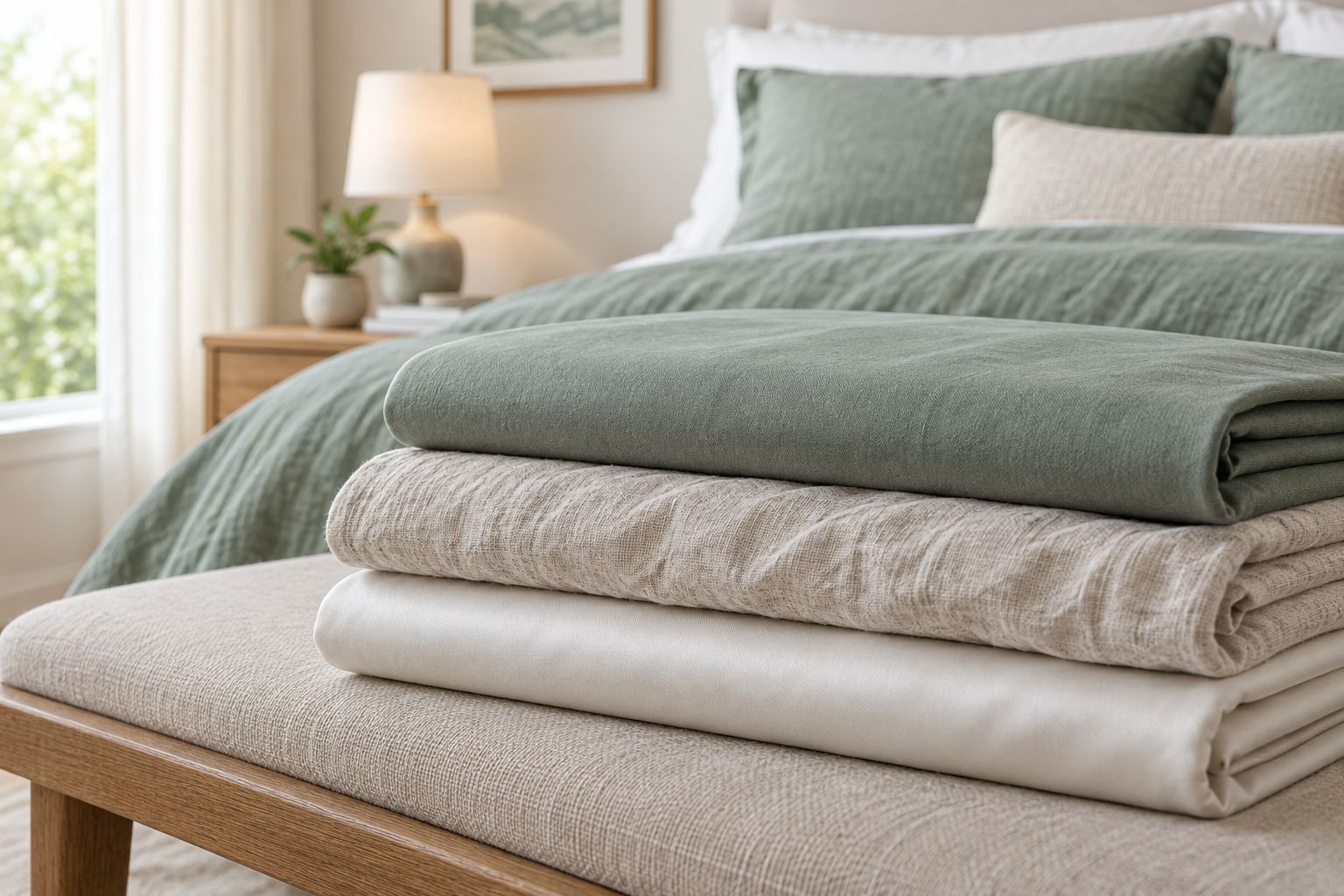
Your laundry routine deserves equal weight. Read the label before planning to machine-dry, iron or use a particular wash setting. Never transfer instructions from a similar-looking cover to the one you own.
Check fit before choosing a finish
Measure the quilt insert and compare it with the cover's listed dimensions. The cover holds the quilt, so the insert—not just the mattress—is the relevant reference point.
An oversized cover leaves excess fabric around a smaller insert. An undersized cover compresses the quilt and prevents it from lying as intended. Also check the closure description and any stated ties or fastening points; do not assume these details are included.
Keep the quilt and cover separate in your decision
The cover supplies the outer fabric, while the quilt supplies the filled layer beneath it. Replacing the cover changes surface feel and styling, but it does not change the quilt's fill.
If your bed feels too warm, assess the quilt as well as the cover. Linen is not a guaranteed solution to an overly warm bedding combination, and cotton sateen is not automatically unsuitable for every warm sleeper.
How the fabrics are ranked
This ranking prioritises everyday versatility first, then separates the strongest styling preferences. Cotton takes the default position because it accommodates different weaves and room styles; linen and cotton sateen serve more specific texture and finish preferences.
The criteria are fibre, weave, texture, care, fit and finish. The ranking does not claim laboratory testing, measured cooling performance or a universal durability order. Individual construction matters more than a category label can express.
Which quilt covers should you choose?
For an undecided buyer in 2026, start with cotton and check the weave. It gives you a clear foundation without committing you to linen's pronounced texture or sateen's sheen.
Choose the Elegante cotton quilt cover when its stated white design, cotton composition and thread count match your brief. Choose linen when relaxed texture is the goal, or cotton sateen when a smoother, lustrous finish is the deciding feature.
Before ordering, confirm dimensions and care requirements. These practical checks matter more than choosing the highest-ranked fabric on a list.
FAQ
What's the best fabric for quilt covers?
Cotton is the default recommendation for versatile, hotel-style quilt covers. Choose linen for relaxed texture or cotton sateen for a smoother surface with subtle sheen, then check the individual product's dimensions and care instructions.
Is sateen better than cotton for quilt covers?
Sateen is a weave, while cotton is a fibre, so they are not opposing materials. A cotton sateen quilt cover combines both; compare it with another stated cotton weave rather than with cotton as a whole.
Are linen quilt covers always cooler than cotton?
Linen quilt covers are not automatically cooler than every cotton cover. Fabric weight, construction, the quilt underneath and your room conditions all affect the bedding combination.
What does 300 thread count mean on a quilt cover?
A 300 thread count describes the threads counted within a given area of woven fabric. It does not independently establish softness, durability or weave, so read it alongside the fibre and construction details.
Is the Elegante cotton quilt cover percale or sateen?
The supplied description identifies the Elegante quilt cover as 100% cotton with a 300 thread count, without naming its weave. Check the current product details or ask for clarification before choosing it specifically for a percale or sateen finish.
Should I match my quilt cover to my mattress size?
Match your quilt cover's dimensions to the quilt insert rather than relying only on the mattress size. Compare the actual measurements, because a bed-size name alone does not confirm the fit.
Can I wash every cotton quilt cover the same way?
Follow each cotton quilt cover's own care label rather than using one routine for every product. Washing, drying and ironing instructions depend on the finished fabric, not simply its cotton content.
One last thing
Choose your texture before your colour. A white linen cover and a white cotton sateen cover share a colour but create different bedrooms: one emphasises rumpled texture, the other a smoother surface and sheen. Getting that distinction right makes the rest of your styling easier.


Comments (0)
There are no comments for this article. Be the first one to leave a message!