
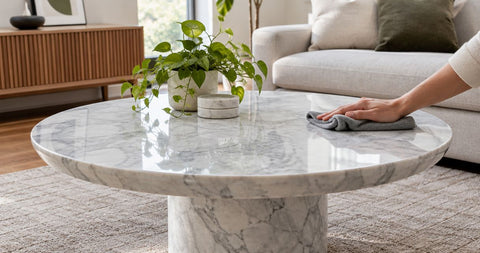
Marble furniture is not hard to maintain if you wipe up spills promptly, use coasters and clean with products suitable for natural marble. The main limitation is that acids can dull the surface even when it is sealed, so easy everyday cleaning does not mean a damage-proof finish.
- Is marble furniture hard to maintain? No, but marble needs prompt spill removal and protection from acids.
- Sealing helps resist absorbed stains; it does not stop acid etching or scratches.
- Use a soft cloth and a cleaner labelled suitable for natural marble, following the furniture's care instructions.
- Elegante marble furniture suits homes where natural stone's character comes with a careful cleaning routine.
Why this matters
A marble table brings natural pattern and an elegant focal point to a room, but its care requirements should suit how you live. A decorative console faces different demands from a coffee table holding drinks throughout the evening.
When considering marble furniture at Elegante, start with what will touch the surface, not simply the colour of the stone. For your 2026 furniture plans, the practical question is whether you are comfortable preventing spills and accepting some surface ageing. Choose marble for its natural character, not an expectation that it will remain untouched by use.
Is marble furniture hard to maintain?
No. Routine marble care involves gentle cleaning and sensible protection, rather than constant polishing. The harder task is correcting damage after the wrong cleaner, an acidic drink or an abrasive object has marked the finish.
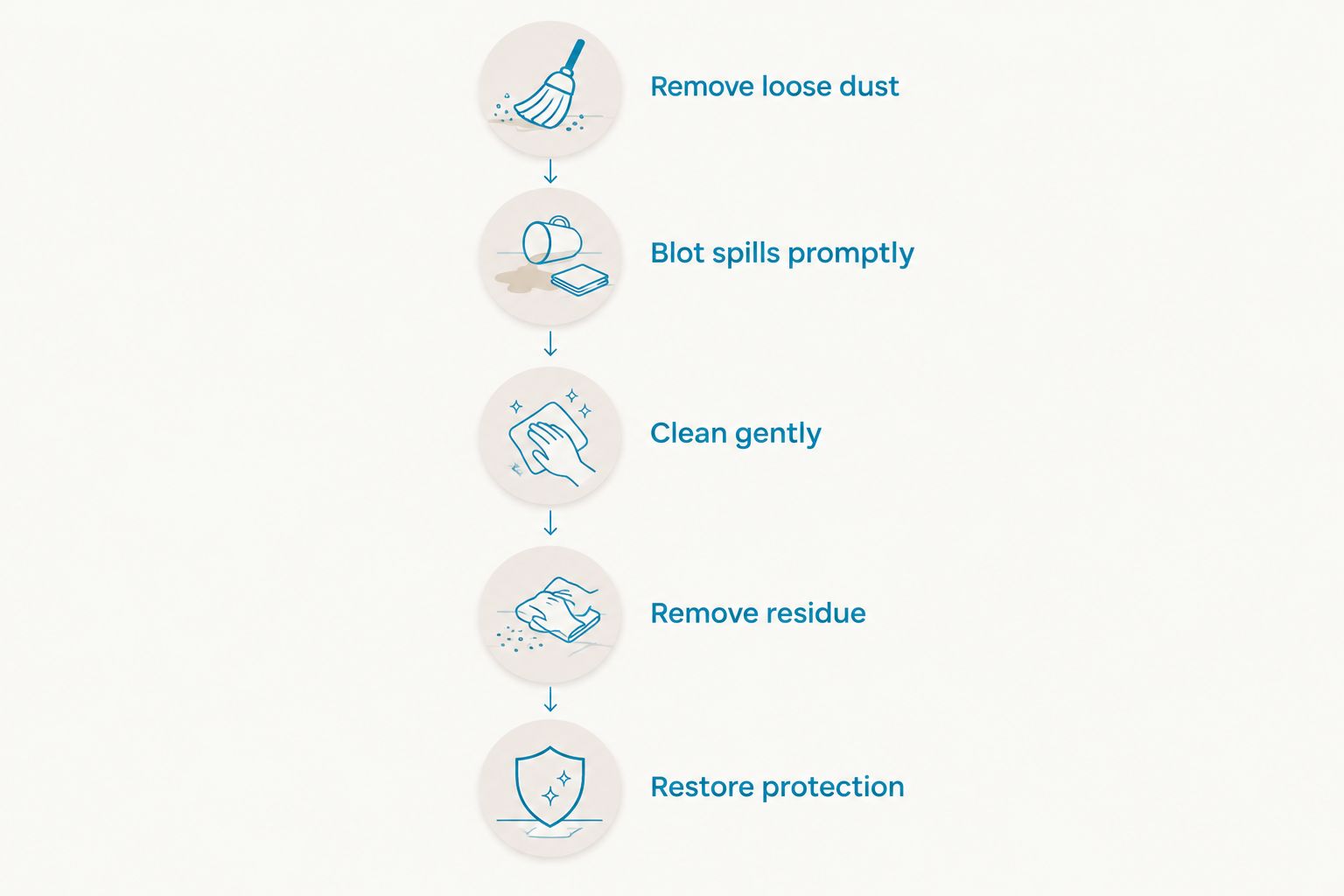
Use this sequence for everyday care in 2026, with the manufacturer's instructions taking priority:
- Remove loose dust. Use a clean, soft cloth before wiping the surface. Lift grit rather than rubbing it across the stone.
- Blot spills promptly. Absorb liquid without spreading it over a wider area. Do not leave a spill while you search for a specialist treatment.
- Clean gently. Use a cleaner labelled suitable for natural marble, at the dilution and contact time stated on its label. Avoid soaking the surface or its joints.
- Remove residue. Follow the cleaner's rinsing instructions, then dry with a separate soft cloth. Residue can leave a dull-looking film.
- Restore protection. Put coasters and suitable protective pads back beneath everyday objects. Keep the furniture's care instructions accessible.
Cleaning should not become an experiment. If a mark remains after normal care, identify it before changing products or increasing pressure.
Is that mark a stain, an etch or a scratch?
A stain changes the stone's colour; an etch changes its surface finish. That distinction determines what to do next. More cleaner is not a universal solution.
The Natural Stone Institute's guidance on calcareous stone identifies sensitivity to acids as a central care concern. Marble's calcium carbonate reacts with acids, which explains why vinegar and lemon are unsuitable cleaning shortcuts.
| Surface issue | What it typically looks like | Appropriate next move | What to avoid |
|---|---|---|---|
| Absorbed stain | Discolouration within the stone | Identify the substance and seek a marble-appropriate treatment | Scrubbing with an abrasive pad |
| Acid etch | A dull or altered patch, often noticeable in reflected light | Ask a stone-care specialist about restoring the finish | Assuming another coat of sealer will repair it |
| Scratch | A line or abrasion across the surface | Assess depth and obtain specialist advice | Sanding or using household scouring powder |
| Cleaning residue | A film or streaks sitting on the surface | Follow the approved cleaner's residue-removal instructions | Adding more cleaner without removing the first application |
A ring beneath a glass is not automatically an absorbed stain. Look at the mark from different angles, and note what touched the surface before choosing a treatment.
Polished marble: best for a reflective finish
Polished marble suits you if you want a reflective surface that gives veining a strong visual presence. Its drawback is that a dull etched patch can contrast clearly with the surrounding shine.
Keep acidic drinks, bathroom products and cleaning sprays away from direct contact. Choose polished marble when you value the reflective finish and will protect it consistently. Do not assume a glossy appearance means the stone has a protective coating that resists every spill.
Honed marble: best for a softer appearance
Honed marble suits you if you prefer a less reflective look. Etching can be less conspicuous against a matte surface, but honing does not remove marble's sensitivity to acids or guarantee stain resistance.
| Finish | Best for | Main advantage | Main limitation |
|---|---|---|---|
| Polished marble | A reflective, formal appearance | Highlights the contrast and movement of natural veining | Dull etches can stand out against the shine |
| Honed marble | A softer, less reflective appearance | Reduces the visual contrast between matte areas | Still needs spill protection and finish-specific care |
Confirm the actual finish before buying cleaners or restoration products. Product photographs alone do not establish the correct care method.
Why marble maintenance varies
The amount of attention marble needs depends on its finish, treatment and daily exposure. A quiet hallway and a busy entertaining space present different problems.
- Surface finish: Polished and honed finishes show changes differently. Neither makes marble immune to acids.
- Existing treatment: A penetrating sealer and a surface coating are different treatments. Confirm what has been applied before adding anything.
- Spill exposure: Coffee tables, bedsides and serving furniture encounter liquids that decorative pieces do not.
- Objects on top: Rough pottery, gritty trays and frequently moved ornaments create abrasion risks.
- Furniture construction: Stone tops, marble cladding, timber bases and metal details need care suited to each material.
- Your expectations: Keeping a pristine reflective finish requires a different level of intervention from accepting a gently aged surface.
The key is matching the piece to the room. A protected display surface asks less of you than a table used for meals, craft projects and drinks.
Does marble furniture need sealing?
Some marble benefits from a suitable penetrating sealer, but do not apply one automatically. Ask whether the piece is already treated, what treatment was used and whether the manufacturer recommends further sealing.
Sealer helps reduce liquid absorption; it does not make marble acid-proof. A sealed coffee table still needs coasters and prompt spill removal. Sealer also does not repair existing scratches or restore a dulled polished finish.
There is no single resealing calendar that applies to every marble furniture item in 2026. The stone, existing treatment, cleaning routine and exposure all affect the decision. Follow the furniture and sealer manufacturers' instructions rather than assuming an annual application is always necessary.
Before applying any treatment, confirm compatibility with the stone and surrounding materials. Protect timber, metal and upholstery from accidental contact. If the finish or treatment is unknown, seek advice instead of layering a new product over it.
How should you protect marble during everyday use?
Place protection where contact happens. Use coasters beneath drinks, suitable mats beneath serving pieces and protective pads beneath objects that move across the surface. Check that their undersides are clean, non-abrasive and suitable for natural stone.
Avoid putting hot cookware directly on marble. Use appropriate heat protection and follow the furniture's instructions; a stone surface is not permission to treat a coffee table like a kitchen worktop.
On a bedside table, keep cosmetics, perfume and toiletries on a suitable protective tray. In an entryway, give keys a dedicated landing place rather than dropping them directly onto the stone. Remove decorative items periodically to clean underneath and check for trapped moisture.
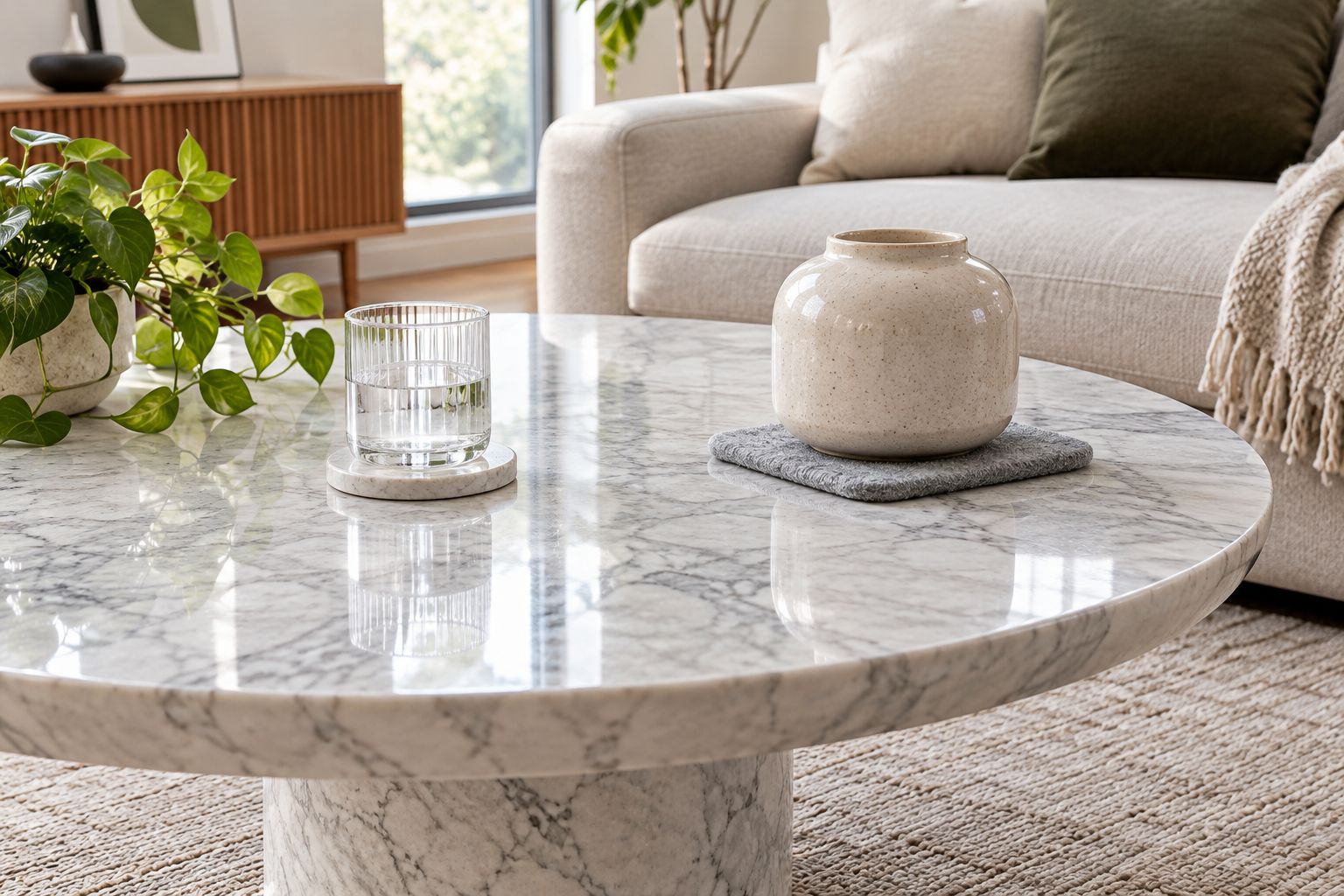
For routine dusting, soft microfibre cloths lift loose particles without the abrasion of a scouring pad, provided the cloth itself is clean. Keep a separate cloth for marble rather than reusing one carrying grit or bathroom-cleaner residue.
Wash cloths according to their care labels and replace damaged ones. Good technique matters as much as the fabric: use light pressure, expose a clean section frequently and stop if you feel grit dragging.
Which marble furniture suits your routine?
Start with the job the furniture will do. Elegante marble furniture is best for design-conscious buyers prepared to protect natural stone during everyday use. The visual benefit is natural variation; the trade-off is that the surface needs more considered handling than a wipe-and-forget expectation allows.
These examples from Elegante's marble furniture range show how placement changes the care routine. The dimensions below come from the product names, not an assumption about usable surface area.
| Furniture | Best for | Practical benefit | Care trade-off |
|---|---|---|---|
| Frankie 50x60cm Marble Bedside Table - Ivory | A bedside setting with white marble and ivory timber panels | Combines a marble top with curved timber detailing | Needs protection from drinks and toiletries |
| Barlow 160cm Marble Console Table - Natural Oak | An entryway with marble and natural oak | Pairs a stone surface with architectural timber form | Keys and decorative objects need protected contact points |
| Benedict 170cm White Oak Buffet - White Marble | A dining room with a marble-topped buffet | Brings a white marble surface into a storage setting | Serving spills need prompt attention |
For a 2026 room refresh, judge these pieces by their intended role rather than width alone. Confirm the complete dimensions, care instructions and construction before deciding. A console used for display avoids some drink exposure, while a buffet used during entertaining needs a deliberate serving routine.


Can I use vinegar or lemon to clean marble?
No. Vinegar and lemon contain acids that react with marble and can etch its surface. A homemade cleaner that works on another household material is not automatically safe for natural stone.
Choose a cleaner specifically labelled suitable for marble. Keep general bathroom cleaners, descalers and abrasive powders away from the furniture, including accidental overspray from nearby cleaning.
Can I remove a dull ring by polishing it myself?
Do not start with household polish or an abrasive paste. A dull ring can be etching, and restoring it requires a method suited to the stone and its original finish.
Photograph the mark and record what caused it before contacting a stone-care specialist. Avoid repeated treatments: they can enlarge the affected area and make assessment more difficult.
Should I choose marble if I want no-maintenance furniture?
No. Marble suits careful everyday use, not a requirement for zero maintenance. If you dislike coasters, regularly leave spills overnight or want a permanently uniform finish, its care requirements conflict with those preferences.
You do not need to reject marble throughout the home. Choose a lower-exposure location, such as a decorative console, rather than placing it at the centre of your busiest activities.
FAQ
Is marble furniture hard to maintain in a busy home?
Marble furniture is manageable in a busy home when you protect contact points and remove spills promptly. It is a poor match if acidic drinks and other spills are routinely left on surfaces.
What is the safest way to clean a marble coffee table?
Use a clean, soft cloth and a cleaner labelled suitable for natural marble, following the furniture's care instructions. Remove loose grit first, avoid soaking the surface and dry it after cleaning.
Does sealing marble stop drink rings?
Sealing does not prevent acid etching, which can leave a dull drink ring. A suitable sealer helps resist absorbed stains but does not replace coasters or prompt spill removal.
Can I put a hot mug directly on marble?
Use a coaster beneath a hot mug rather than placing it directly on marble. Follow the furniture manufacturer's guidance on heat protection and keep the underside of the coaster clean.
How often should I reseal marble furniture?
Follow the furniture manufacturer's guidance rather than a universal resealing interval. Confirm the existing treatment and whether additional sealing is recommended before applying a product.
Is honed marble easier to maintain than polished marble?
Honed marble can make etching less conspicuous, but it is not maintenance-free. Both honed and polished marble need protection from acids, abrasion and absorbed spills.
What should I check before buying marble furniture from Elegante?
Check the specific piece's stone finish, construction and care instructions before buying. Confirm any existing treatment and plan protection for the drinks, toiletries or decorative objects you will place on it.
One last thing
A dull marble surface is not always dirty. Etching changes the stone itself, so scrubbing harder can add abrasion without restoring the finish.
Make that your simplest marble-care rule for 2026: when gentle cleaning does not remove a mark, stop and identify it. Keeping the original care instructions and a photograph of the undamaged surface gives you a useful starting point for specialist advice.


Comments (0)
There are no comments for this article. Be the first one to leave a message!