

Club armchairs for a hotel-style study or library are deep, tailored lounge chairs, usually leather or velvet, built to give a reading corner the weight and finish of a five-star lobby lounge rather than a generic accent seat.
- Club armchairs work best bought as a pair, not a single chair, in a home study or library.
- Seat depth of 55-60cm and elbow-height arms separate a true club chair from a lounge chair.
- 590 Australians search club armchairs each month in 2026, with a keyword difficulty score of zero.
- Leather suits traditional libraries; velvet suits softer, jewel-toned reading nooks.
- Pair club armchairs with a floor lamp and a marble side table for the hotel-library finish.
Why club armchairs matter for a hotel-style study or library
A study or library room lives or dies on one piece of seating, because most people only fit one or two chairs into the space before a desk, shelving or a fireplace takes the rest of the footprint. That makes the club armchair the single hardest-working item in the room, doing the job a sofa does elsewhere.
Search demand backs this up: club armchairs pull 590 monthly searches across Australia in 2026, and the keyword carries a difficulty score of zero, meaning almost no dedicated content exists to answer the question properly yet. Most people typing that phrase are past browsing and into deciding what actually fits a reading corner. If you're planning that corner now, start with armchairs for a reading nook before you commit to a style, because the room layout should decide the chair, not the other way round.
A study is also a smaller, more scrutinised room than a living area. Guests sit in it for ten minutes, not two hours, so proportions, arm height and fabric read more clearly than they would across a bigger lounge suite.
Measure the reading corner first
Get the tape measure out before you open a single product page. A club chair that looks proportionate in a showroom photo can swallow a small study whole.
- Leave roughly 90cm of clearance in front of each chair for feet, a stool or a low table
- Allow at least 40cm between two facing chairs so knees and elbows never touch
- Check ceiling and cornice height against the chair's back rest, which typically runs 100-110cm tall on a true club design
- Account for a side table's footprint next to each arm, not just the chair itself
- Note doorway and hallway width if the chair arrives fully assembled rather than flat-packed
Choose materials that read "hotel", not "man cave"
The fabric decision does more work than the shape. A well-proportioned chair in the wrong material still reads like a rec-room reject.
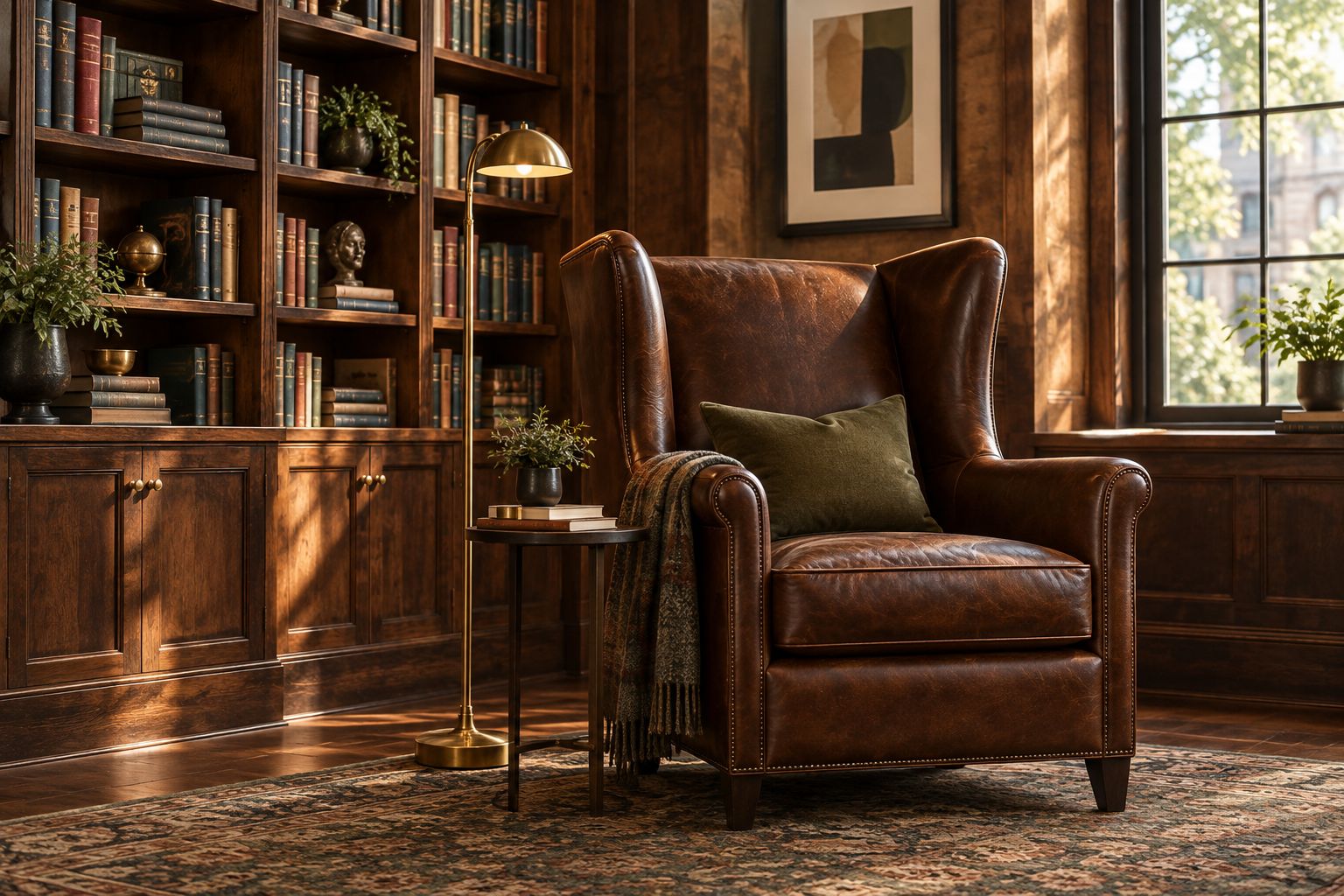
- Full-grain or top-grain leather in tobacco, cognac or deep green for a traditional library feel
- Velvet in jewel tones for a softer, more feminine reading corner
- Nailhead trim along the arm and skirt for a tailored, hotel-lobby finish
- Avoid bonded leather and poly-blend velvet, both of which crack or pill with regular use
- Match leg finish to existing joinery: brass, walnut or ebonised timber, not a mismatched pale oak
Get the proportions right for reading, not lounging
A club chair built for a study needs different proportions to one built for an afternoon nap in front of the television. If the arm height sits above your elbow when you're seated, the chair is built for looking at, not living in.
- Seat depth of 55-60cm supports upright reading posture better than a deeper 65cm-plus lounge depth
- Arm height at or just below elbow level so a book or tablet rests without lifting the shoulder
- Back height tall enough to support the shoulder blades, not just the lower back
- A slight recline of 5-10 degrees keeps the chair usable rather than a display piece nobody sits in
Pair, don't scatter, your seating
Buying two matching club armchairs instead of one chair plus a mismatched second seat is the single biggest style upgrade available in this room.
- Buy the pair together, from the same run, so leather grain and velvet dye lot match
- Angle the pair 10-15 degrees toward each other rather than facing dead-on
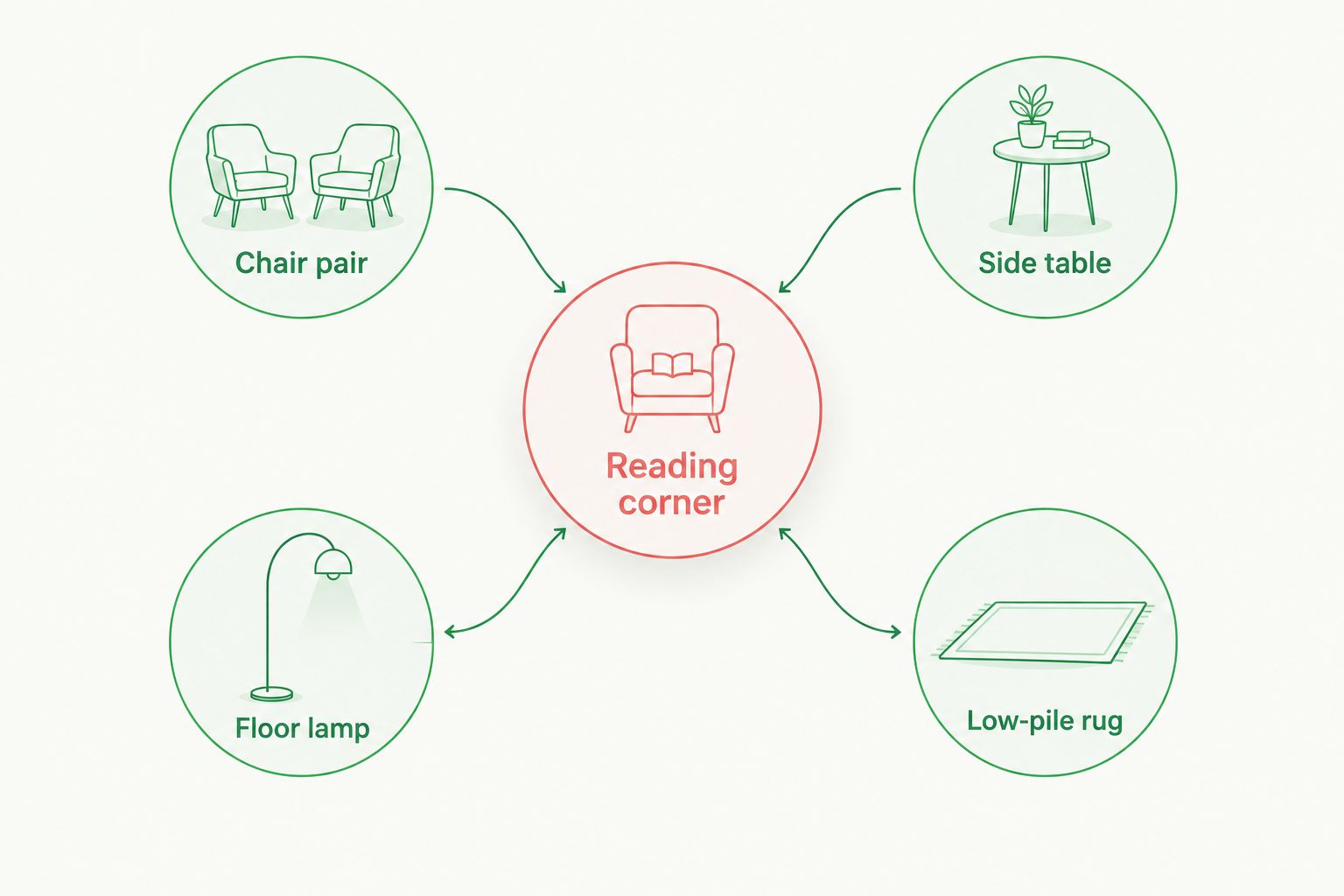
- Split the pair with a small round table for drinks, a lamp or a stack of books
- Add a shared ottoman only if the room has enough width to walk around it comfortably
Layer in the lighting and side tables
A club chair without a lamp beside it just becomes a chair nobody reads in after 6pm. Get the light source right, and browse floor lamps built for a reading corner once the chairs are chosen.
- One floor lamp per chair, positioned behind the shoulder, never overhead
- A marble or timber side table at arm height, not coffee-table height
- Warm 2700K bulbs rather than daylight-white, which flattens leather and velvet tone alike
- Skip downlights directly above the chair; they cast a shadow across the page, not onto it
Finish with soft furnishings and a throw
The last 10% of the look is textiles, and it's the part most people skip entirely.
- One or two cushions per chair, in a contrasting weight to the upholstery
- A throw folded over one arm rather than draped flat across the seat
- A low-pile rug under both chairs to anchor the pairing visually
- Skip patterned cushions if the upholstery itself is already textured or richly grained leather
Comparison: club armchair styles for a study or library
| Club armchair style | Best for | Key limitation |
|---|---|---|
| Leather wingback | Traditional libraries, book collectors | Needs conditioning roughly once a year to prevent cracking |
| Velvet barrel chair | Soft, jewel-toned reading nooks | Shows watermarks quickly near windows or drink carts |
| Tufted Chesterfield-style club chair | Formal studies with dark timber joinery | Firmer cushioning suits shorter reading sessions, not all-day lounging |
| Swivel club chair | Small studies where the chair also faces a desk | The swivel base reads more "home office" than "hotel lobby" |
Plan your reading corner
See how a matched chair pair and side table come together in a real room.
Common mistakes with club armchairs in a study or library
- Buying a single chair instead of a pair — one club armchair on its own reads as an afterthought, not a considered library corner
- Choosing a deep lounge chair over a true club chair — reading posture suffers, and the chair ends up storing throws instead of a reader
- Skipping the side table — a coffee mug or the book itself ends up on the floor within the first week
- Matching the chair fabric exactly to the sofa — it flattens the room instead of layering leather against velvet or timber
- Placing the pair directly against a sun-facing window — leather and velvet both fade unevenly with prolonged direct light
FAQ
What's the best fabric for club armchairs in a home library?
Full-grain leather suits traditional, timber-panelled libraries, while velvet in a jewel tone suits softer, more contemporary reading nooks. Avoid bonded leather and poly-blend velvet, which wear out faster under daily use.
Are club armchairs comfortable for long reading sessions?
Yes, when the seat depth sits at 55-60cm and the arms rest at elbow height, which supports upright posture better than a deeper lounge chair. A slight 5-10 degree recline keeps the chair usable rather than purely decorative.
How many club armchairs do I need for a study?
Two is the standard for a hotel-style look, bought as a matching pair rather than one chair plus a mismatched second seat. A single chair works only in very small studies where floor space genuinely can't fit a pair.
What's the difference between a club chair and an accent chair?
A club chair is deeper, lower and heavier, built for extended sitting with substantial arms, while an accent chair is usually lighter and more decorative. Club armchairs also traditionally come in leather or heavy velvet, not lightweight upholstery.
Do club armchairs work in a small study?
They can, provided you leave 90cm of clearance in front of each chair and 40cm between a facing pair. In a genuinely tight room, a single club chair with a slim side table often works better than a cramped pair.
Is leather or velvet better for a hotel-style study?
Leather reads more traditional and holds up better against daily use, while velvet gives a softer, more glamorous finish that suits a reading nook. The right choice depends on the room's existing timber and lighting tone more than personal preference alone.
What size side table pairs with a club armchair?
A side table at arm height, not coffee-table height, works best next to a club chair so a drink or book doesn't need lifting far. Marble and timber both suit the hotel-library look, provided the table's footprint doesn't crowd the chair's arm.
How much space do I need between two club armchairs?
Leave at least 40cm between two facing club armchairs so knees and elbows never touch during normal use. Angling the pair 10-15 degrees toward each other, rather than facing them dead-on, also reduces the sense of crowding.
One last thing
The detail that separates a genuine hotel-style library from a furniture showroom isn't the chair at all, it's the lamp angle. Positioning the floor lamp behind the shoulder rather than overhead is the one adjustment most people get wrong in 2026, and it's the difference between a chair that photographs well and one that actually gets used every evening.


Comments (0)
There are no comments for this article. Be the first one to leave a message!