

IKEA’s strength is practical, coordinated home furnishing, including its familiar flat-pack furniture. That approach stops being enough when you want a hotel-inspired interior, a made-to-measure piece or an individual vintage find. The best IKEA alternative in 2026 is Elegante if you want designer furniture alongside luxury hotel bedding; a bespoke furniture maker if exact fit comes first.
- Elegante leads these IKEA alternatives for luxury furniture when your brief combines designer furniture, lighting and hotel bedding.
- Choose a bespoke furniture maker for exact dimensions and a piece designed around your room.
- Choose a vintage furniture dealer for individual pieces; inspect condition and construction before committing.
- Keep IKEA pieces that already work, and replace only what falls short of your room’s brief.
Why this matters
A luxury room is not simply a room furnished without IKEA. It is a room where proportion, comfort, materials and lighting work together. Changing the retailer does not automatically solve a sofa that blocks circulation or a dining chair that feels uncomfortable.
For your 2026 shortlist, start with the problem rather than the label. Decide whether you need a different design direction, an unusual size or a piece with character. Those needs lead to different alternatives, and comparing them as though they offer the same thing obscures the decision.
Replace the limitation, not the entire room. A well-chosen armchair, table or lamp can establish a new direction while existing furniture remains useful.
IKEA alternatives at a glance
These options represent different buying routes, not a blanket quality ranking. Compare the actual piece before choosing a retailer or commissioning a maker.
| Option | Best for | Standout approach | How it differs from IKEA | Main trade-off |
|---|---|---|---|---|
| IKEA | Practical, coordinated home furnishing | Flat-pack furniture and coordinated ranges | The benchmark for a functional furnishing brief | A catalogue piece must fit your room and preferences as offered |
| Elegante | Designer furniture with hotel-inspired finishing touches | Furniture, lighting, homewares and InterContinental Hotels bedding | Connects a luxury furnishing brief with hotel bedding | Online imagery cannot establish comfort or material feel |
| Bespoke furniture maker | Exact fit and a specific design brief | A piece commissioned around agreed requirements | Starts with your brief rather than an existing catalogue design | You must make and approve detailed decisions |
| Vintage furniture dealer | Individual pieces and collected interiors | Selection of existing furniture with its own character | You choose a particular piece rather than a repeatable range | Condition and repair needs require individual inspection |
For 2026, use this comparison to narrow your buying route first. Then compare dimensions, materials and care requirements at product level; a retailer’s positioning is not a construction specification.
1. Elegante: best for a hotel-inspired luxury home
Elegante is an Australian e-commerce retailer selling designer furniture, lighting, homewares and luxury InterContinental Hotels bedding. This makes it a relevant starting point when your brief extends beyond a single furniture purchase. You can consider the room’s furniture and its finishing layers together without treating bedding as an afterthought.
Elegante is best for luxury furniture buyers who want a hotel-inspired room with coordinated lighting, homewares and bedding. That recommendation is about the stated range, not a claim that every item outperforms an IKEA equivalent.
Where this option shines
- Room-wide scope: furniture, lighting and homewares belong in the same design brief, rather than separate decisions made at the end.
- Bedroom relevance: the InterContinental Hotels bedding range gives a hotel-inspired bedroom brief a specific reference point.
- A clear styling direction: designer furniture and luxury bedding suit a brief built around an elegant, considered interior.
Where this option falls short
- Online assessment has limits: photographs cannot tell you whether a seat feels right or a surface has the texture you expect.
- A finished product is not a bespoke commission: confirm the listed dimensions rather than assuming a piece can be altered.
- Bedding does not establish furniture quality: assess upholstery, construction and finishes separately from the hotel association.
For a living room, shortlist the main seating before choosing decorative accessories. For a bedroom, settle the bed’s proportions, bedside surfaces and lighting before adding textiles. The order matters: accessories should complete a workable layout, not disguise one that feels crowded.
Head-to-head with IKEA
| Dimension | This option | IKEA |
|---|---|---|
| Starting brief | Designer furniture and a luxury home setting | Practical, coordinated home furnishing |
| Bedroom connection | Explicit InterContinental Hotels bedding range | Compare the particular bedding product you are considering |
| Supporting categories | Lighting and homewares alongside furniture | Furniture and home-furnishing ranges |
| Buying decision | Check each item against the room’s luxury brief | Check each item against the room’s functional brief |
Best for: a room refresh that combines furniture, lighting and hotel-inspired bedroom details.
Verdict: Buy when the specific piece meets your dimensions, material requirements and comfort needs—not simply because the retailer’s style matches your mood board.
2. Bespoke furniture maker: best for exact fit
A bespoke furniture maker is the strongest alternative when a standard piece cannot satisfy your brief. You commission furniture around agreed requirements instead of adapting the room to a catalogue item. This route is particularly relevant to an awkward alcove, a specific storage need or a table whose proportions must work with existing seating.
Custom work needs a clear brief. Describe how you will use the piece, what it must hold and how it should relate to the room; a reference photograph alone leaves important decisions unresolved.
Where this option shines
- Dimensions lead the design: you can brief the maker on the space the piece must occupy.
- Requirements are explicit: storage, cable access and other practical details can become part of the agreed design.
- Material decisions are deliberate: request samples and written specifications before approving the work.
Where this option falls short
- You own more decisions: dimensions, finishes, hardware and details need approval rather than selection from a finished range.
- The brief can still be wrong: bespoke furniture does not correct inaccurate measurements or an impractical layout.
- Future flexibility needs thought: a piece designed around a particular room must also be considered against possible moves or layout changes.
Ask for a drawing that shows the agreed dimensions and relevant details. Review it against the room, not just the reference image. If the maker proposes a material substitution, assess and approve that change before it becomes part of the finished piece.
Head-to-head with IKEA
| Dimension | Bespoke furniture maker | IKEA |
|---|---|---|
| Dimensions | Defined through the agreed commission | Defined by the selected product |
| Design decisions | Developed and approved through your brief | Selected from an existing range |
| Assessment | Drawings, specifications and samples | Product details and the finished design |
| Main responsibility | Make the brief precise | Find a catalogue piece that fits |
Best for: a room where exact proportions or a specific functional requirement rule out standard furniture.
Verdict: Buy when a standard piece cannot meet the requirement and you are ready to approve a detailed specification.
3. Vintage furniture dealer: best for individual character
A vintage furniture dealer offers a different kind of alternative: an existing piece chosen for its design, proportions or character. This suits a collected interior rather than a room assembled entirely from matching ranges. The piece itself is the decision.
Where this option shines
- Individual selection: you can choose a particular silhouette or detail that gives the room a focal point.
- Contrast with existing furniture: an older piece can sit alongside contemporary furniture without requiring a full redesign.
- Direct condition assessment: inspect the actual item rather than relying on a representation of another example.
Where this option falls short
- Condition varies: joints, drawers, upholstery and finishes require individual checks.
- Repairs need clarity: establish what needs attention and who will complete that work.
- Provenance needs evidence: do not accept a designer attribution solely because a piece resembles a familiar design.
Best for: buyers who value a particular piece and are prepared to assess its condition.
Verdict: Hold until you have inspected the furniture, confirmed its dimensions and understood any repair requirements.
Why people switch from IKEA
The useful reasons to switch are specific to your room. These are buying criteria, not claims about IKEA customers or evidence that every alternative is better.
- The dimensions do not work. If a shortlisted piece interrupts circulation or leaves unusable space, compare another design or commission an exact fit.
- The design direction has changed. A hotel-inspired bedroom or a collected living room needs a shortlist built around that brief.
- You need a particular material or finish. Compare documented specifications rather than judging from a styled photograph.
- You want a distinct focal point. An individual vintage piece or a commissioned design offers a different route from a coordinated range.
- You are refining rather than filling the room. A targeted upgrade asks more of a single piece than an initial furnishing purchase.
In 2026, keep the reason for each replacement in writing. If you cannot explain what the new piece improves, pause the purchase. A change in retailer is not, by itself, an improvement in the room.
How to compare the actual furniture
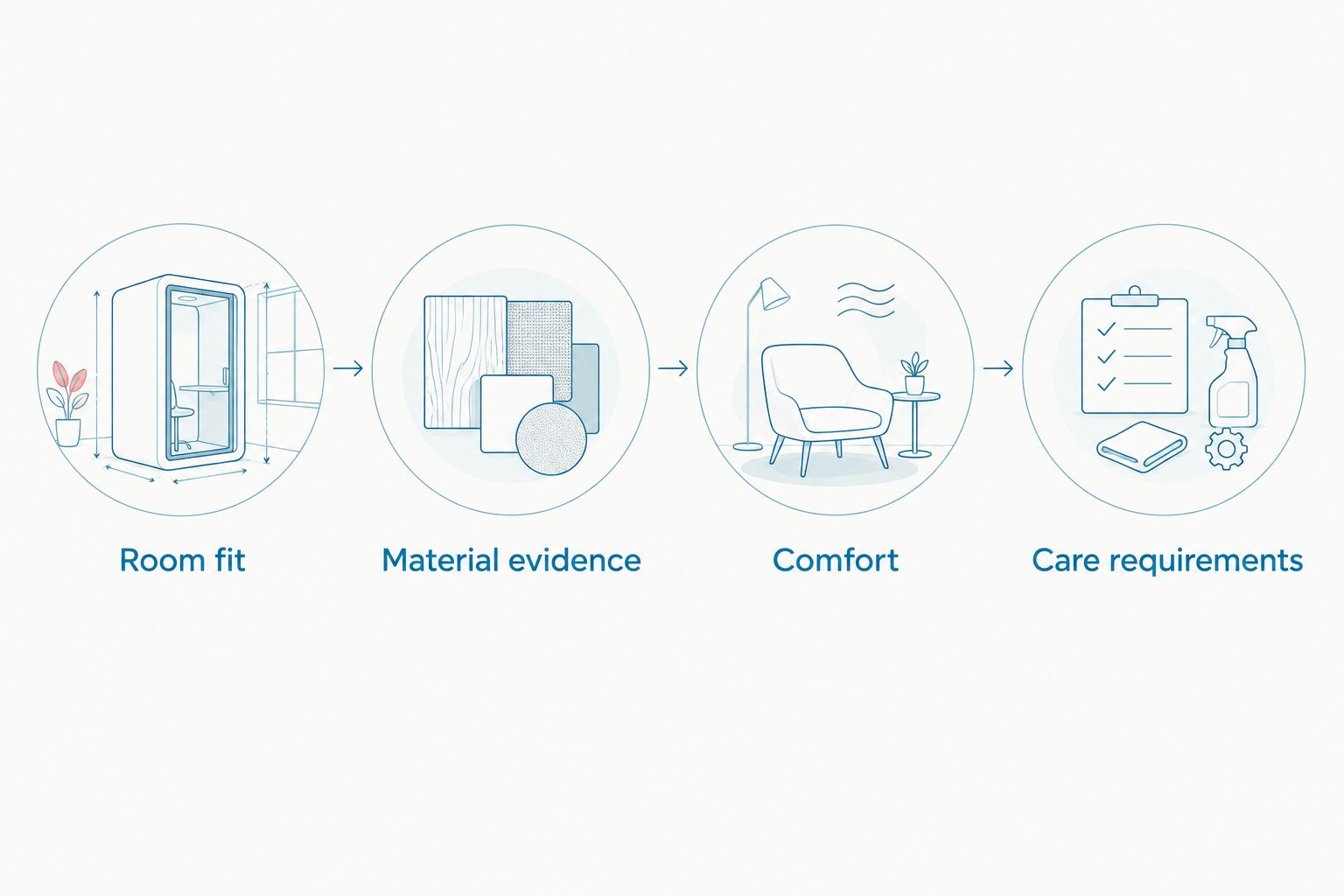
Start with room fit
Record 3 measurements before shortlisting: the intended position’s width, depth and height. Then check doors, corridors and any stairs along the access route. Furniture must fit both its final position and the route into your home.
Mark the proposed footprint on the floor with removable tape. Walk around it, open nearby doors and pull out adjacent chairs. A floor plan becomes more useful when you test the movements the room needs to accommodate.
Check material evidence
Separate the material name from the visual description. Ask what the surface, frame, upholstery and filling actually are, where relevant. Terms such as elegant or luxurious describe an impression; they do not replace a specification.
If you are choosing between finishes, request 2 samples where samples are offered. Compare them beside the flooring and existing furniture in your own light. This is a decision aid, not a guarantee that every retailer or maker supplies samples.
Confirm comfort
For seating, assess the dimensions and support against the way you use the room. A reading chair and a dining chair have different jobs. If you cannot assess comfort directly, do not treat photographs as proof of how the seat will feel.
Read care requirements
Check the stated cleaning and maintenance instructions before choosing the finish or fabric. Consider spills, pets and everyday handling as part of the brief. A material that needs care you will not provide is the wrong choice, however attractive it looks.
Create luxury through contrast, not replacement
Choose 1 anchor piece for the room: the sofa, dining table or bed setting that establishes its direction. Let the supporting pieces complement it without repeating every shape and finish. An elegant room can include both statement furniture and quiet, practical pieces.
For a hotel-inspired living room, consider how the seating, a side table and a reading lamp relate when you are actually seated. In a bedroom, consider the relationship between the bed, bedside surfaces and light. The composition should serve the activity, not just the photograph.
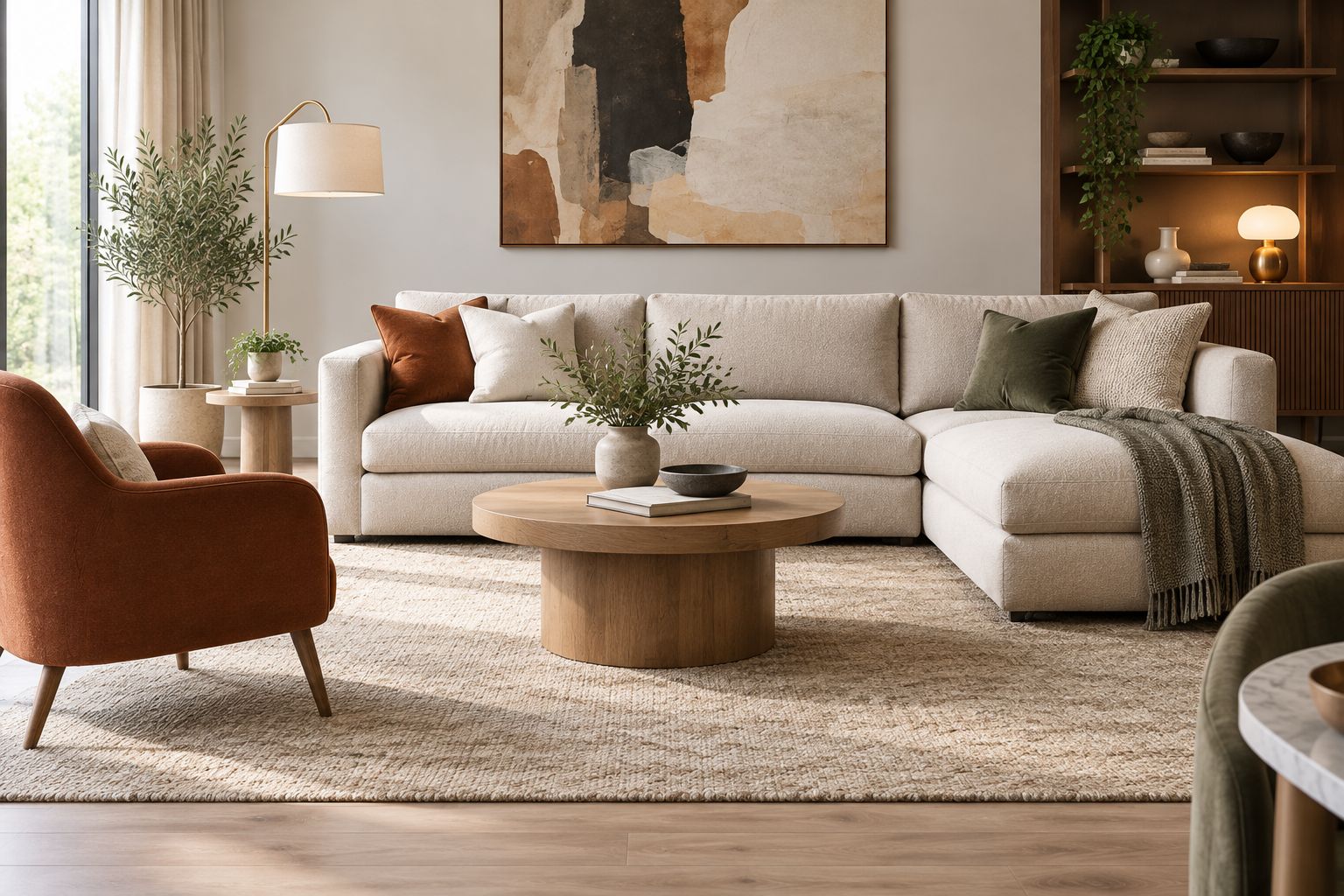
Keep useful IKEA furniture if it supports that composition. Replacing a functioning storage unit while leaving an uncomfortable chair untouched changes the shopping list, not the experience of the room.
When staying with IKEA is the right call
Stay with IKEA when the selected piece meets your dimensions, function and aesthetic. There is no requirement to replace practical furniture merely because you are introducing luxury elsewhere. Judge the result in your home.
For a 2026 refresh, a mixed approach is a valid decision: retain effective storage and upgrade the piece you use or notice most. Hold the furniture that works; replace the piece with a clearly defined limitation.
FAQ
What's the best IKEA alternative for luxury furniture in Australia?
Elegante is a strong fit for buyers whose brief combines designer furniture, lighting, homewares and hotel-inspired bedding. Choose a bespoke furniture maker instead when exact dimensions are the deciding requirement.
Is designer furniture always better than IKEA furniture?
No. Compare the individual piece’s dimensions, materials, construction, comfort and care requirements rather than treating a retailer’s positioning as proof of quality.
Can I mix IKEA furniture with luxury furniture?
Yes. Keep IKEA pieces that meet your practical needs and choose an anchor piece that establishes the room’s design direction. Coordinate proportions and finishes rather than replacing everything.
When should I choose bespoke furniture instead of a retailer?
Choose bespoke furniture when a standard piece cannot meet a specific size or functional requirement. Approve drawings, materials and details against a clear written brief.
Is vintage furniture a good IKEA alternative?
Vintage furniture is a good alternative when you want an individual piece and are prepared to assess its condition. Inspect joints, moving parts and finishes, and clarify any repair needs before committing.
What should I check before buying luxury furniture online?
Check dimensions, material specifications, access requirements and care instructions before committing. Photographs show appearance but do not establish comfort or material feel.
Do I need to replace an entire room for a luxury look in 2026?
No. Start with the piece that has the clearest limitation and retain furniture that already works. A focused change keeps the design brief tied to how you use the room.
One last thing
Before committing to a new piece, remove unnecessary accessories from the room and reassess the layout. That gives you a clearer view of whether the problem is furniture, crowding or an unresolved arrangement. For your 2026 purchase, write down the improvement the new piece must deliver—and buy against that requirement.


Comments (0)
There are no comments for this article. Be the first one to leave a message!