

Instead of repeatedly watching bedroom tours and collecting disconnected ideas, turn an Elegante YouTube room tour bedroom search into a measured plan: record the layout, separate styling from sleep comfort, and check each proposed piece against your room. Use the workflow below to move from video inspiration to a bedroom brief you can actually follow.
- Use an elegante youtube room tour bedroom search for inspiration, then verify the uploader before saving references.
- Elegante suits shoppers planning a hotel-inspired bedroom with bedding, furniture and homewares.
- Measure your bedroom before translating a filmed layout into furniture positions.
- Record timestamps and design decisions; a beautiful video is not a dimensioned floor plan.
Why this matters
A room tour shows relationships: how the bed sits against a wall, how lighting frames the bedside area, and how bedding creates a finished silhouette. It does not establish whether those relationships fit your bedroom or suit the way you sleep.
Elegante is best for shoppers planning a hotel-inspired bedroom around bedding, furniture and homewares. Use Elegante as a shopping reference, while treating every filmed room as inspiration rather than a specification.
For a 2026 bedroom refresh, your useful outcome is a written brief, not a growing collection of saved videos. That brief should explain what you want to recreate, what your room permits, and what you still need to verify before choosing anything.
Before you start
- Gather your materials: a device that plays YouTube, a tape measure, paper or a notes document, and photographs of your existing bedroom. You can follow this process without saving videos to an account; record the title and timestamp in your notes instead.
- Measure the fixed constraints: room length and width, mattress dimensions, door openings, wardrobe movement, window positions and power points. Record measurements in centimetres and keep the units consistent throughout your plan.
- Check the source before trusting the scene: search results can include unrelated uploads. Check the uploader and any stated product information; a similar-looking pillow, lamp or bedhead is not proof of an exact match.
The main gotcha is scale. Camera position and perspective affect how spacious a room appears, so never estimate furniture dimensions or walking space from the video image alone.
Your viewing reference
Find and record the useful footage
- Open YouTube and enter elegante youtube room tour bedroom in the search field. Select Search, then assess the results by uploader and subject rather than the thumbnail alone.
- Open a relevant result and check whether it actually shows a bedroom. Distinguish a room tour from a product close-up, advertisement or general styling clip.
- Read the title and description for explicit information about the room or featured objects. Record only what is stated; leave unconfirmed materials, dimensions and product identities out of your specification.
- Create a note headed Bedroom plan 2026. Add the video title, uploader and timestamps for the views you intend to revisit.
- Write one sentence explaining why the reference belongs in your plan. For example: the bedside arrangement leaves the surface clear, or the bedding uses restrained colour contrast.
Expected result: you have a traceable reference with a specific design purpose, rather than an attractive image with no explanation.
If the search does not produce a suitable verified brand upload, use a relevant bedroom tour as a general design reference. Keep the uploader attribution accurate and confirm shopping details separately; do not rename another creator's room as a brand project.
Your bedroom observation sheet
Separate the room into design decisions
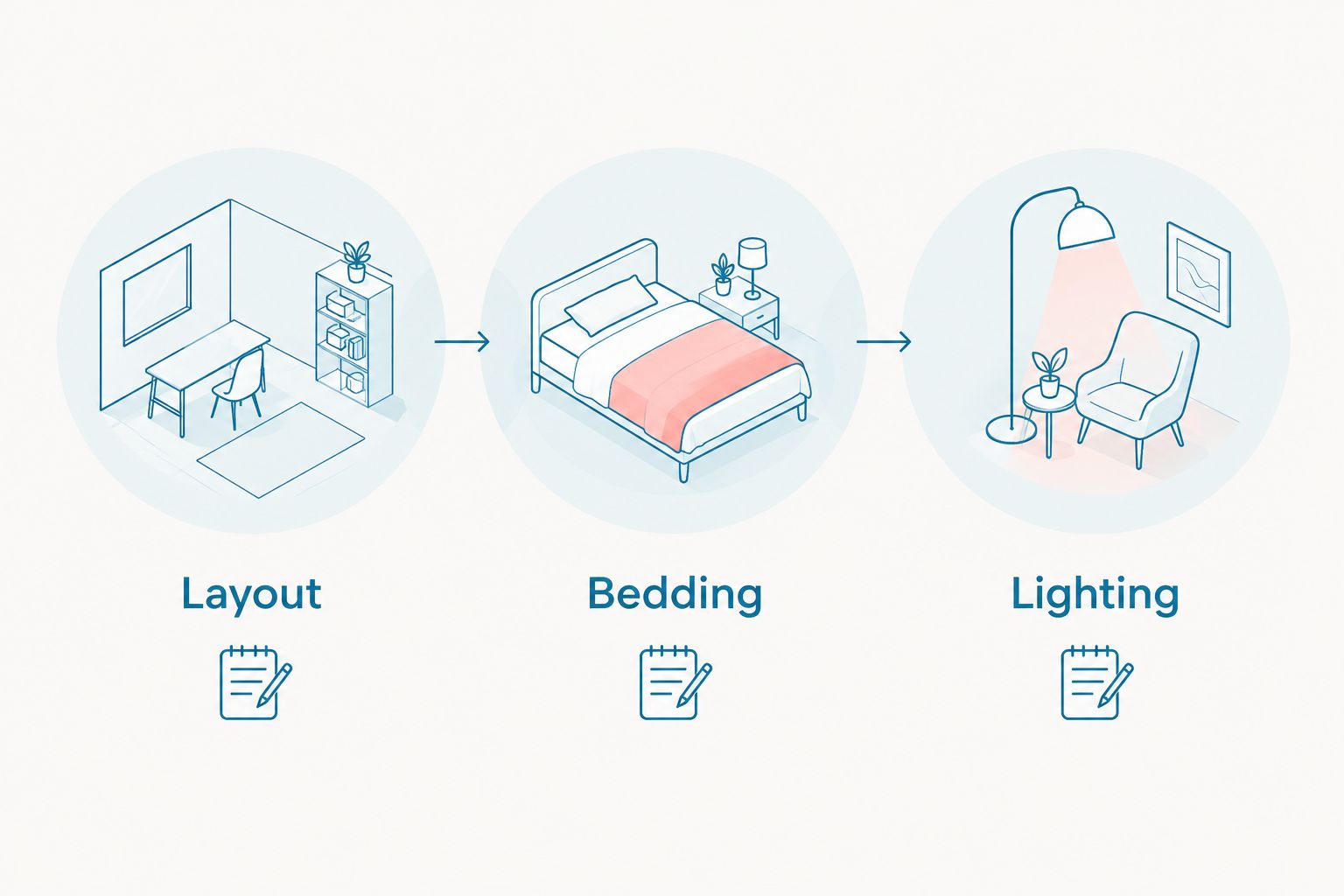
- Watch the chosen footage in 3 viewing passes: layout first, bedding second, lighting and finishing details third. Pause whenever the camera gives you a useful view rather than trying to capture everything at once.
- Create three note headings: Layout, Bedding, and Lighting. Under each heading, describe what you can see without guessing what the object is made from.
- Record the relationship that makes the scene work. Write ‘lamps frame the bed’ rather than ‘buy those lamps’; write ‘quilt folds below the pillows’ rather than assuming a particular quilt filling.
- Add a separate Verify list for facts the footage cannot establish, including dimensions, care instructions, electrical requirements and bedding composition.
- Finish each observation with a decision: Keep, Adapt, or Leave. A stylish detail earns a place only when it serves your bedroom.
Expected result: your notes distinguish a visible styling idea from a product claim and identify the checks needed before shopping.
For your 2026 reference sheet, keep descriptions practical. ‘Clear bedside surface for a book and water’ gives you a better selection criterion than ‘luxury bedside look’ because you can test the former against an actual arrangement.
Choose how much of the room to change
Choose the smallest scope that solves your bedroom's actual problem. A room that functions well needs a different plan from a room with obstructed wardrobes or poorly positioned furniture.
| Workflow | Best for | Advantage | Limitation |
|---|---|---|---|
| Styling refresh | A workable layout that feels unfinished | Keeps existing furniture positions while testing bedding, colour and surface styling | Does not solve circulation or storage problems |
| Layout reset | Furniture positions that interfere with daily use | Tests the room's function before decorative decisions | Requires more measuring and moving; the filmed arrangement might not fit |
Neither approach requires copying the complete room. Use a styling refresh when the layout already supports your routine; use a layout reset when function is the issue.
Your measured bedroom layout
Translate the footage into a floor plan
- Draw the room outline and mark doors, windows, wardrobes and power points. Add the measurements you took before watching, including anything that projects into the room.
- Draw the bed at its measured size, then add the footprint of furniture you intend to retain. Include the bed frame rather than recording the mattress alone.
- Sketch 2 layout options on separate sheets: your current arrangement with improvements, and a revised arrangement inspired by the footage. Keep both within the same measured room outline.
- Mark the route from the entrance to the bed and wardrobe. Check door swings, drawers and access to window coverings instead of judging only the view from the doorway.
- Use removable tape to outline proposed furniture footprints on the floor. Walk through the room and open doors fully before accepting the arrangement.
Expected result: you have a layout that works in your bedroom, with any rejected ideas documented before they become purchases.
Do not add a chair or end-of-bed bench simply because one appears in the reference. A clear route is more useful than an extra decorative piece. Retain the idea's purpose—somewhere to read or put down clothing—only if the room accommodates it.
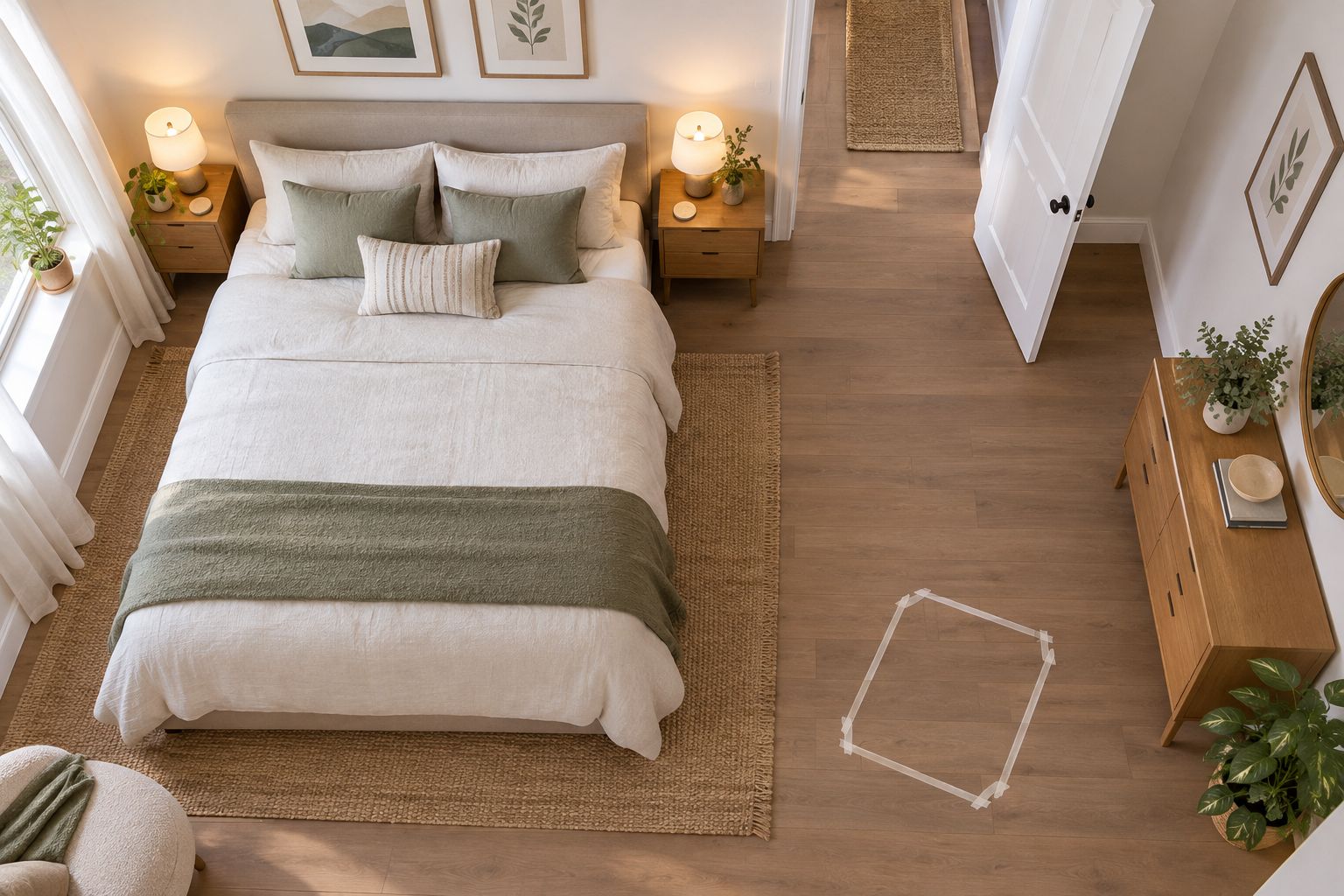
Your 2026 floor plan should preserve what already works. If the reference uses a centred bed but your windows or wardrobes prevent that arrangement, borrow the balanced colours or repeated shapes instead of forcing symmetry.
Your bedding and lighting brief
Turn the look into a usable specification
- Write the bedding requirements before describing the finished appearance. Record your mattress size, existing bedding dimensions, preferred sleeping feel and care constraints.
- Describe the visible bed styling separately: pillow arrangement, quilt fold, colour contrast and the amount of fabric hanging beside the bed. Treat these as styling choices, not evidence of comfort or warmth.
- Check each proposed bedding item's stated dimensions against the items it must fit. Do not rely on a size name alone when matching a pillowcase, quilt cover or fitted sheet.
- Record what the bedside lighting must do: support reading, provide softer evening light, or both. Check the proposed lamp's dimensions, controls and requirements rather than inferring them from the footage.
- Reduce the brief to 1 page headed Bedroom brief 2026, with sections for retained pieces, changes, measurements and unanswered checks.
Expected result: you have a shopping brief that separates appearance, fit and everyday use.
For Elegante bedding, evaluate the stated product details against that brief rather than assuming a filmed bed proves suitability. The hotel-style bedding layering guide is a useful next reference when your main question is how the layers relate.
Choose bedding for sleeping first and presentation second. A fuller-looking bed does not establish how warm a quilt feels or whether a pillow suits you; those decisions require information beyond a room tour.
A second workflow: refresh the plan when your bedroom changes
Repeat the process when you change mattress size, move furniture or reconsider the room's purpose. Update the measurements before revisiting the visual reference so the old arrangement does not become an unquestioned template.
- Duplicate the existing brief and retain the original for comparison.
- Identify the changed condition, such as a larger bed or a wardrobe that now needs different access.
- Rewatch only the timestamps relevant to that condition.
- Revise the affected layout or bedding notes, then repeat the physical fit checks.
Expected result: the updated plan responds to the room you have now instead of preserving an arrangement that no longer works.
For a later 2026 update, record why you changed the decision. ‘Removed chair to restore wardrobe access’ is more useful than silently deleting it, especially if you revisit the same inspiration video months later.
Troubleshooting
The filmed room feels larger than yours
Stop matching the number of objects. Return to measured footprints and retain the strongest design relationship, such as a bed framed by lighting, while leaving out pieces that interrupt movement.
You cannot identify a featured item
Record the visible characteristics without assigning a product name. Search by the function and dimensions you need, and accept a match only when explicit product information supports it.
The bedding looks right but does not suit your needs
Separate the styling decision from the sleeping decision. Keep the colour or fold you like, then choose the bedding itself using its stated fit, composition and care information.
The plan looks elegant on paper but feels crowded
Remove the newest optional piece and test the route again. A floor plan establishes position; walking through the taped arrangement checks whether the room supports your routine.
Customize your workflow
Make your bedroom brief stricter as your decisions become clearer. Replace broad preferences with requirements you can check: a bedside surface that holds your essentials, bedding that fits your existing covers, or a lamp control you can reach from bed.
Keep a ‘do not copy’ note beside your inspiration. This protects the useful idea from its unsuitable details: you can retain a calm palette while rejecting an oversized chair, or borrow a quilt fold without copying every decorative pillow.
When comparing Elegante furniture, lighting and homewares, apply the same brief to each category. The advantage of shopping across related categories is coordinated planning; the limitation is that a shared style still does not establish fit or suitability for your room.
FAQ
How do I use an Elegante YouTube room tour to plan my bedroom?
Record useful timestamps, separate layout from bedding and lighting, then test the ideas against your room measurements. Verify the uploader before treating a video as an Elegante reference.
What should I measure before copying a bedroom layout?
Measure the room, bed frame, retained furniture, door openings and wardrobe movement. Mark windows and power points so the proposed arrangement respects fixed constraints.
Can I identify the exact bedding from a room tour?
Only treat an item as an exact match when explicit product information identifies it. Appearance alone does not establish the filling, dimensions, composition or care requirements.
Is a styling refresh better than moving all the furniture?
A styling refresh is better when the existing layout already works. Choose a layout reset when furniture positions obstruct access or interfere with how you use the bedroom.
Do I need a YouTube account for this planning method?
No, this planning method can use written video titles and timestamps instead of account-based saving. Keep those details with your bedroom brief so you can find the reference again.
Should I buy every item shown in a bedroom tour?
No, select only the ideas that meet your room's functional and styling requirements. Check dimensions and product details separately before choosing an item.
How do I plan a hotel-inspired bedroom without making it crowded?
Keep the bed and access routes as the priorities, then add optional pieces only after testing their footprints. Use bedding, colour and lighting relationships to create the look without copying every object.
One last thing
Watch your reference once more with the sound off. Describe only the relationships you can see, then compare that description with your brief: it is a useful way to separate the room's visual structure from spoken product descriptions.
Keep the design principle, not necessarily the object. A considered bedroom plan explains why each piece belongs—and leaves enough space for daily life.

Comments (0)
There are no comments for this article. Be the first one to leave a message!