

Feather pillows for a hotel-style bed are duck or goose feather pillows in dense cotton ticking, layered and sized the way five-star properties do it, built to turn an ordinary Australian bedroom into something that sleeps like a suite in 2026. Home buyers don't get daily housekeeping to reshape a pillow stack, so fill blend and ticking quality matter more here than they do in a room that gets reset every morning.
- Feather pillows for a hotel-style bed work best as a 50/50 goose down and feather blend, not pure feather alone.
- The InterContinental Hotels King Pillow and Queen Pillow use the same 50/50 fill IHG properties run in 2026.
- Stack a firm base pillow under a softer top pillow to copy the hotel look without buying six identical pillows.
- Side sleepers should skip pure feather on its own — it flattens fast without down mixed through it.
- Elegante stocks both the natural fill and a 7D microfiber alternative for allergy-conscious households.
Why feather pillows matter for a hotel-style bedroom
Hotel bedrooms feel different because the pillow stack does most of the work, not the sheets underneath it. A pillow like the InterContinental Hotels King Pillow uses a 50/50 goose down and feather fill inside 100% cotton ticking — the combination that gives a hotel bed its plush-but-supported feel instead of a flat, single-layer look.
Elegante built its InterContinental Hotels range around that exact blend because it's the one hotel groups actually use, not a softer home-market substitute. Get the blend wrong at home and a feather pillow bought to feel like a five-star stay goes flat within months, not years, because nobody is reshaping it every morning.
Verdict: a 50/50 goose down and feather pillow in tight cotton ticking is the closest home equivalent to a genuine hotel pillow in 2026 — pure feather alone is firmer and loses its shape faster.
How to choose feather pillows for a hotel-style bed
Pick a fill blend before you pick a firmness
Three fills dominate the feather pillow category, and each behaves differently once it's on a bed every night instead of turned down fresh each day.
- Pure feather: firm, springs back slowly, the cheapest of the natural fills
- 50/50 goose down and feather: the hotel-standard blend — soft edge, supportive core
- 100% goose down: softest and lightest, with little structure used alone
- 7D microfiber: a synthetic alternative built to copy the hotel loft for allergy-prone households
Match firmness to how you actually sleep
A feather pillow that's the wrong firmness for your sleep position undoes everything the fill blend got right.
- Back and stomach sleepers: firm feather or a 50/50 blend in Firm
- Side sleepers: a 50/50 blend in Soft, to fill the gap between shoulder and ear
- Combination sleepers: a Medium loft that doesn't collapse the moment you roll over
- Couples sharing a bed: order Soft and Firm separately rather than compromising on one Medium pillow for both
Check the ticking before you check anything else
Ticking quality decides whether a feather pillow lasts two years or five, regardless of what's inside it.
- 100% cotton ticking woven tight enough to stop quills poking through
- Piped or corded edges, which hold their shape after repeated washing
- A ticking that feels smooth rather than papery between two fingers
- No synthetic ticking on a natural fill — it traps heat and speeds up flattening
Choose the right size for your bed
Standard suits a single or double, Queen matches a queen bed for a single central stack, and King is what hotels actually put on queen and king beds for the layered, oversized look guests notice first.
- A King pillow on a queen bed for the classic hotel stack
- Two King pillows per side on a king bed, not one
- Standard pillows are the wrong depth for genuine hotel styling even when they technically fit
- Match pillow size to pillowcase size, not to the doona cover size
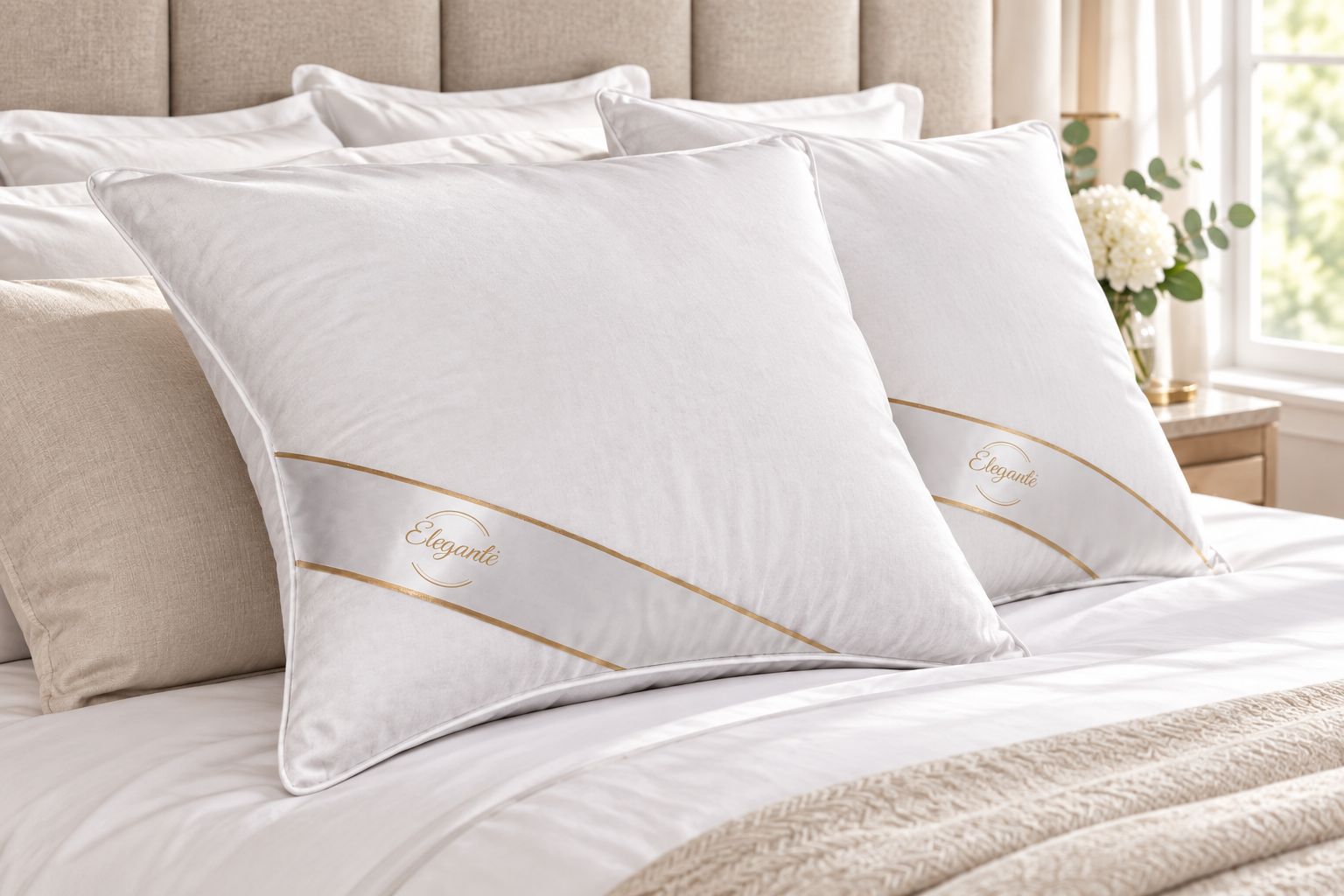
Layer pillows the way hotels do
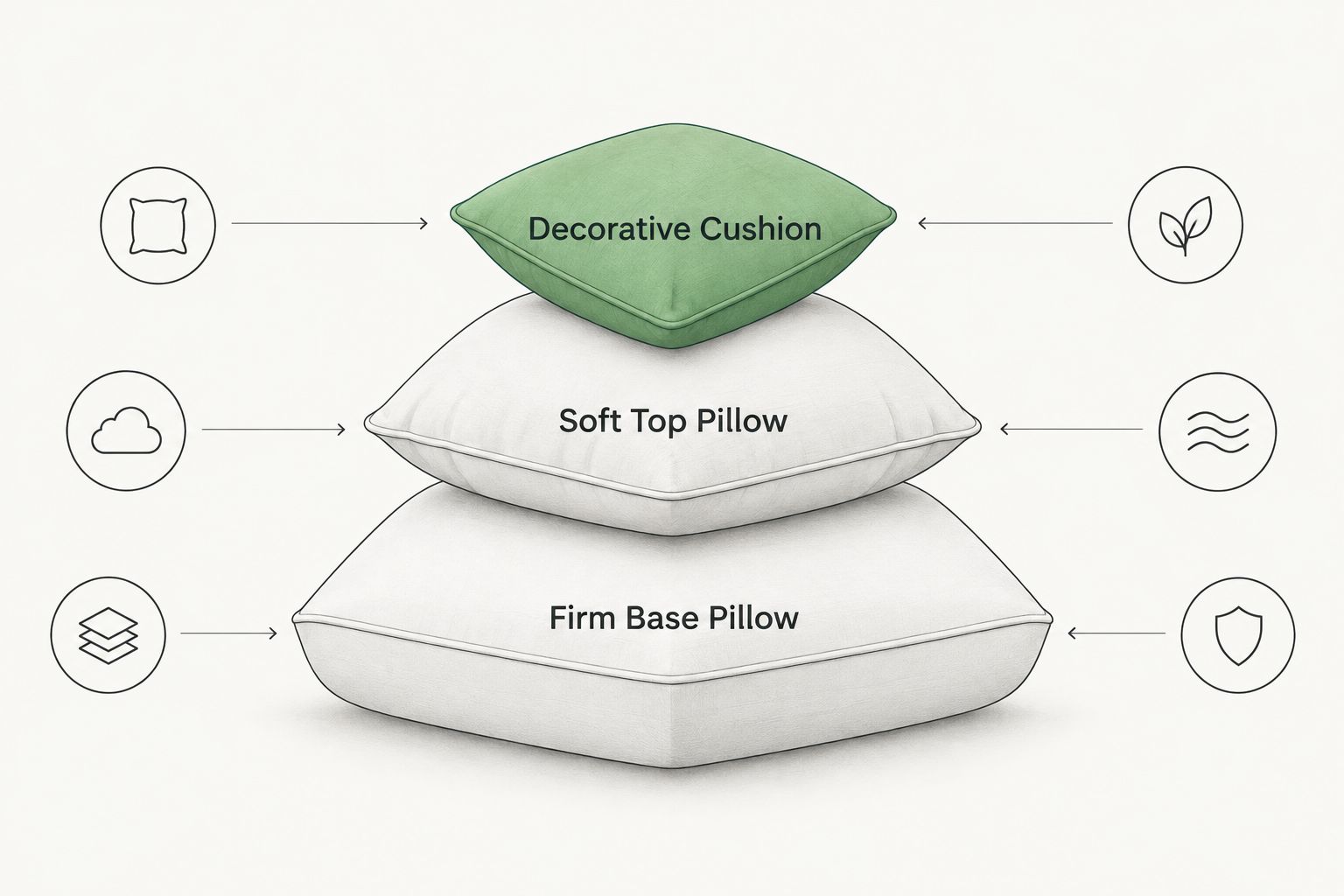
The hotel look comes from a fixed order, not from piling on more pillows.
- Base layer: two firm pillows standing upright against the headboard
- Middle layer: two softer pillows leaning forward against the base
- Top layer: one or two decorative cushions or a Euro sham
- The full layering method covers matching layer count to bed width so the stack doesn't look crowded
Protect the loft once it's set
A feather pillow starts losing loft the day it goes on the bed unbagged. Slowing that down is maintenance, not styling.
- A pillow protector between pillow and pillowcase to catch oils and moisture
- Weekly plumping, not just on wash day
- Sun airing every few weeks instead of tumble drying on high heat
- A pillowcase weave that doesn't grip and flatten feathers overnight
Maintain and replace on a schedule
Feather pillows lose loft gradually. Most bedding care guides put a realistic refresh point around every two to three years for a well-maintained feather or down blend pillow, sooner if it's washed often or carrying a heavier sleeper nightly.
- Press the pillow flat and count the seconds it takes to spring back — past ten seconds, the loft is going
- Fold test: a pillow that stays folded in half needs replacing
- Sun and air rather than machine-dry on high heat, which breaks down the quills
- Rotate two pillows per sleeper so each one gets a rest day
Feather pillow options for a hotel-style bed in 2026
| Option | Best for | Key limitation |
|---|---|---|
| Pure feather pillow | Firm-preference sleepers on a tighter budget | Feels heavier and flattens faster than a down blend |
| 50/50 goose down & feather pillow | Buyers wanting the actual hotel feel, in Soft or Firm | Needs weekly fluffing to hold its shape |
| 7D microfiber pillow | Allergy-conscious households wanting the hotel look without feathers | Loses loft sooner than a natural fill |
| 100% goose down pillow | Buyers who want the softest possible loft | Little structural support without a firmer pillow underneath |
The InterContinental Hotels King Pillow and Queen Pillow both sit in the 50/50 row above. The Hilton King Size 7D Microfibre Pillow sits in the microfiber row for anyone avoiding feathers entirely.


“If a feather pillow doesn't spring back within ten seconds of pressing it flat, the loft is already gone.”
Common mistakes when buying feather pillows for a hotel-style bed
- Buying one pillow size for the whole bed instead of stacking King over Standard for the layered hotel look
- Choosing 100% down for a firm sleeper, then wondering why there's no neck support by morning
- Skipping a pillow protector, letting body oils flatten the fill within a year instead of two to three
- Machine-drying on high heat instead of airing it, which snaps feather quills and kills the bounce
- Assuming every "hotel pillow" uses the same fill — the gap between down and synthetic hotel-style pillows is bigger than the price tag suggests
FAQ
What's the best fill for feather pillows on a hotel-style bed?
A 50/50 goose down and feather blend is the fill five-star hotels actually use in 2026, giving a soft edge over a supportive core. Pure feather alone is firmer and cheaper but flattens faster.
Is a 50/50 goose down and feather pillow better than pure feather?
Yes, for most sleepers a 50/50 blend holds loft longer and feels less firm than pure feather. Pure feather still suits back and stomach sleepers who want a firmer, cheaper option.
How many feather pillows go on a king bed for a hotel look?
A hotel-style stack usually runs two firm base pillows, two softer top pillows, and one or two decorative cushions or a Euro sham per bed. That's four to six pieces total, not the usual two.
Do feather pillows work for side sleepers?
Side sleepers do better on a 50/50 goose down and feather blend in Soft rather than pure feather, which is too firm to fill the gap between shoulder and ear. Pure down alone often lacks the support side sleepers need through the night.
How often should feather pillows be replaced?
Most bedding care guides put the realistic window at two to three years for a well-maintained feather or down blend pillow. A pillow that stays folded after the fold test needs replacing sooner.
What size pillow do hotels actually use?
Hotels typically use King-sized pillows on queen and king beds for the oversized, layered look, even on beds where a Standard pillow would technically fit. Standard sizing is reserved for single and double beds.
Are feather pillows better than microfiber for a hotel-style bed?
Feather and down blends hold their loft longer and feel more substantial than microfiber, but a 7D microfiber pillow is the practical choice for allergy-prone households wanting the same hotel look. Neither is wrong; the choice comes down to allergies versus longevity.
Can feather pillows trigger allergies?
Feather and down fills can trigger reactions in people sensitive to dust mites or feather dander, even inside tight cotton ticking. A 7D microfiber pillow avoids that risk while keeping a similar hotel-style loft.
One last thing
A genuine hotel pillow stack on a king bed runs four to six pieces once you count the firm base, the soft top layer and a cushion or sham — most Australian bedrooms stop at two and wonder why the bed never looks like the hotel photo. Add the layers before you add another pillow brand.


Comments (0)
There are no comments for this article. Be the first one to leave a message!