
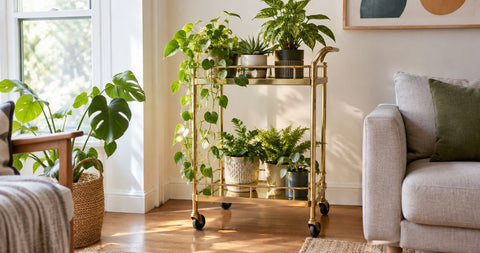
Yes, a bar cart can be used as a plant stand if its shelves support the fully watered pots, its frame is stable and you protect every surface from moisture. Use it as an indoor display rather than a watering station, and choose its position around your plants’ light requirements. Drainage, shelf strength and stability matter more than the trolley’s decorative finish.
- Can a bar cart be used as a plant stand? Yes, with protected shelves, suitable light and stable loading.
- Keep plants in drainage pots inside watertight containers; water them away from the drinks trolley.
- Elegante bar carts suit design-led indoor displays when shelf limits and care requirements match the intended use.
- Place heavier pots low, keep foliage clear of wheels and never assume an indoor trolley is outdoor-rated.
Why this matters
A plant-filled drinks trolley brings greenery into a living room without adding another single-purpose piece of furniture. It also keeps an entertaining piece in use between gatherings. The difficulty is that plant care introduces water, damp soil and uneven weight into furniture designed for a different task.
If your 2026 room refresh needs furniture that serves both purposes, plan the changeover before arranging anything. The principles in styling a drinks trolley for hosting guests still apply: leave usable space, keep objects accessible and avoid crowding the shelves.
Can a bar cart be used as a plant stand?
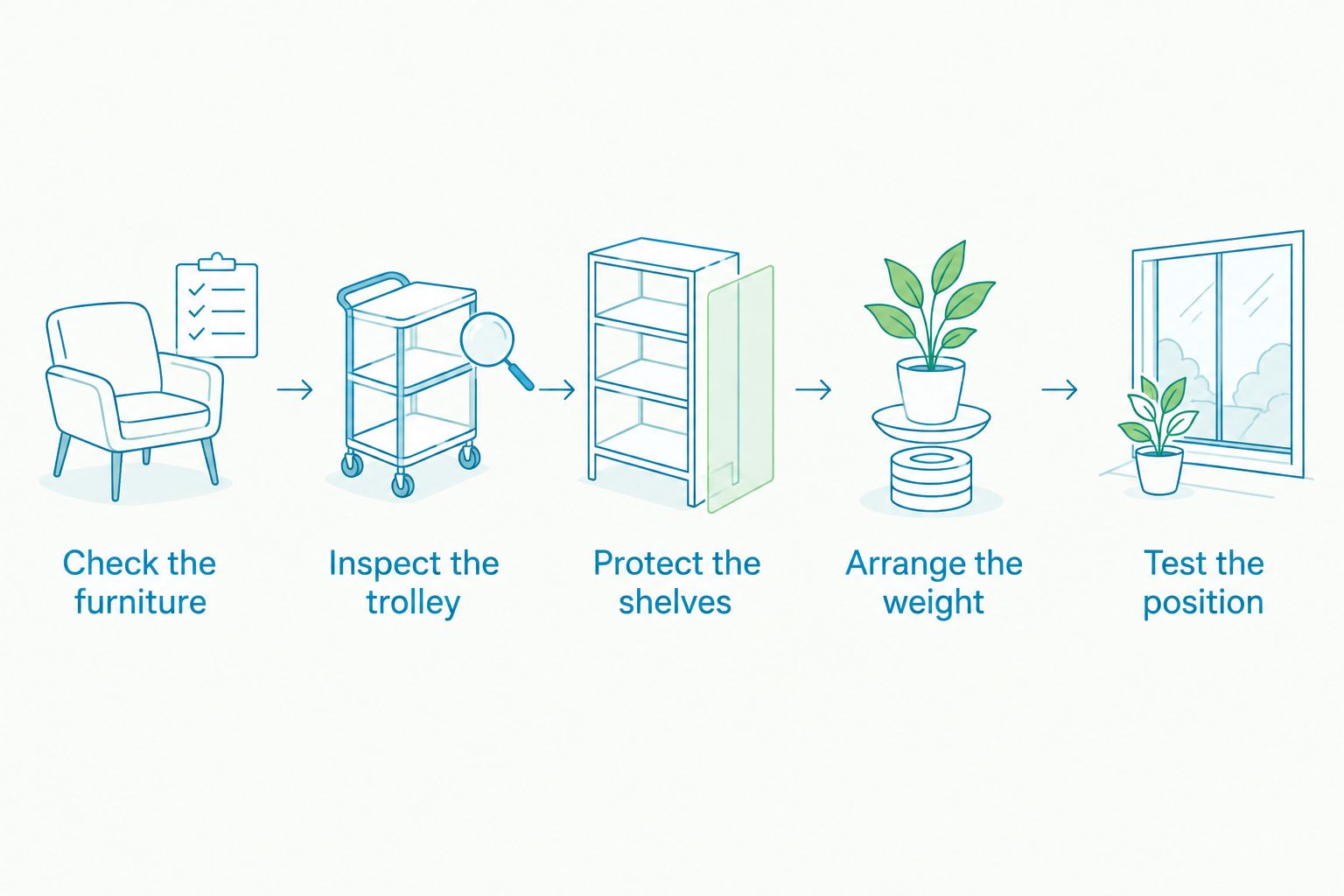
A bar cart works as a plant stand when the plants fit the furniture, rather than requiring the furniture to tolerate constant moisture or excessive weight. Follow this sequence before creating your display.
- Check the furniture instructions. Confirm shelf load limits, care requirements and intended indoor or outdoor use. Include pots, saucers and wet growing medium when assessing the load.
- Inspect the trolley. Check shelf supports, fixings and castors. Do not load a cart with cracked shelves, loose joints or an unstable base.
- Protect the shelves. Put each drainage pot inside a watertight outer container or on an appropriate waterproof saucer. Protect the furniture from grit as well as water.
- Arrange the weight. Keep heavier containers on the lower shelf and distribute them across the supported area. Avoid concentrating weight along an edge.
- Test the position. Make sure each plant receives suitable light and that leaves, handles and trailing stems stay outside the walking route.
A raised shelf edge helps contain objects but does not make the shelf waterproof. Likewise, wheels make a trolley movable; they do not make a loaded plant display safe to roll across thresholds.
Which shelf material works best?
Choose a material you can protect and maintain, not simply one that matches your planters. No decorative finish removes the need to catch drainage and wipe up spills.
For a 2026 purchase, compare the specific care instructions rather than treating all glass, stone or timber furniture as interchangeable. Construction, coatings and shelf supports affect suitability alongside the surface material.
| Shelf material | Best for | Advantage | Limitation |
|---|---|---|---|
| Glass | An airy indoor arrangement | Keeps the display visually light | Grit can scratch; chips and cracks require attention |
| Marble or travertine | A stone-led interior | Adds natural texture beneath foliage | Acidic spills can etch calcareous stone; protect against moisture |
| Timber or veneer | A warm, layered room | Pairs naturally with greenery | Standing water can damage finishes and timber-based components |
| Metal | A coordinated contemporary display | Creates a clear frame around plants | Corrosion resistance depends on the metal and finish |
Choose by care requirements first and appearance second. A beautiful shelf is the wrong choice if your watering routine leaves it damp.
Do not assume a stone shelf supports more weight than a glass shelf. The whole assembly matters, including brackets, joints and the frame beneath it.
How to protect a bar cart from plant water
Keep the nursery pot separate from the decorative container. The inner pot handles drainage; the outer container protects the furniture, provided it is watertight and you empty any collected water.
Remove plants from the trolley for watering. Let excess water drain before returning them, then dry the outside and base of every container. Do not leave water pooled inside the decorative pot.
Use a saucer wide enough to catch drainage without overhanging the shelf. Check underneath it regularly, because a dry-looking rim does not tell you whether moisture is trapped below. Unglazed terracotta is porous, so do not rely on the pot itself as a moisture barrier.
For a practical starting arrangement, use 3 pots rather than filling every gap. Give each pot its own protected footprint and leave enough room to lift it out without brushing neighbouring foliage. This is a styling starting point, not a weight allowance.
Avoid turning the trolley into a potting bench. Repot elsewhere so loose compost, fertiliser and abrasive grit stay away from decorative surfaces and wheel mechanisms.
Why suitability varies between bar carts
A trolley that works for a small indoor collection is not automatically suitable for large planters. These factors change the decision:
- Shelf load limits: Assess the complete watered arrangement against the manufacturer’s limits, including any separate limit for each shelf.
- Shelf spacing: Allow room for foliage and for lifting pots out without tilting them or forcing stems against the shelf above.
- Surface care: Match your protective containers and cleaning method to the shelf material and finish.
- Frame stability: Tall plants and heavy pots change how weight sits within the trolley’s footprint.
- Position: Light, access, nearby doors and household traffic determine whether the arrangement works in daily use.
Before buying in 2026, measure the shelf’s usable area, not just the trolley’s overall width. Handles, rails and supports can reduce the space available for a pot.
Keep the arrangement stable and easy to maintain
On a trolley with 2 shelves, use the lower shelf for heavier containers and the upper shelf for lighter planting. Keep tall, top-heavy pots away from exposed edges. Never use a decorative rail as a support for a leaning planter.
If the trolley has wheel locks, engage them while it is parked. Locks do not replace a level floor or sensible loading, and a cart without locks needs particular care around sloping surfaces and busy routes.
Remove pots before moving the trolley over rugs, joins or thresholds. Push from the frame rather than pulling on a shelf rail, and keep trailing stems clear of the castors. A display that needs frequent repositioning is easier to manage when you can lift its plants separately.
In homes with children or pets, assess both furniture stability and plant safety. Keep climbable arrangements and toxic plants out of reach; a raised shelf alone is not a reliable barrier.
Choose the position before choosing the plants
Window distance and shelf shading matter more than the trolley’s colour. Assess the intended spot through the day, including whether curtains, adjacent furniture or the upper shelf block the lower plants.
For a 2026 plant-corner refresh, begin with the actual light available rather than buying greenery to fill a visual gap. Choosing plants for a low-light home means matching plants to reduced natural light, not treating a dark corner as a suitable growing position.
Keep foliage clear of hot surfaces and avoid positioning the trolley where an opening door strikes the leaves. Leave access behind the display so you can inspect plants rather than only seeing their most attractive side.
A useful styling exercise is to place 1 empty pot on each intended spot before adding plants. Check how easily you can reach it, whether its base sits fully on the shelf and how much space remains around it. Then choose plants whose mature shape fits those positions.
Bar cart designs to consider for a plant display
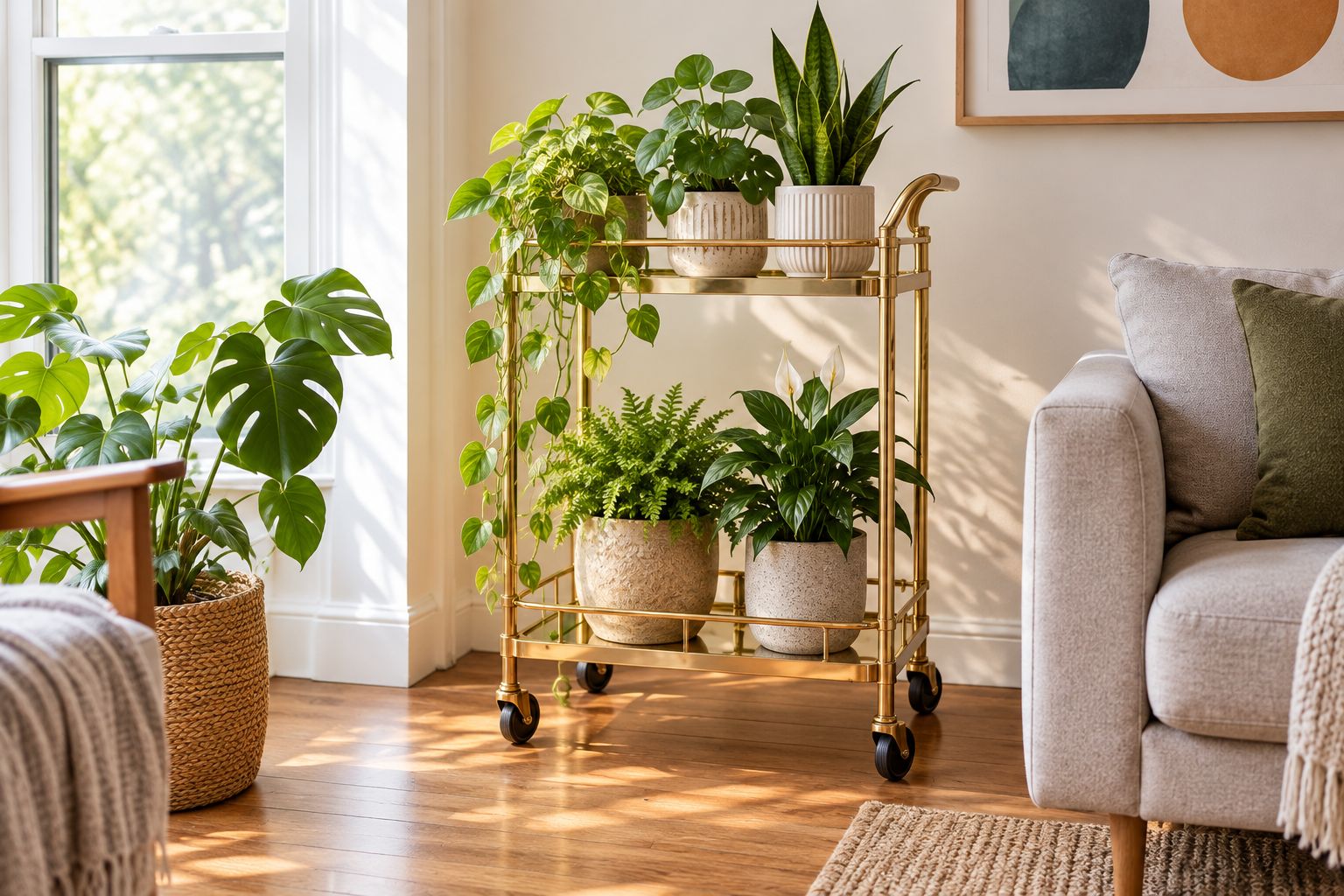
Elegante bar carts offer different visual directions for an indoor plant corner. Treat the following as furniture options to assess, not as purpose-built planters: confirm shelf limits, dimensions and care instructions before using either for live plants.
Elegante is best for style-conscious shoppers seeking a decorative indoor bar cart, not a purpose-built plant stand. The benefit is a piece that can return to entertaining use; the compromise is that plant care must happen around the furniture’s requirements.
| Furniture option | Best for | Supplied design details | Plant-display limitation |
|---|---|---|---|
| Wentworth Rectangle Bar Cart - Antique Gold | A glass-and-metal styling scheme | Metal frame paired with glass | Protect glass from grit and check shelf loading before adding pots |
| Ashley Travertine Bar Cart - Walnut | A warm, mid-century-inspired room | Two-tier design with curved edges; birchwood and iron are listed materials | Protect mixed materials from water and follow surface-specific care instructions |
The Wentworth Rectangle Bar Cart - Antique Gold suits a scheme where foliage sits against glass and metallic finishes. Choose it for that visual relationship, not because glass signals any particular load capacity.
The Ashley Travertine Bar Cart - Walnut suits a warmer furniture palette. Its mixed-material construction makes careful moisture control particularly important; do not assume every component takes the same cleaning treatment.


Can you keep a plant-filled bar cart outside?
Only use a bar cart outdoors when the manufacturer specifies that use. A covered balcony still exposes furniture to humidity, wind-driven rain and changing conditions, so shelter alone does not establish suitability.
An indoor trolley with metal or stone components is not automatically weather-resistant. Choose a purpose-built outdoor plant stand when the display needs to remain outside, and consider wind as well as surface care.
Can you still use the trolley for drinks?
Yes, provided you remove the plants and clean and dry the serving surfaces first. Keep plant-care tools, compost and fertiliser separate from glassware and serving accessories.
For occasional entertaining, use removable plant containers rather than a planted trough that turns the shelf into a permanent growing bed. That keeps the changeover practical and leaves the original furniture intact.
FAQ
Can a bar cart be used as a plant stand without damaging it?
Yes, if the watered pots remain within shelf limits and you prevent moisture and grit from contacting vulnerable surfaces. Water plants elsewhere, dry the containers and inspect underneath them regularly.
Is a glass bar cart suitable for indoor plants?
A glass bar cart is suitable only when its shelf limits, condition and dimensions accommodate the arrangement. Protect the glass from abrasive grit and never use a chipped or cracked shelf.
Should the heaviest plants go on the bottom shelf?
Yes, place heavier pots on the lower shelf and distribute their weight within the supported area. This does not replace checking the trolley’s stated load limits.
Can I water plants while they are on the trolley?
Remove plants for watering rather than watering them on decorative furniture. Allow drainage to finish, empty collected water and dry each container before returning it.
Can I put a bar cart plant stand on a balcony?
Use a bar cart on a balcony only when the manufacturer specifies outdoor suitability. A roof or awning does not remove exposure to moisture and wind.
How many plants should I put on a drinks trolley?
Choose the plant count around shelf limits, pot dimensions and access rather than a fixed target. Leave enough room to remove every pot separately and keep foliage away from wheels.
Are Elegante bar carts purpose-built plant stands?
Treat Elegante bar carts as decorative furniture when planning a plant display. Confirm the individual product’s load limits, care requirements and intended use before adding live plants.
One last thing
Check the bottom shelf’s light before filling it. An arrangement can look balanced from across the room while its lower plants sit in the shadow of everything above. For your 2026 display, leave that shelf partly empty if necessary; healthy foliage is a better finishing touch than a fully occupied trolley.

Comments (0)
There are no comments for this article. Be the first one to leave a message!